Vehicle makers have set targets that reach deep into their supply chains, and the requests travel down the tiers. A tier-1 asks its suppliers; a tier-2 stamping or casting shop asks its own. A mid-sized parts maker can be answering several customers' questionnaires in the same quarter, each slightly different, while needing data from its own steel, aluminium and resin suppliers to give a good answer.
This post covers a parts supplier's sources, what customers tend to ask, and how ESGBlade handles both directions: answering customers and asking suppliers.
The sources, by scope
| Source | Scope and category |
|---|---|
| Natural gas for heat treatment furnaces, paint ovens, space heat | Scope 1, stationary combustion |
| Propane for forklifts, diesel for yard vehicles | Scope 1, combustion |
| Refrigerant top-ups in chillers and air conditioning | Scope 1, fugitive (mass × GWP) |
| Electricity for presses, machining, welding, compressed air | Scope 2, location-based and market-based |
| Steel, aluminium, castings, resin, fasteners | Scope 3, category 1 |
| Presses, tooling, robots bought this year | Scope 3, category 2 |
| Inbound freight by truck, rail, sea or air | Scope 3, category 4 |
| Scrap metal, swarf, oily waste | Scope 3, category 5 |
| Business travel to customers' plants | Scope 3, category 6 |
Who is asking, and how
Vehicle makers and tier-1 suppliers, through supplier questionnaires, supplier portals, sustainability clauses in sourcing decisions, and annual supplier reviews. The questions usually cover Scope 1 and 2 (often market-based, with the share of renewable electricity), whether you report Scope 3, whether you have a reduction target and how it was set, and increasingly the carbon footprint of the specific parts you supply. Some customers ask suppliers to follow particular methods or industry guidance; read the request for the method it names.
Market-based Scope 2 is often the question
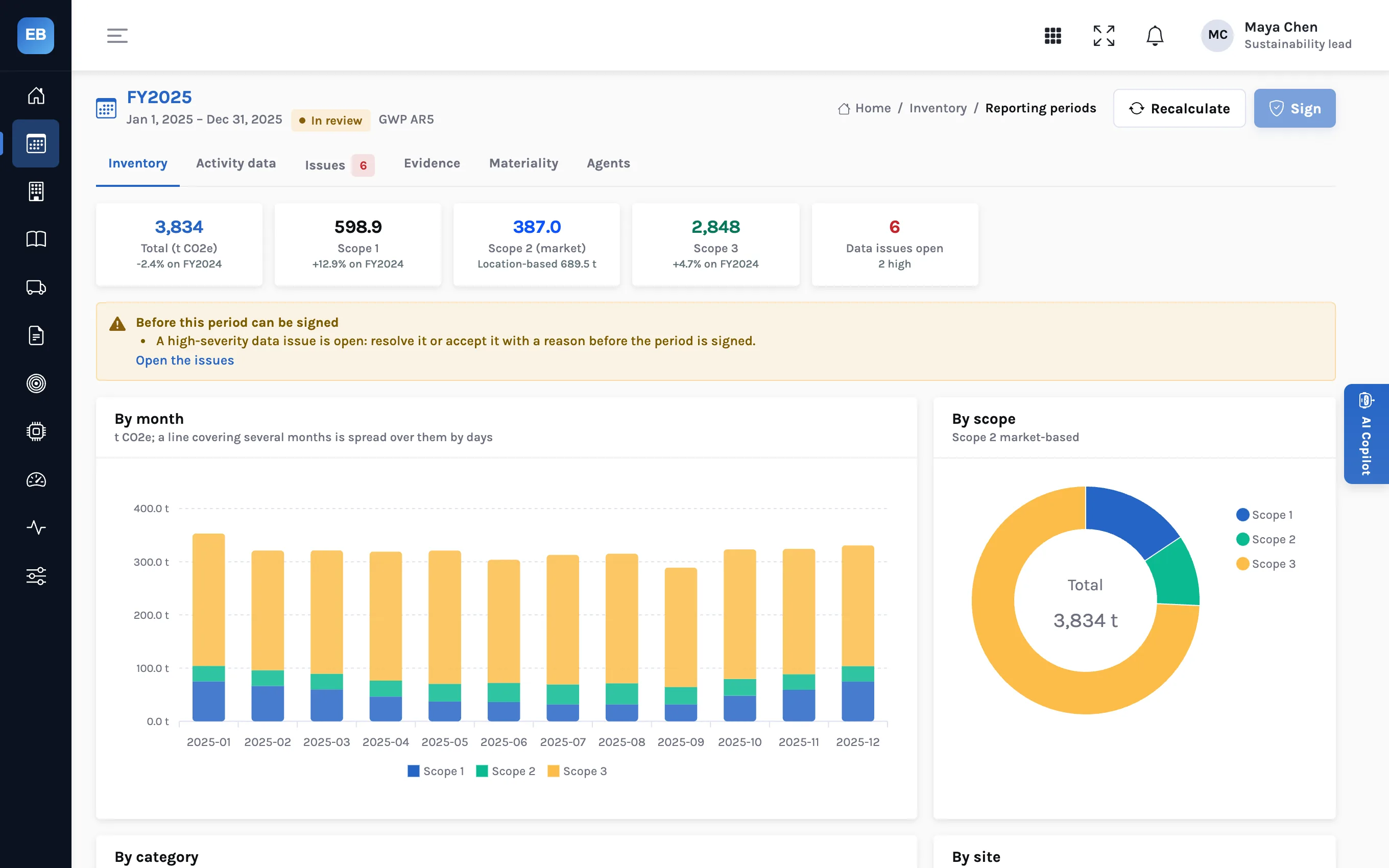
Many customers ask for the market-based figure and what renewable electricity you buy. ESGBlade calculates both bases: location-based from the eGRID subregion or national grid, market-based from RECs, PPAs, green tariffs and supplier-specific instruments entered with MWh and a certificate reference. See location-based and market-based Scope 2.
Both directions
Answering your customers
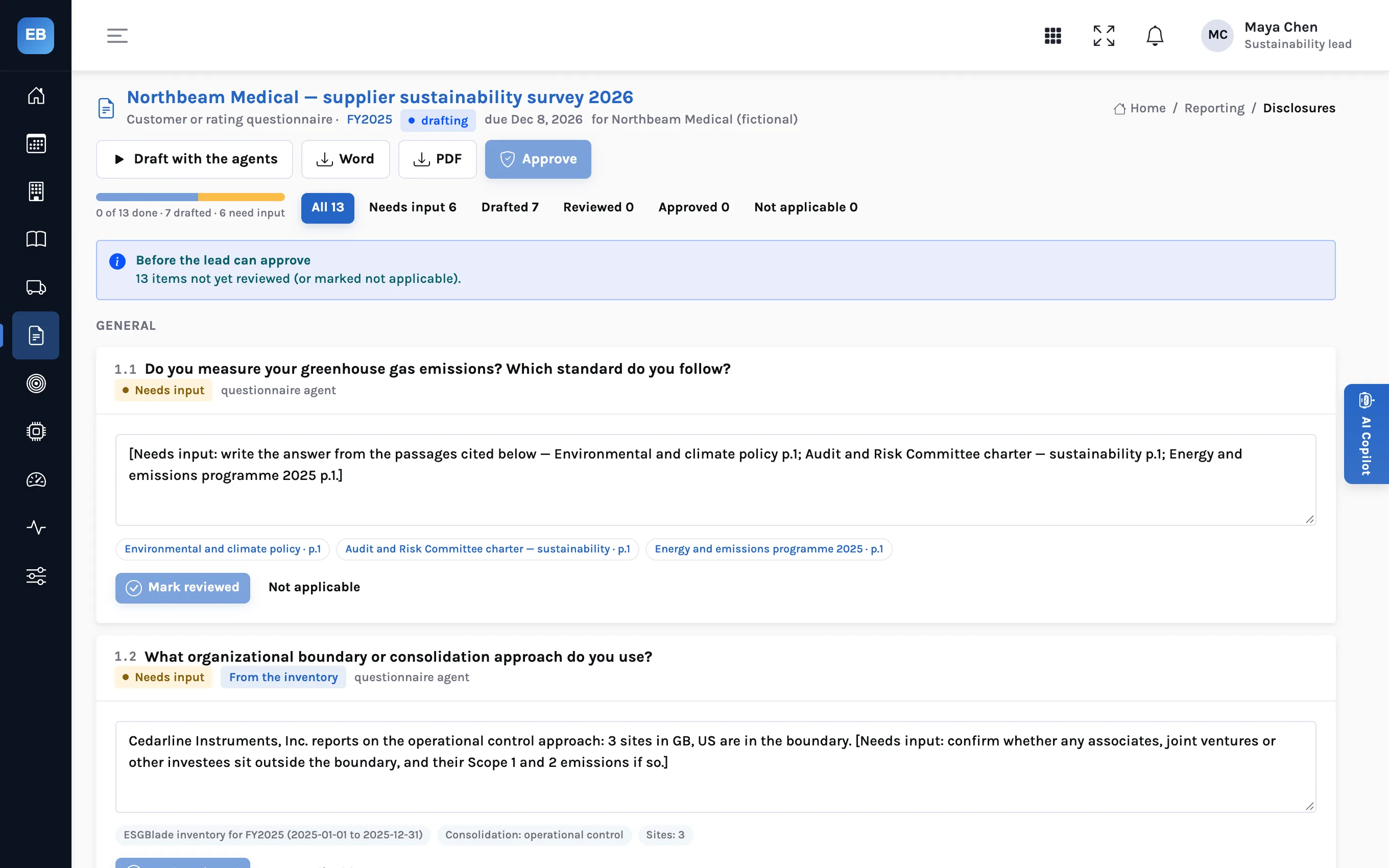
Import each customer's questionnaire as a spreadsheet, one question per row in a column called "question" (an id and section are optional). The questionnaire responder drafts each answer from the signed inventory or from your evidence documents, with citations, and marks what it can't answer as Needs input. Targets and commitments are never invented: if no document states one, the answer says so. A person reviews each item and marks it reviewed, then exports. The full flow is in answering a customer's sustainability questionnaire.
Asking your own suppliers
Your largest Scope 3 category is almost certainly the metal and resin you buy, and it starts as a spend-based estimate. The supplier outreach agent ranks suppliers by spend-based Scope 3, picks those making up about 70% (up to eight), and drafts a data request for each. Every message is held until a person edits and sends it. Sending creates a fresh answer link; the supplier needs no login.
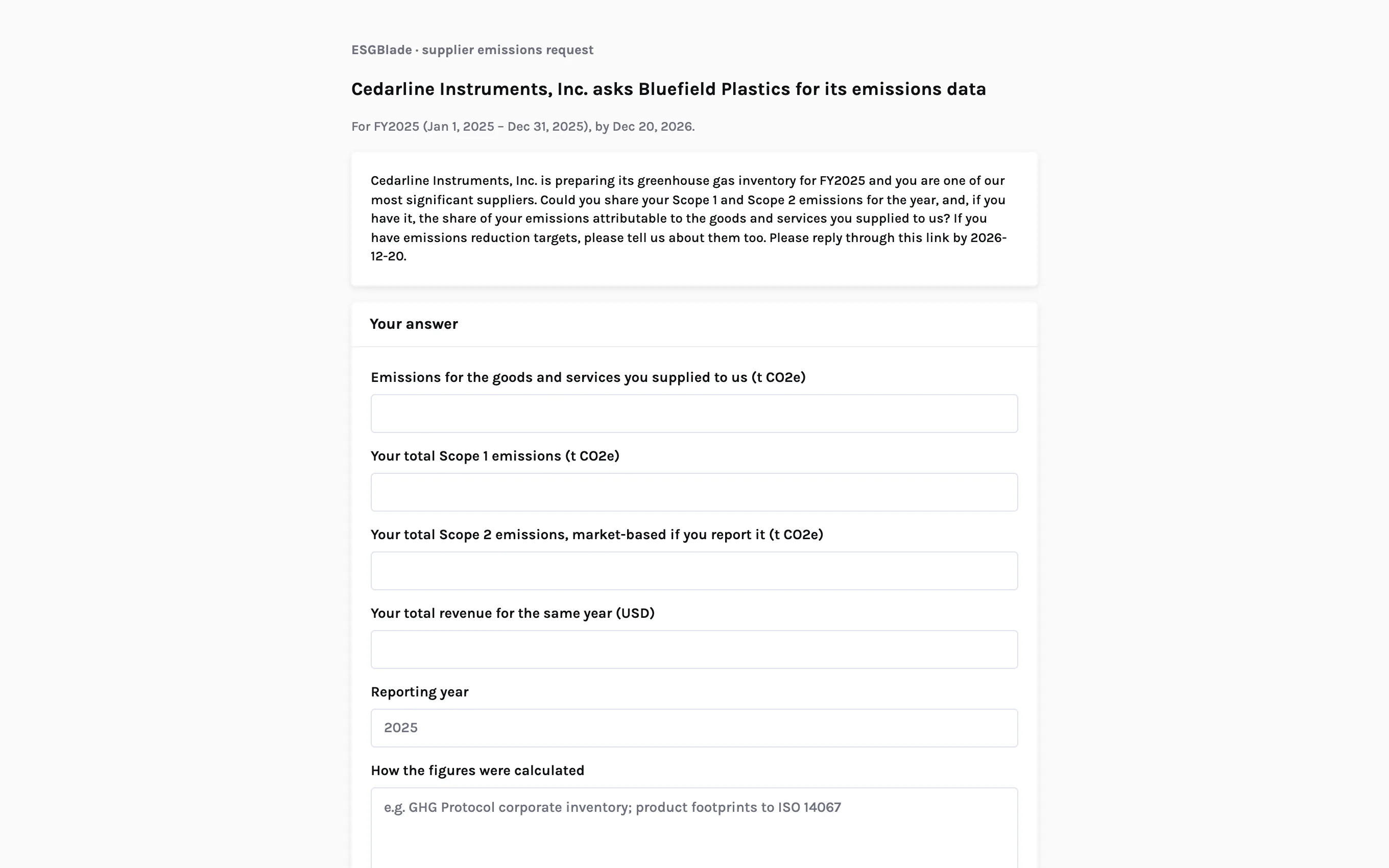
The supplier can give emissions for what it supplied (cradle-to-gate preferred), or its Scope 1, Scope 2 and revenue, which ESGBlade allocates by your share of its revenue, with a warning that this may understate because it leaves out the supplier's own supply chain. It can add method, verification, targets and whether it reports to CDP. Using the answer is a person's call: "Use the supplier's figure" replaces the spend lines; "Go back to the estimate" undoes it. More in asking suppliers for their own numbers.
What to do first
- Collect every customer request you have and list the scopes, bases and years they ask for
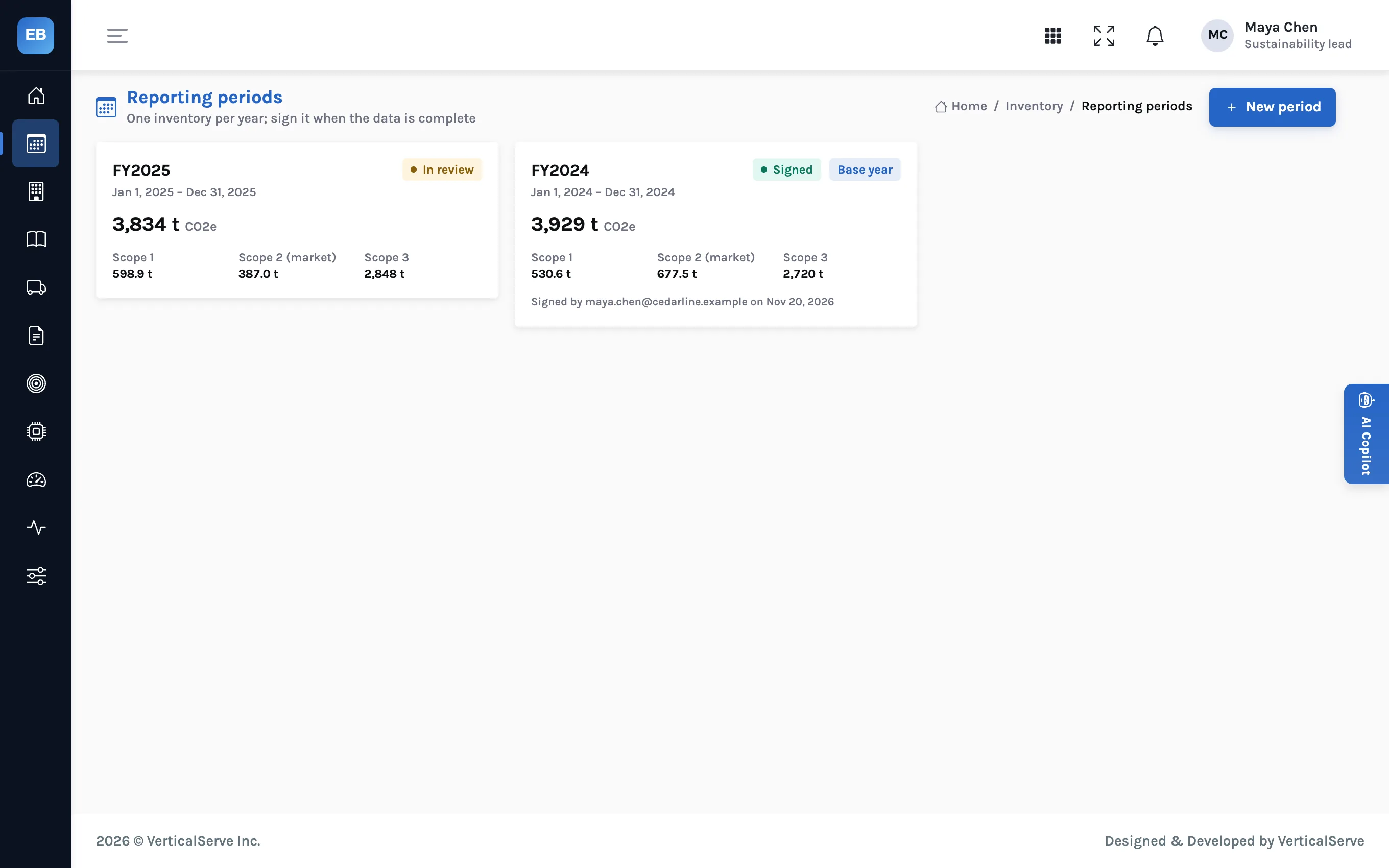
- Build and sign one inventory to answer all of them
- Gather renewable electricity contracts and certificates for market-based Scope 2
- Let the supplier outreach agent draft requests to your largest metal and resin suppliers
Where people stay in charge
- One signed inventory. Answers to every OEM draft from the inventory the lead signed on the decision record.
- Supplier requests wait for you. Requests to your metal and component suppliers are held until a person sends them, and a supplier's figure is used only when a person chooses to use it.
- Needs input goes to a person. Questions the inventory can't answer, such as part-level footprints, are marked Needs input for a person to answer.
- Your team sets the target. ESGBlade tracks progress against the absolute target your team sets; the ambition is the team's call.
One signed inventory answers every customer. The same tool asks your suppliers for theirs.
Try it on your own data
ESGBlade is free. Tell us about your company and we'll set up a workspace for your first reporting period.
Request a demo