Everything between the utility bill and the approved disclosure
ESGBlade covers the boundary, the activity data, the calculation, the checks, the sign-off, the disclosures, the suppliers and the targets, in one place, for one company or a group. These are the screens, on a fictional demo company.
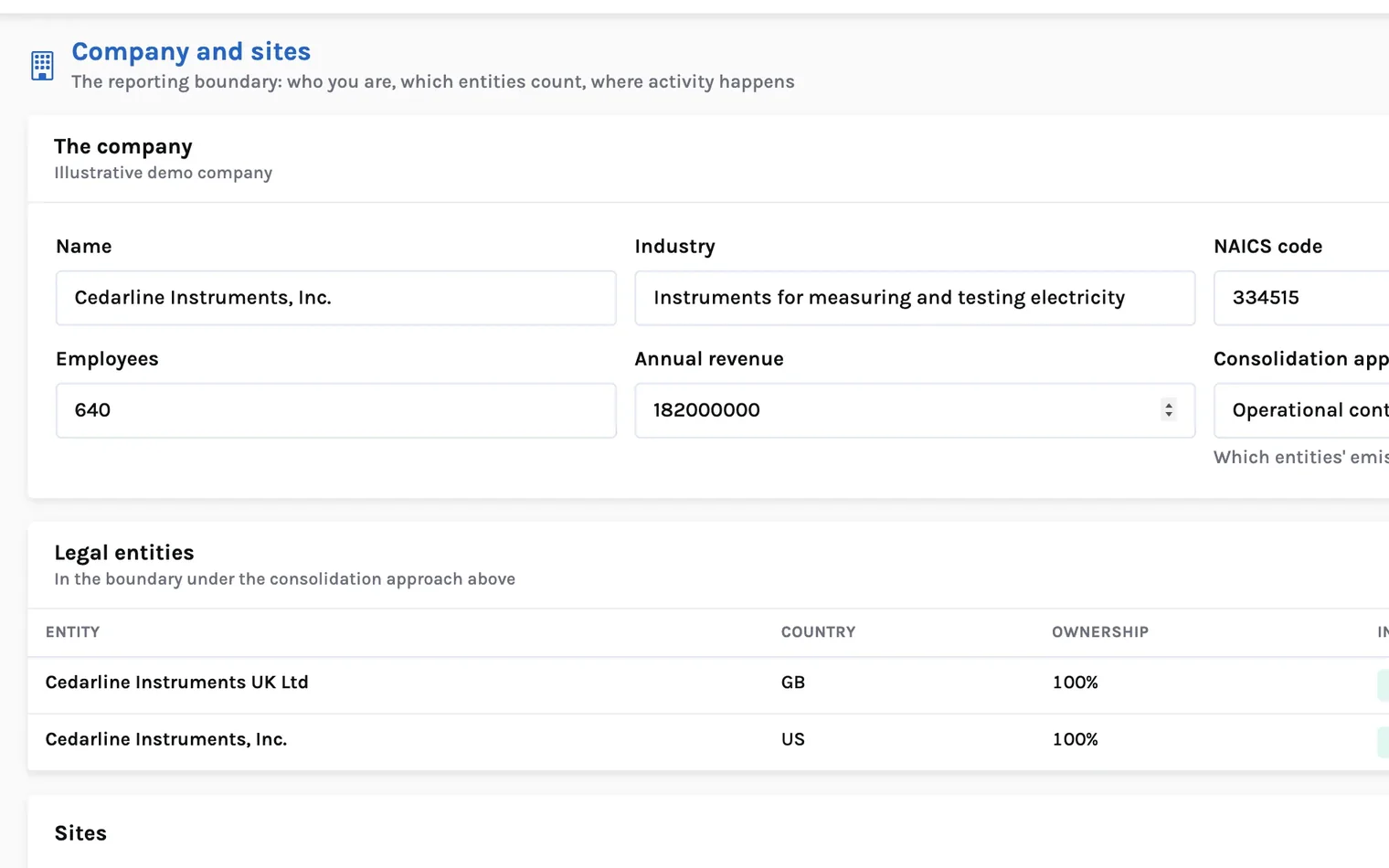
Company, entities and sites
Set the consolidation approach (operational control, financial control or equity share), the legal entities and their ownership, and the sites where activity happens: country, US eGRID subregion, floor area, people. Reporting periods are one a year, with a base year.
- Each site's grid region picks its electricity factor
- Entities in or out of the boundary, with ownership share
- One period per year; a signed period is locked until reopened
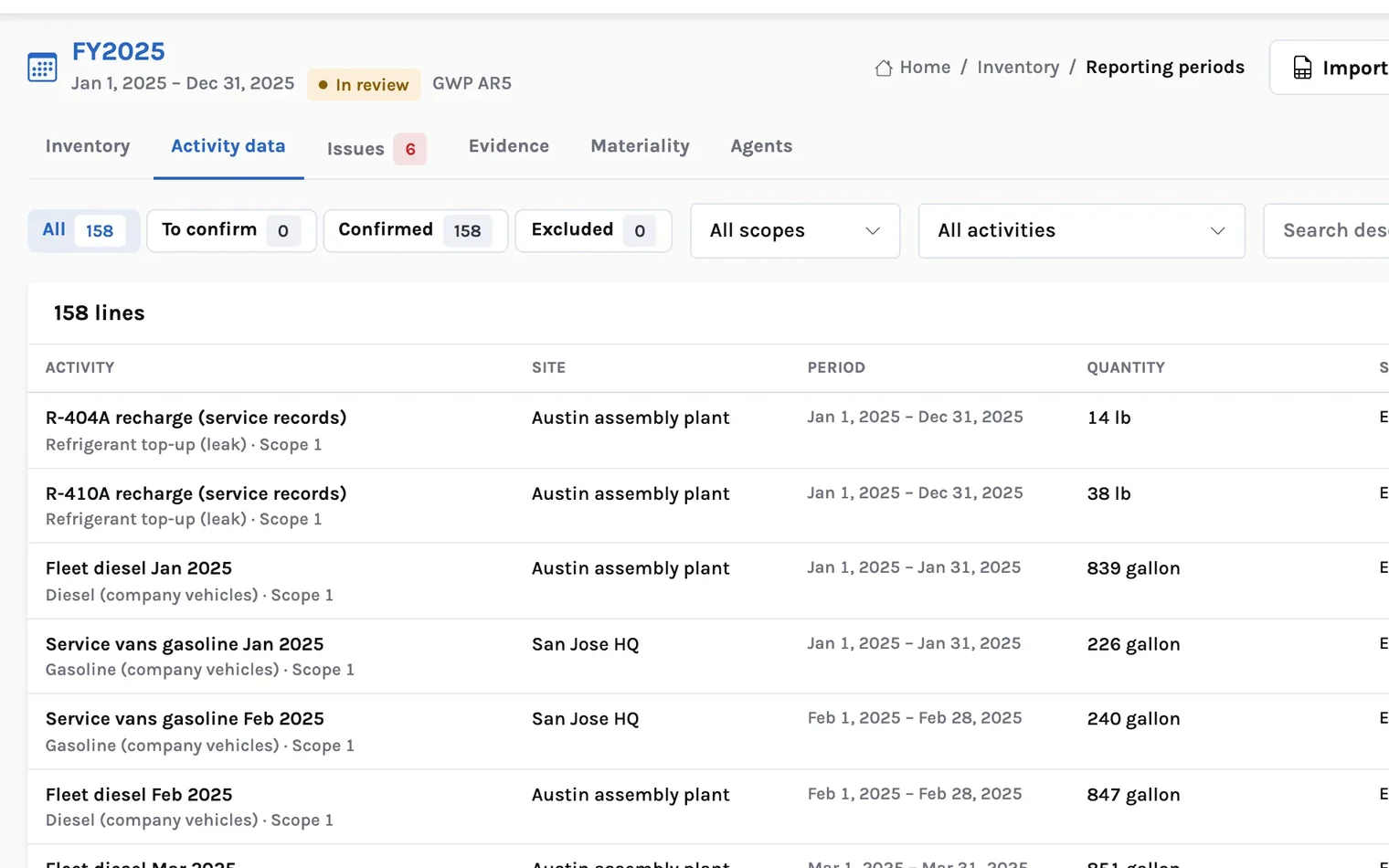
Bills, ledgers and travel reports in
Upload a utility or fuel bill and ESGBlade reads the quantity, unit, service period and account into a draft line, quoting the page it came from. Import the purchase ledger, the travel agency report or fuel cards from a spreadsheet. Enter anything else by hand. A person confirms each line, or excludes it with a reason.
- Electricity, gas, propane, heating oil, diesel and gasoline, refrigerants, steam
- Spend, freight, waste, air and rail travel, car mileage, hotel nights, water
- Text-based PDFs are read; scans are refused with a plain message
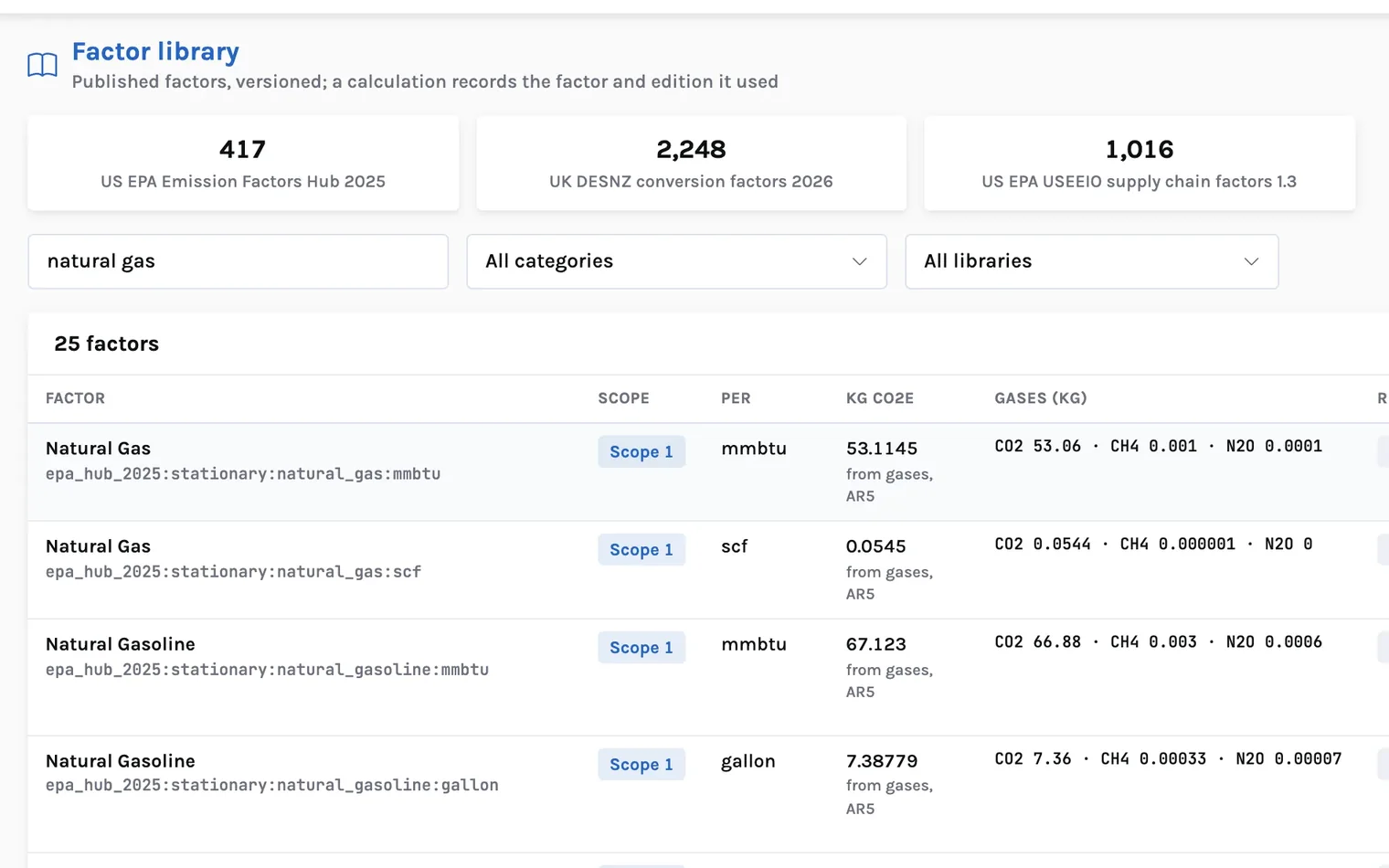
Scope 1, 2 and 3 with published factors
Every line is calculated with a factor from a versioned public library, and the result keeps the factor, its edition, the gases and each step of the arithmetic. Scope 2 is calculated location-based and market-based. Spend is converted to US dollars and adjusted to the factors' price year.
- US EPA Emission Factors Hub 2025, eGRID2023, UK DESNZ 2026, USEEIO 1.3
- IPCC AR5 global warming potentials
- A factor a person confirms is offered next time for the same kind of line
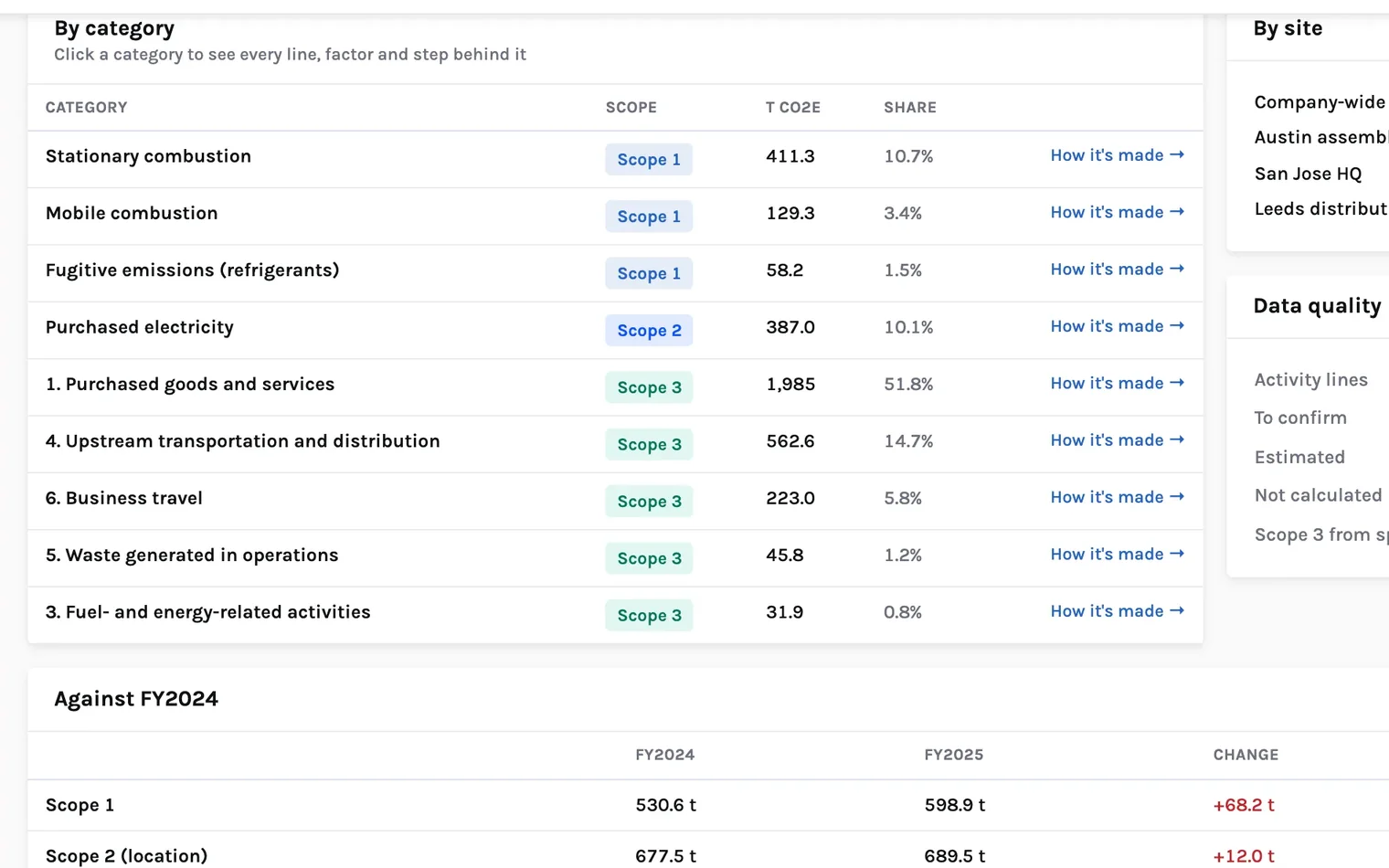
The inventory, by scope, category, site and month
Totals for each scope with Scope 2 both ways, a breakdown by category with a link to how each is made, emissions by site and by month, the change against the prior year, and a data-quality summary that says how much of Scope 3 is still a spend estimate.
- Against the prior period, line by line
- Controls from Rules Studio that block sign-off
- The lead signs on the decision record
The missing month and the bill entered twice
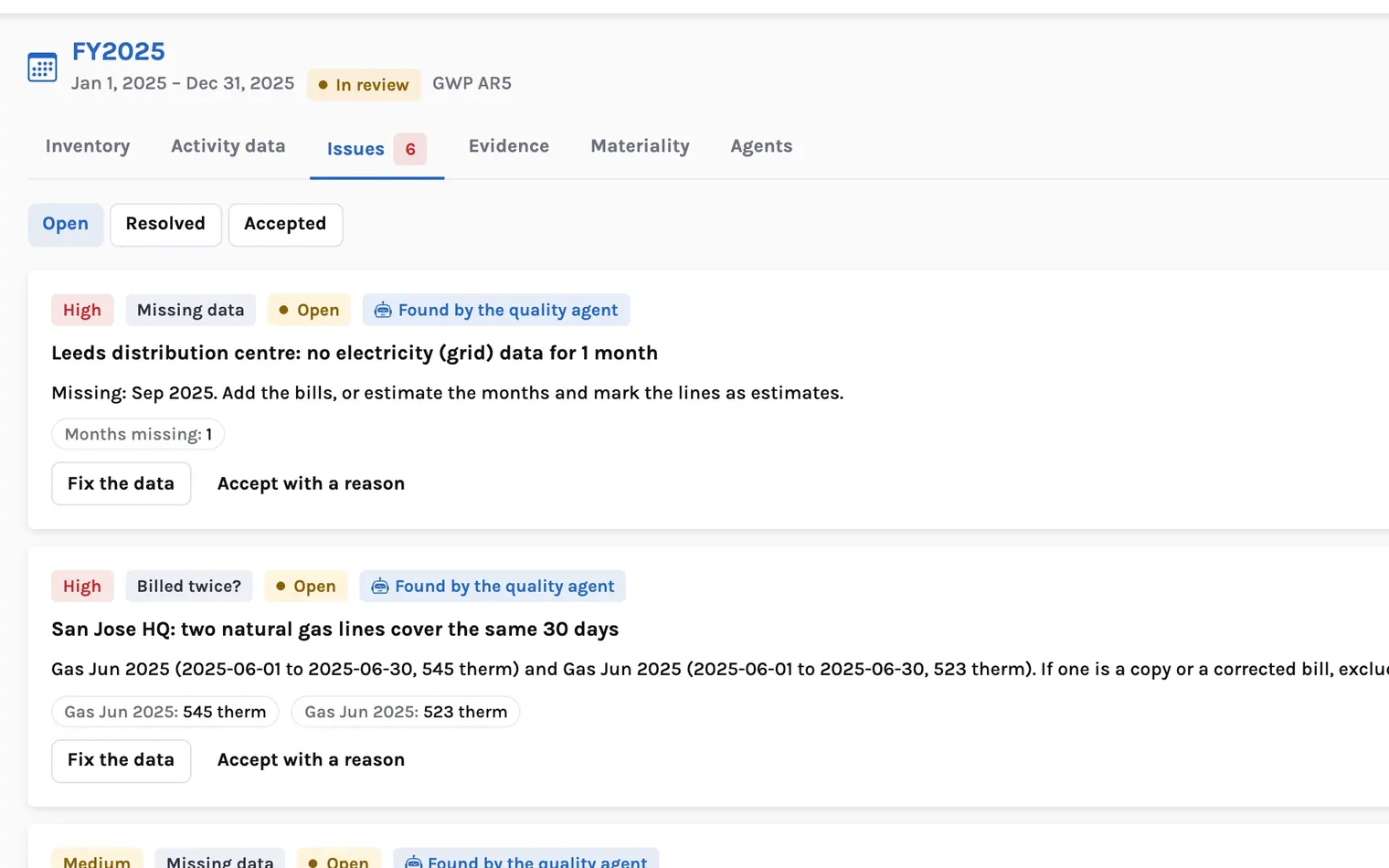
ESGBlade checks each period for missing months per site and fuel, two bills covering the same days, changes of 30% or more against last year, estimates, lines that can't be calculated and US sites with no grid region. Each issue is fixed, or accepted with a reason that stays on record.
- Found and prepared by the data quality agent
- A high-severity issue blocks sign-off
- Fix the data, or accept it with a reason
Policies, registers and charters, cited
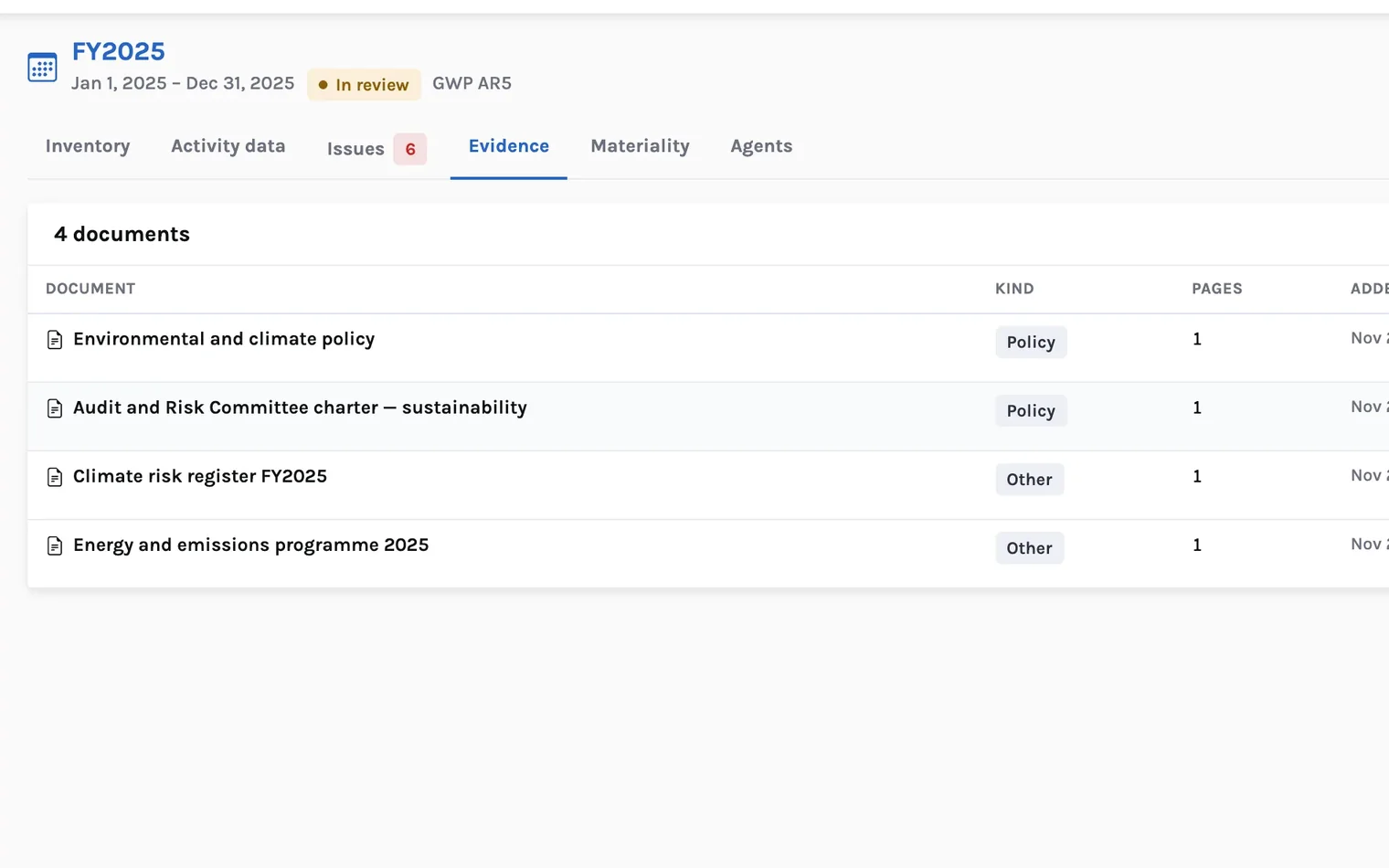
Upload the documents that answer the narrative questions: the climate policy, the risk register, the board committee's charter, the energy programme. The disclosure writer and the questionnaire responder cite them by page; the copilot searches them.
- Every narrative draft cites its passages
- Open the page behind a citation
- Nothing is assumed that a document doesn't say
Ask suppliers, then use their numbers
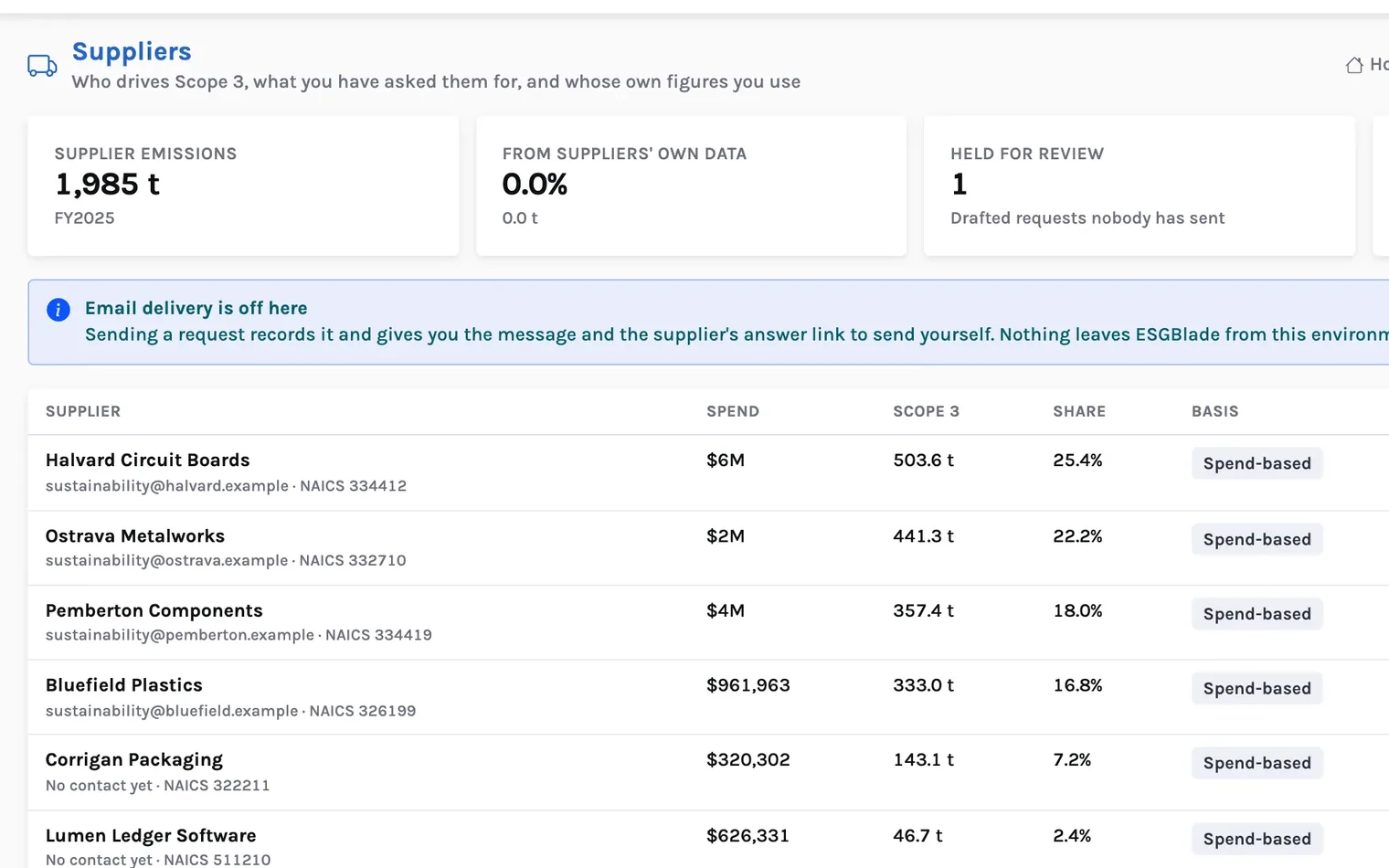
Every supplier on the ledger, ranked by its Scope 3 tonnes. Requests are drafted and held; a person sends them, and each supplier answers through its own link with no account. Their figure is shown next to your estimate; using it is your call, and you can go back.
- Answer with emissions for what they supplied, or Scope 1, 2 and revenue
- A warning when an allocation may understate
- Disclosures say how much comes from suppliers' own data
A page with no login
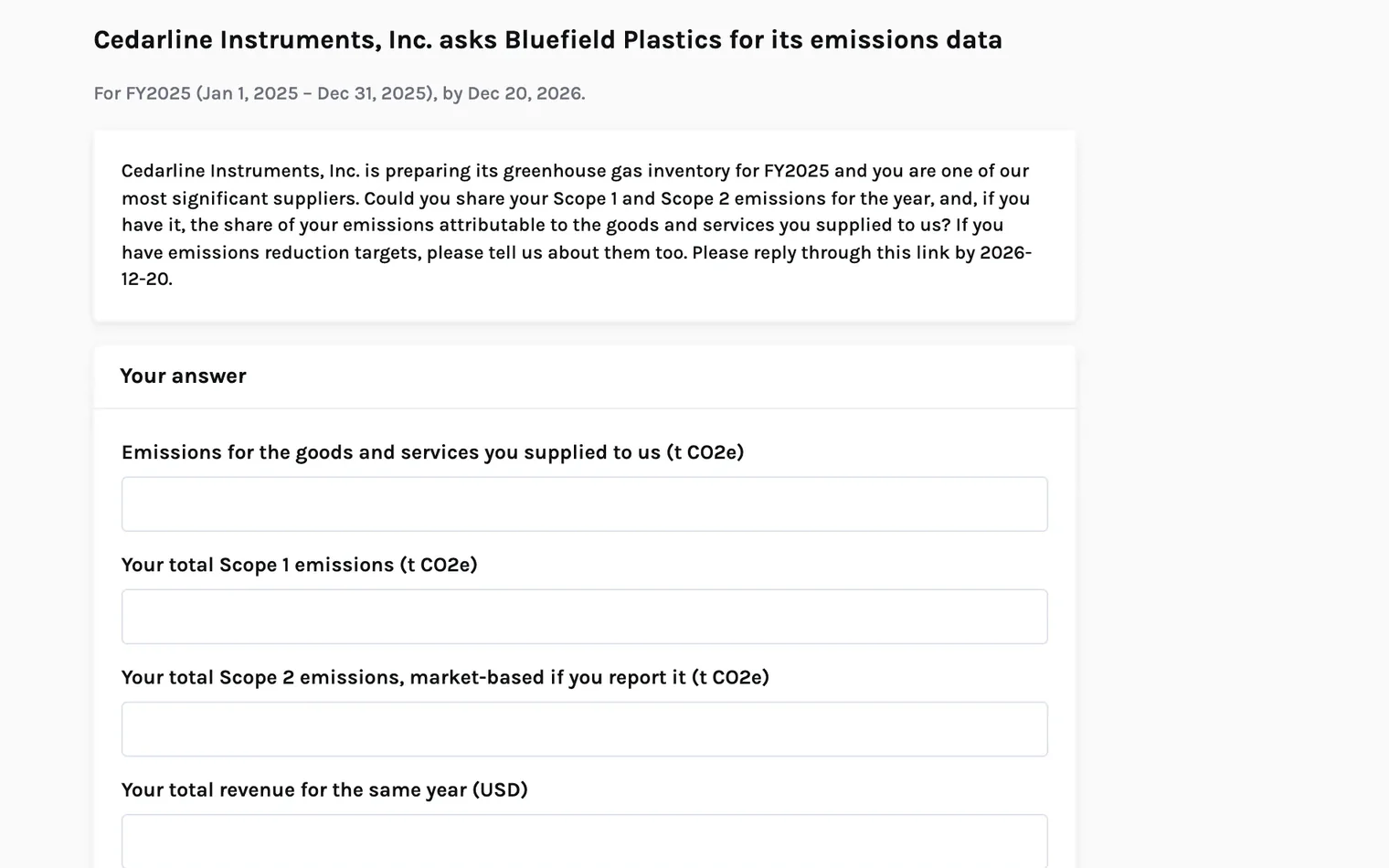
The supplier sees who is asking, for which year, and a short form. It never sees your spend or your other suppliers. Only a fingerprint of the link is kept; withdraw the request and the link stops working.
- Cradle-to-gate figure preferred
- Method, verification, targets and CDP reporting
- Correct the answer until you've used it
A pathway and the gap to close
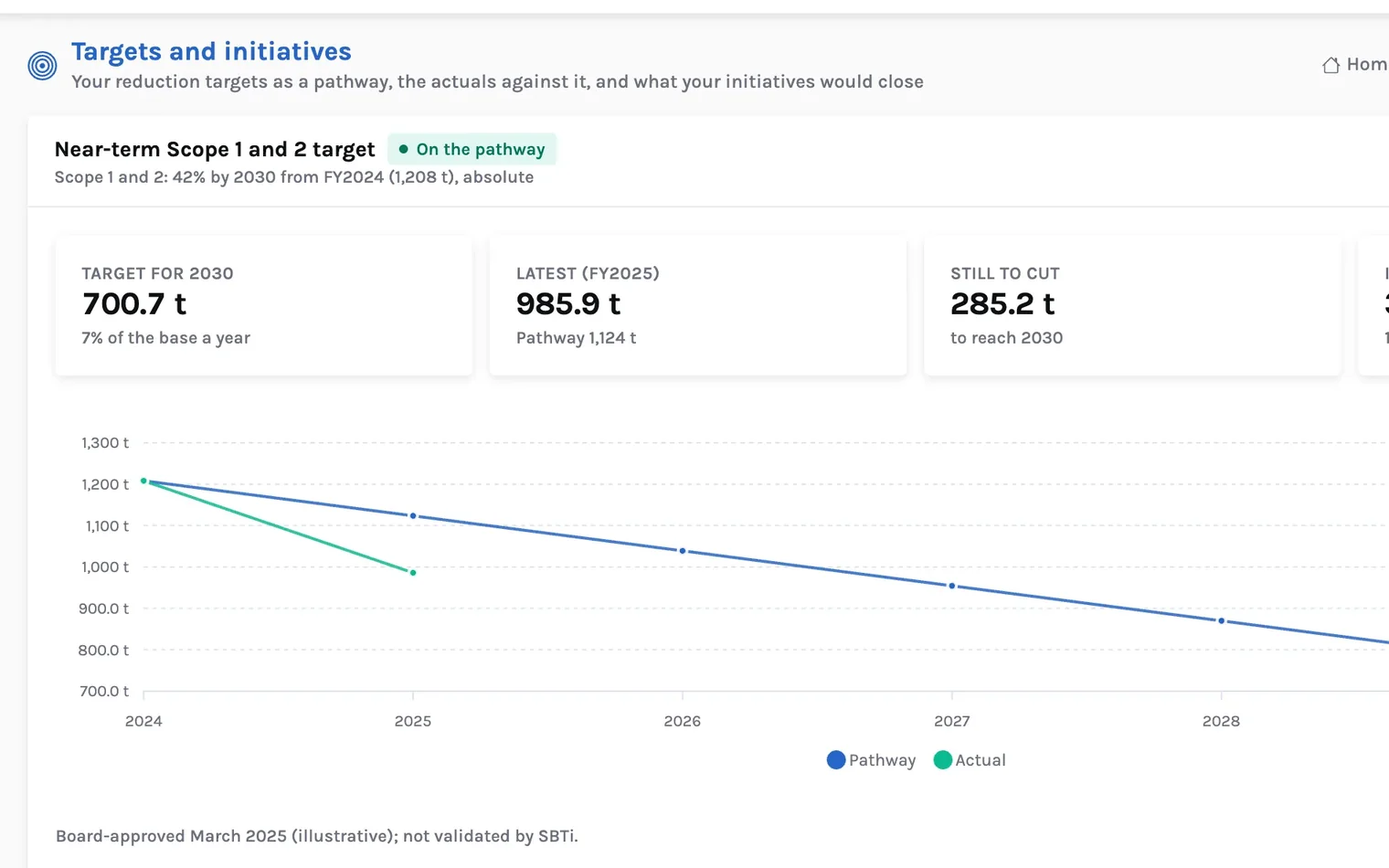
Set an absolute target for Scope 1 and 2, Scope 3 or all three, against a calculated base year. ESGBlade draws the straight line to the target year, plots each year's actual against it, and shows how much your recorded initiatives would close.
- On the pathway, or above it
- Initiatives with estimated abatement, how it was estimated, and cost per tonne
- Your team sets the target; ESGBlade draws the pathway
Rules you can test before they bite
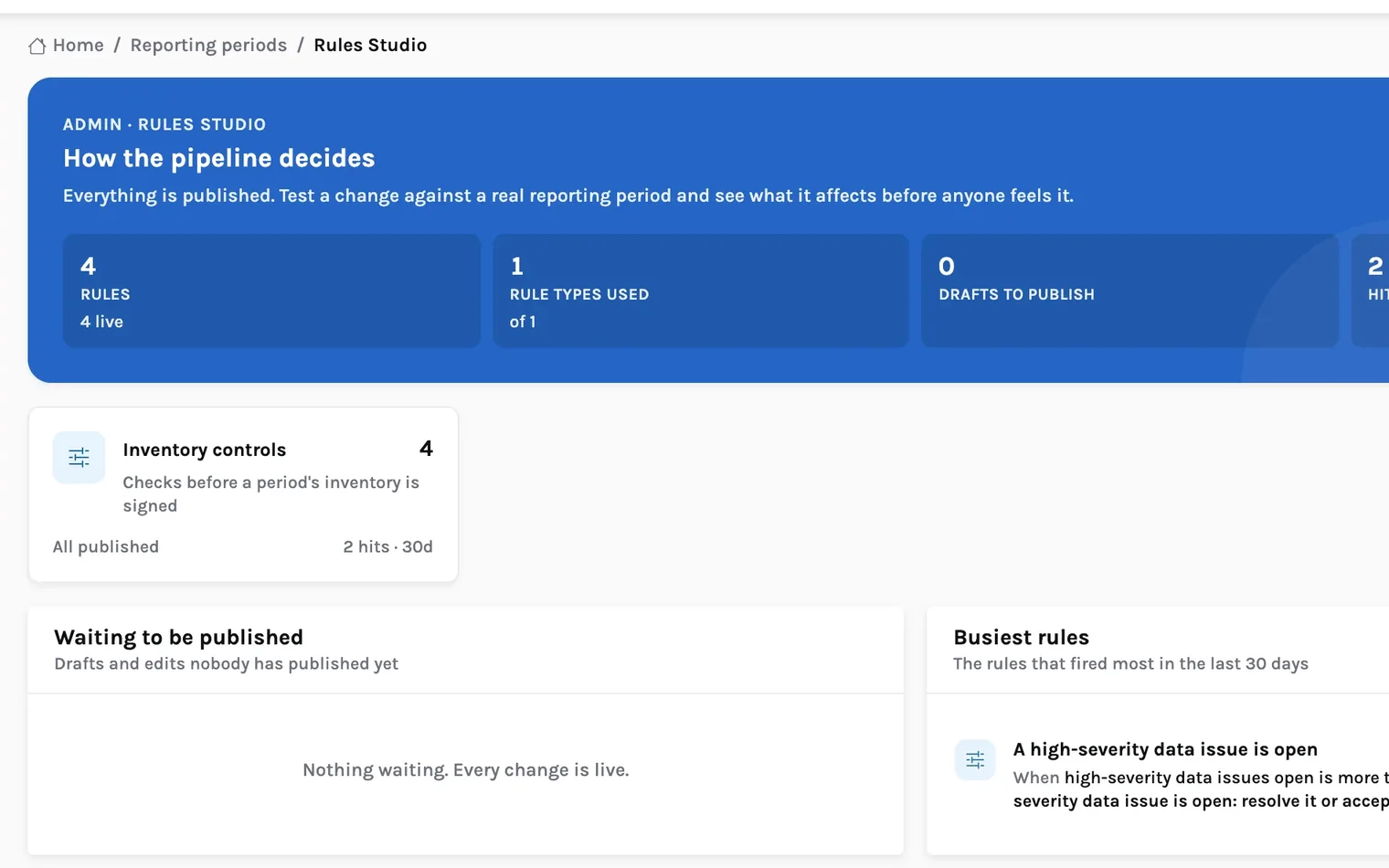
Rules Studio holds the inventory controls, such as blocking sign-off while a high-severity issue is open. Change a rule, test it against a real period, and publish; every version is kept.
- Block, refer or warn
- Tested against a real reporting period
- Every version kept
Ask the copilot about your inventory
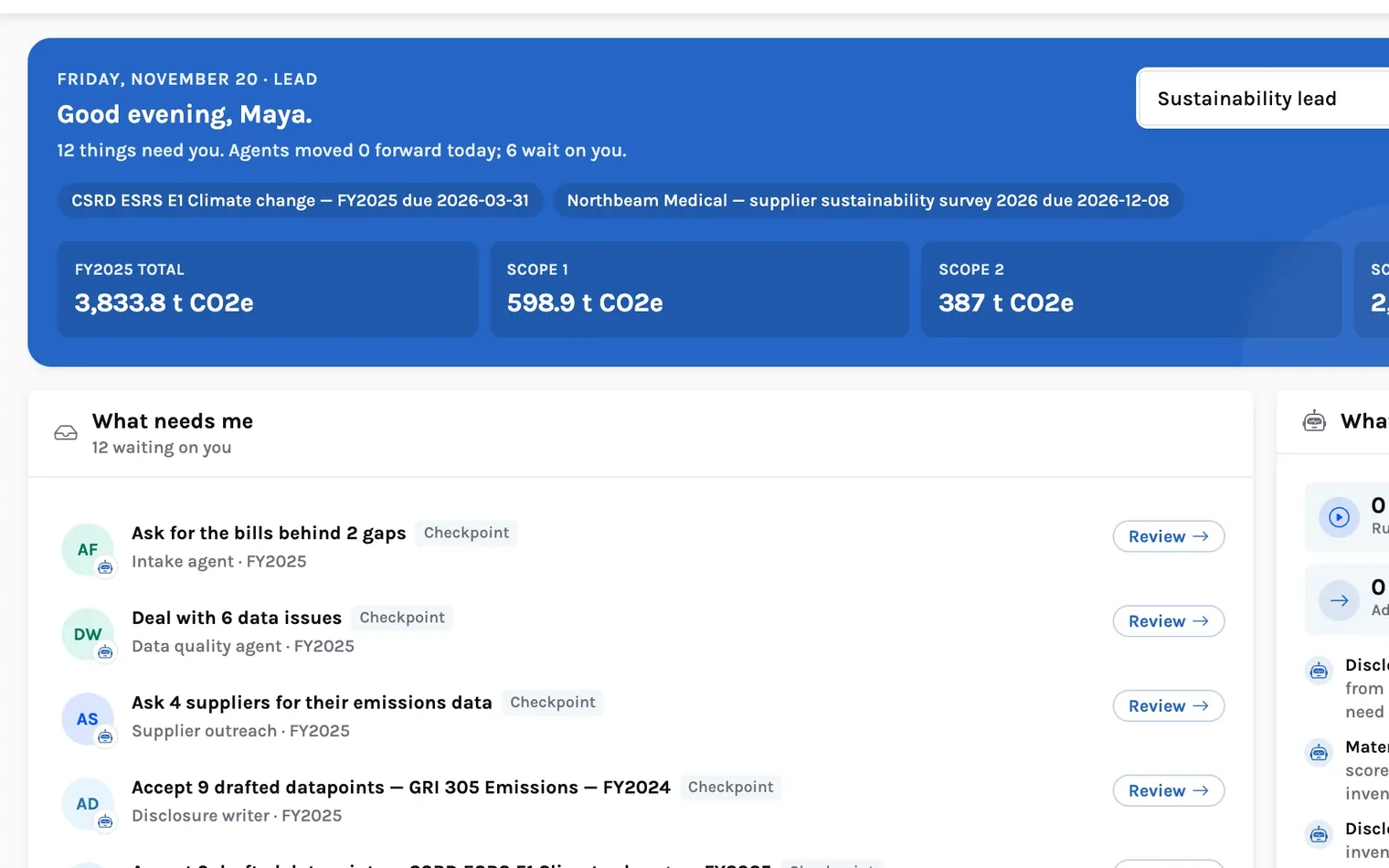
The copilot answers questions about the period with read-only tools: the inventory, the calculation behind a figure, activity lines, data issues, the factor library, the evidence, what the agents are waiting on you for, suppliers and targets.
- “Why did Scope 2 fall?”
- “What are the agents waiting on me for?”
- “Which suppliers have answered?”
Run your next inventory in ESGBlade
ESGBlade is free: no paid plan and no card. Tell us about your company and we'll set up your workspace.