Emissions and disclosure, worked through on real screens
How ESGBlade turns bills, ledgers and travel reports into a Scope 1, 2 and 3 inventory, how its agents prepare the work, and how the inventory answers ESRS E1, ISSB S2, SB 253, GRI 305 and customers' questionnaires. Use cases from many industries, each on the product's own screens.
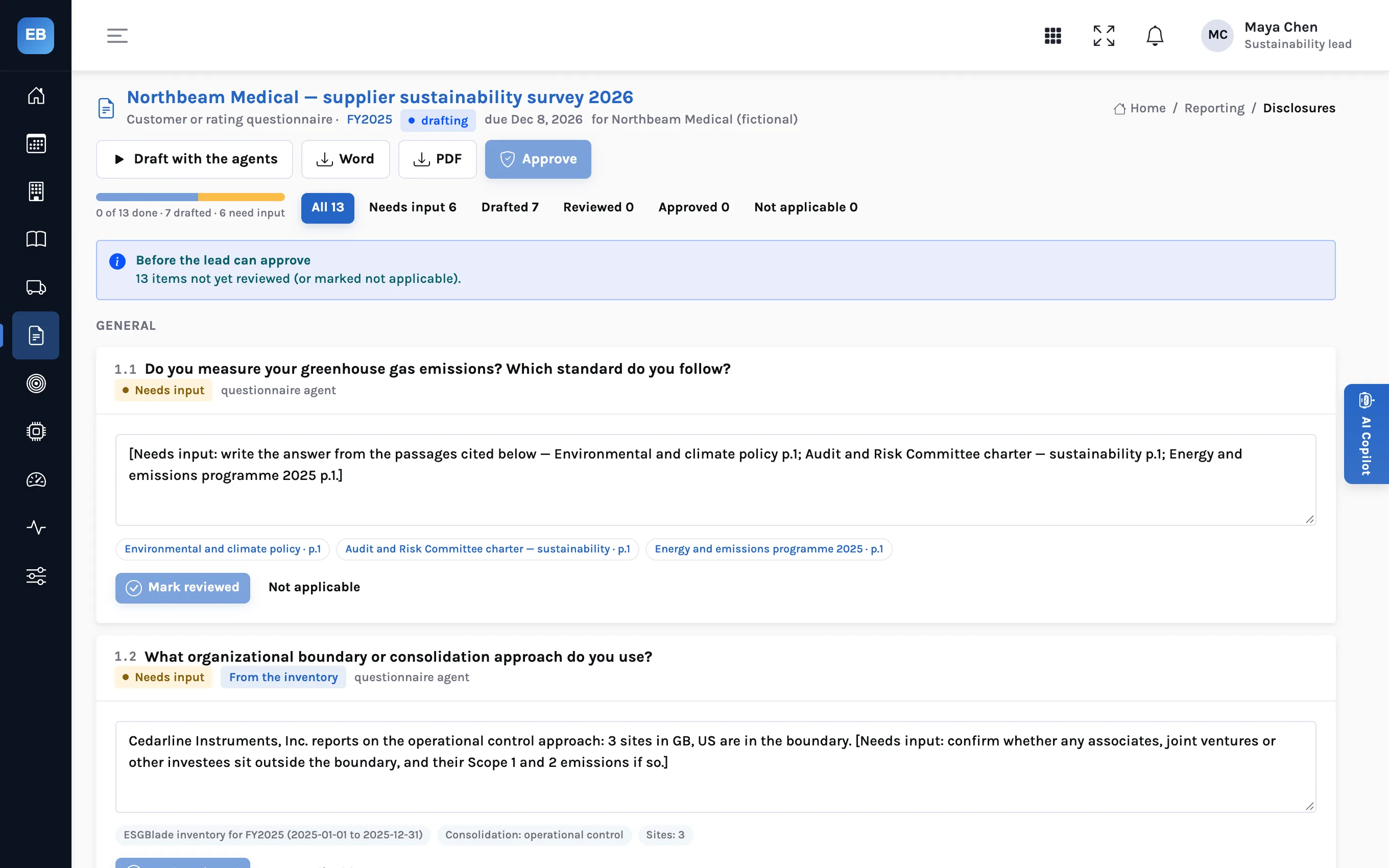
Answering a customer's sustainability questionnaire
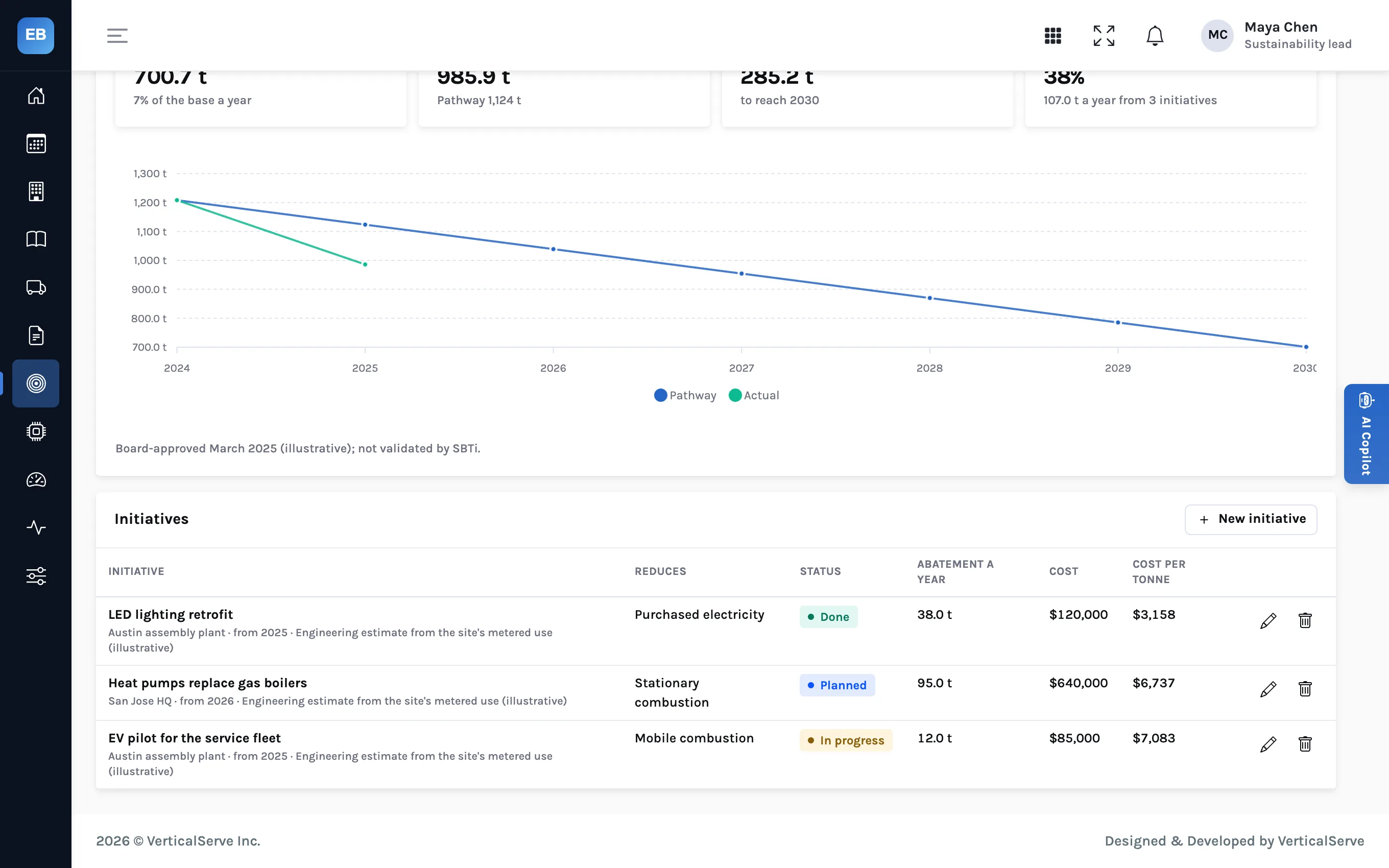
Import the customer's spreadsheet, let the questionnaire responder draft from your inventory and evidence with citations, fill what it marks Needs input, then export to Word or PDF. Step by step, with a 13-question example.
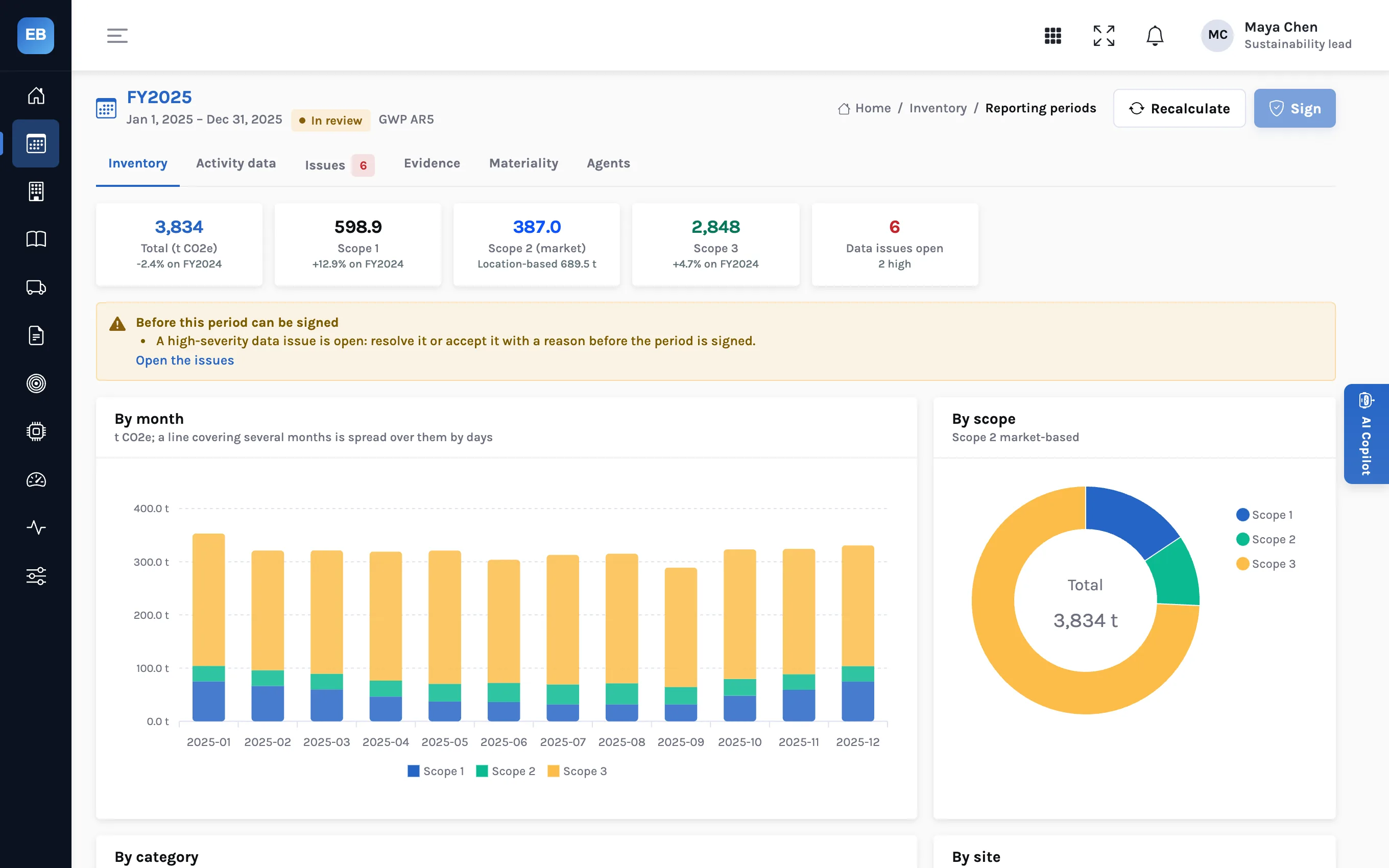
Scope 1, 2 and 3 from the bills you already have
A first greenhouse gas inventory built from utility bills, fuel statements and the purchase ledger: boundary and sites, three ways in, the factor library, the three scopes and sign-off, shown on a demo company in ESGBlade.
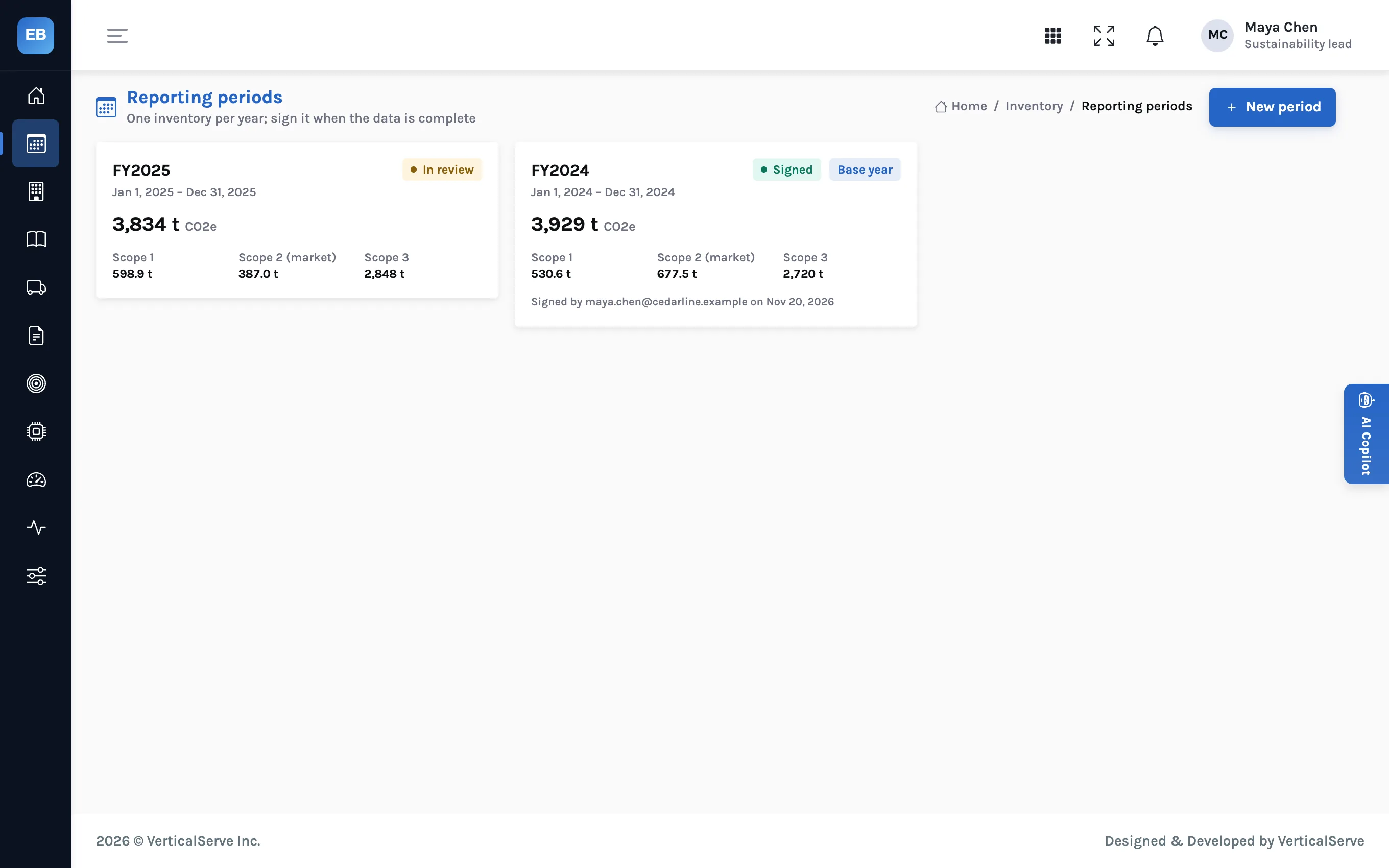
A first emissions inventory at an electronics manufacturer
How the fictional demo company Cedarline Instruments built its first GHG inventory: the boundary, the base year, what drove each scope, and the customer requests that started it.
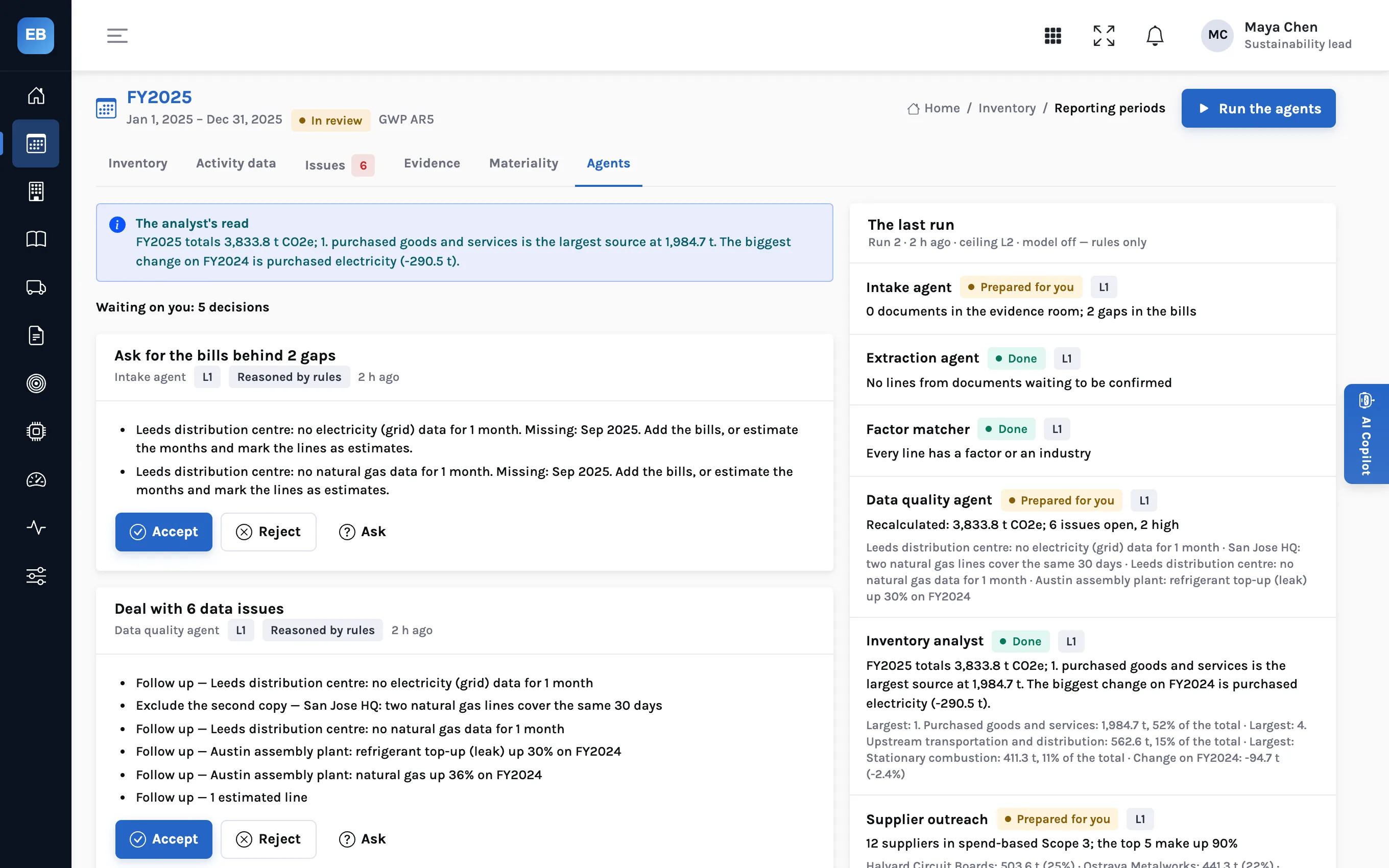
Agents prepare, people decide
ESGBlade's ten agents do the reading, checking and drafting, then stop at a prepared decision with Accept, Reject and Ask. How the L2 ceiling, the rules fallback and number grounding keep a person in charge.
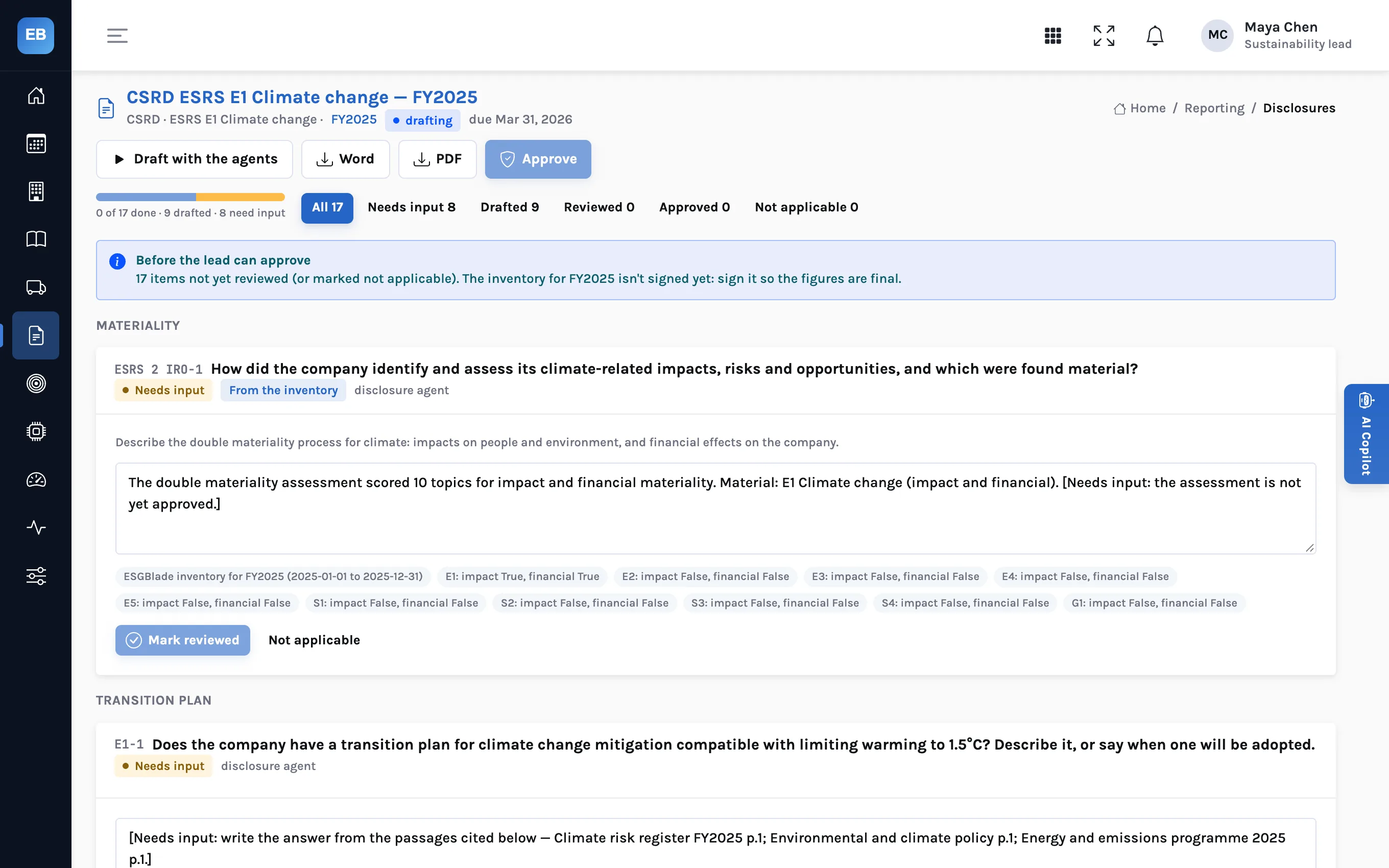
CSRD and ESRS E1 for a mid-sized company
What ESRS E1 Climate change asks, item by item; which answers come from your emissions inventory and which need a person; and why materiality comes first. Check first whether CSRD still applies to you.
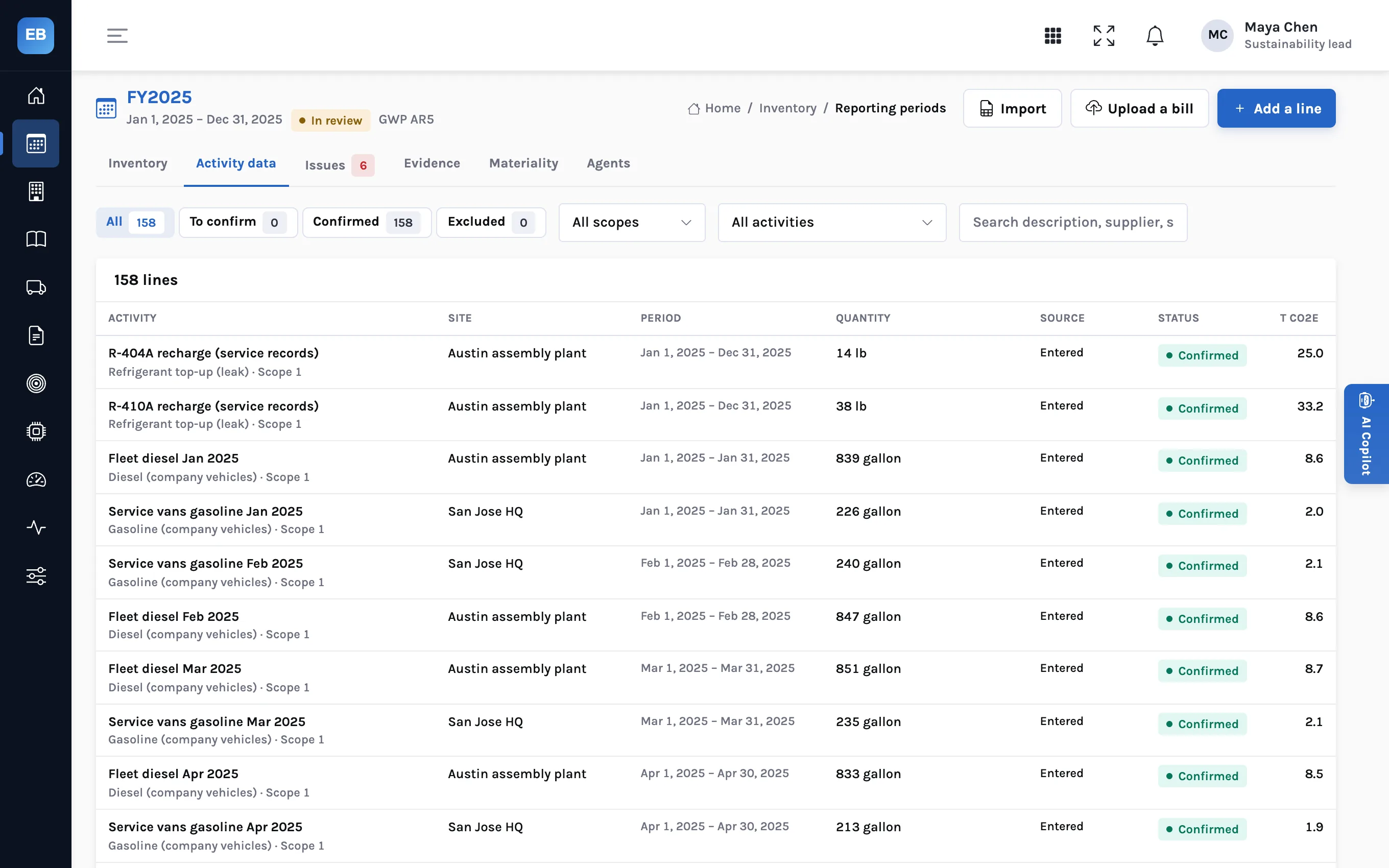
Emissions accounting for logistics providers and distributors
Fleet diesel, freight by truck, rail, sea and air, warehouse electricity and refrigerants across many sites: how a 3PL or distributor builds a GHG inventory its shippers can use.
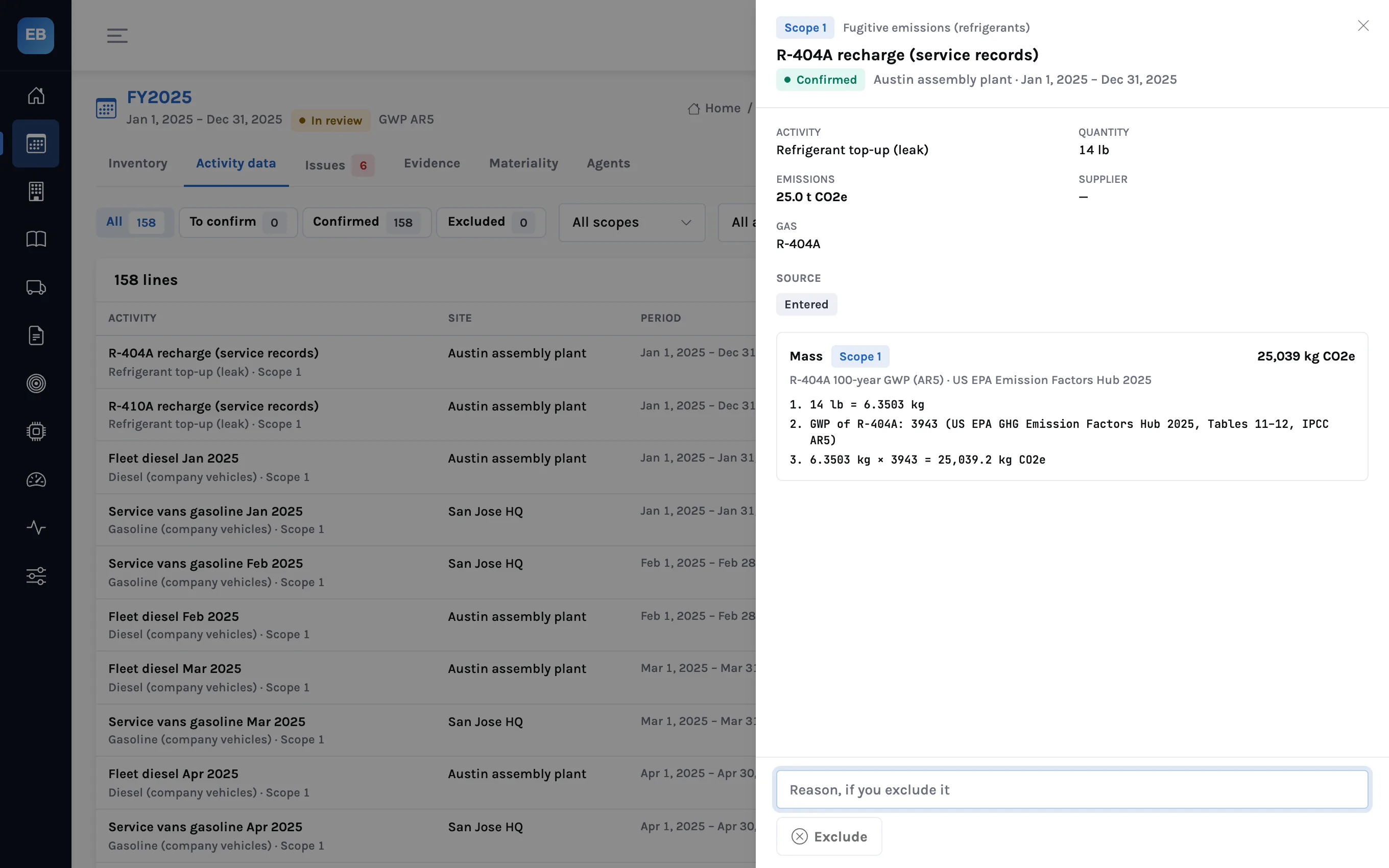
Every figure traces to a page and a factor
How ESGBlade ties each tonne back to the bill page it came from, the factor edition it used and the arithmetic in between, so a reviewer can follow any number without asking you.
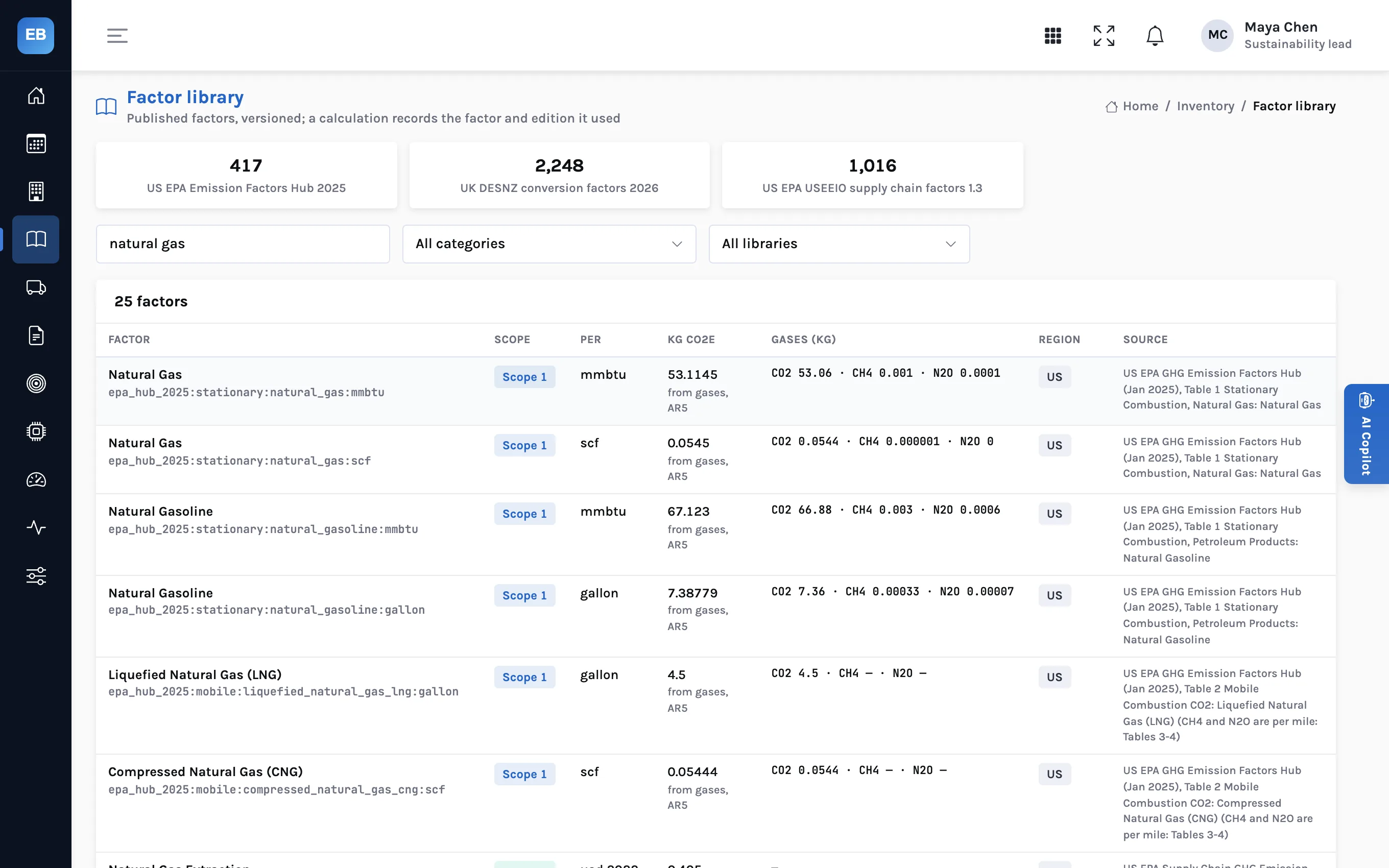
Emissions for software and professional services companies
Small Scope 1, office electricity, and a Scope 3 made of cloud spend, purchased services and travel. How a SaaS or services firm builds an inventory and answers enterprise customers' questionnaires.
Asking suppliers for their own numbers
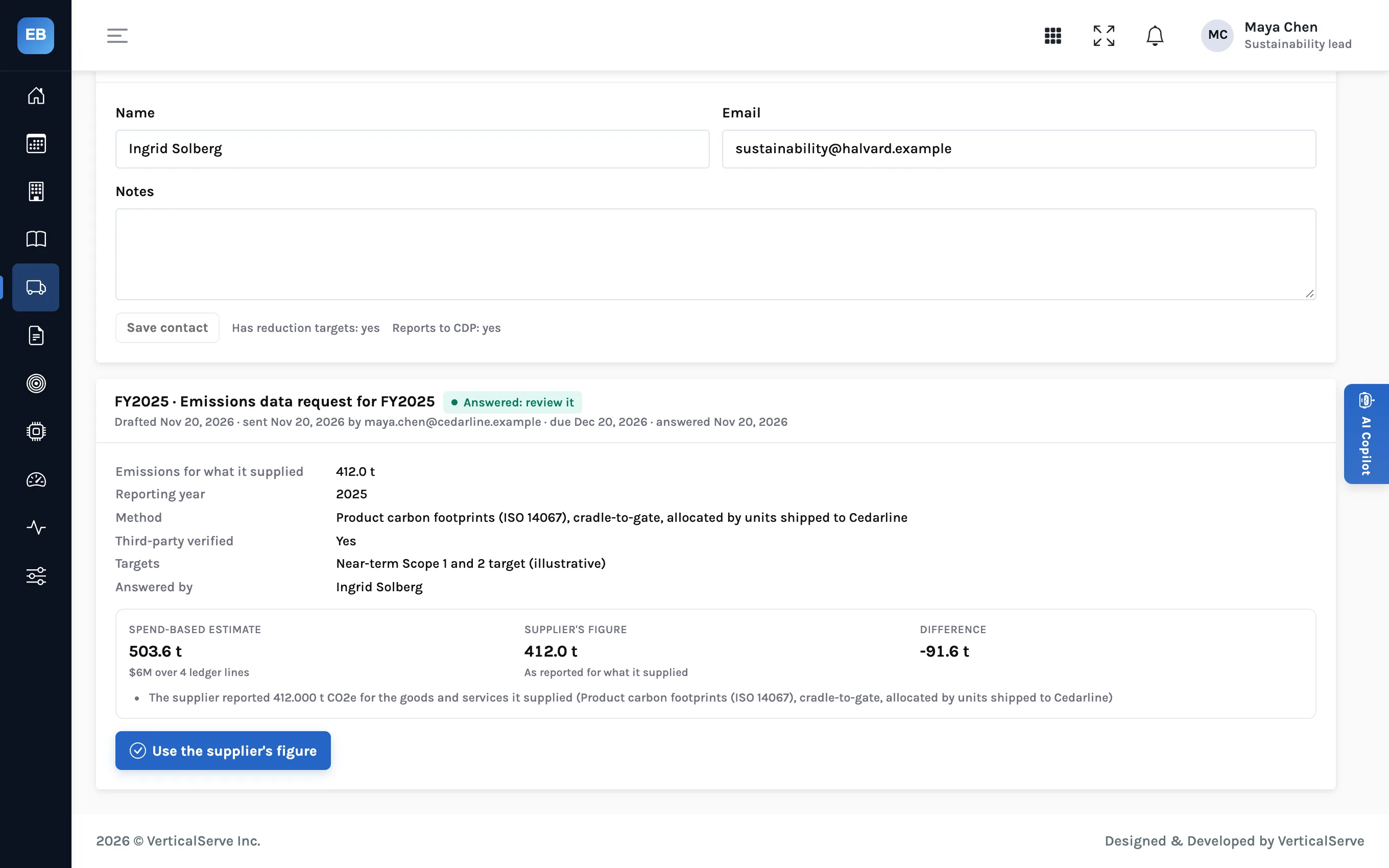
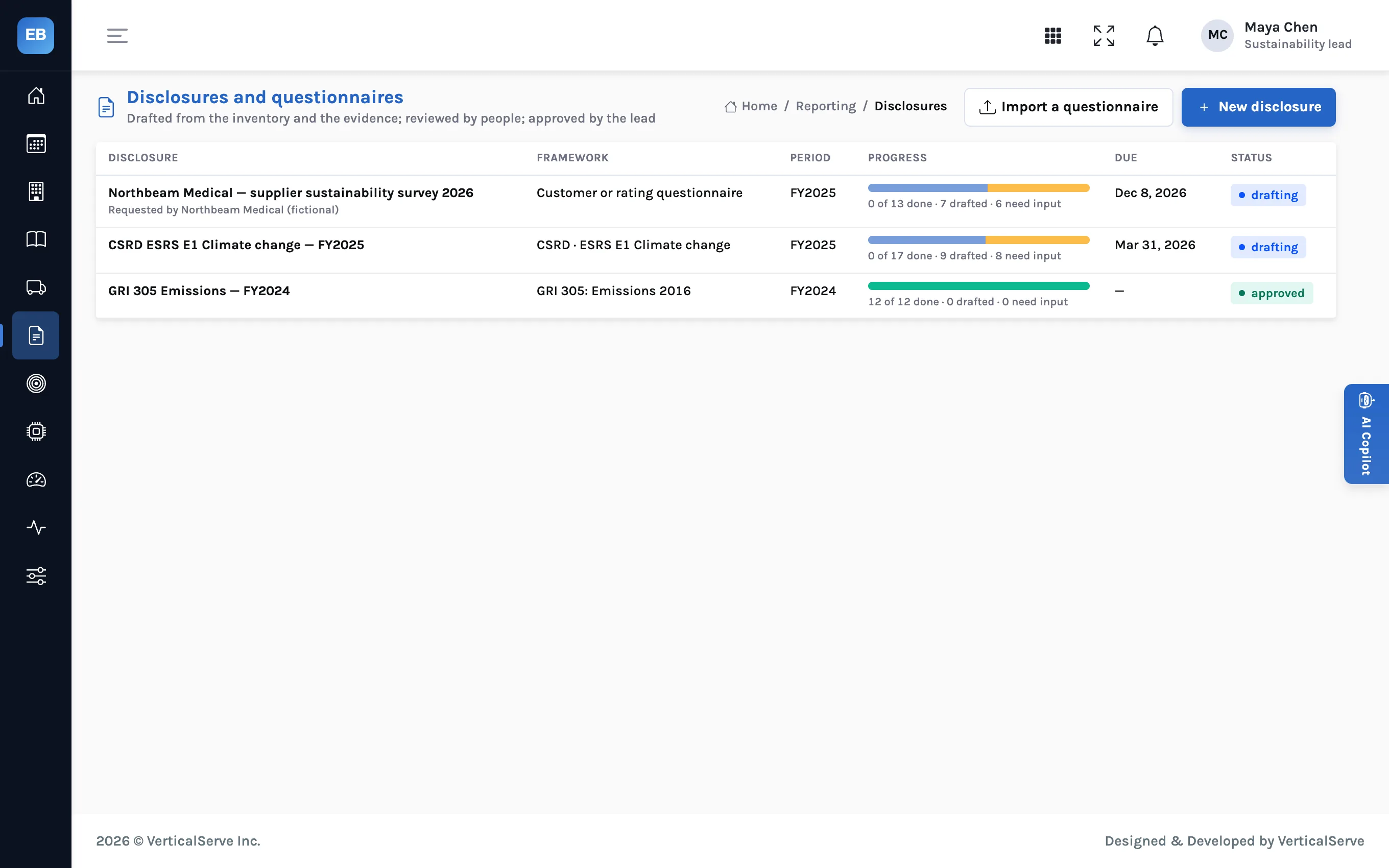
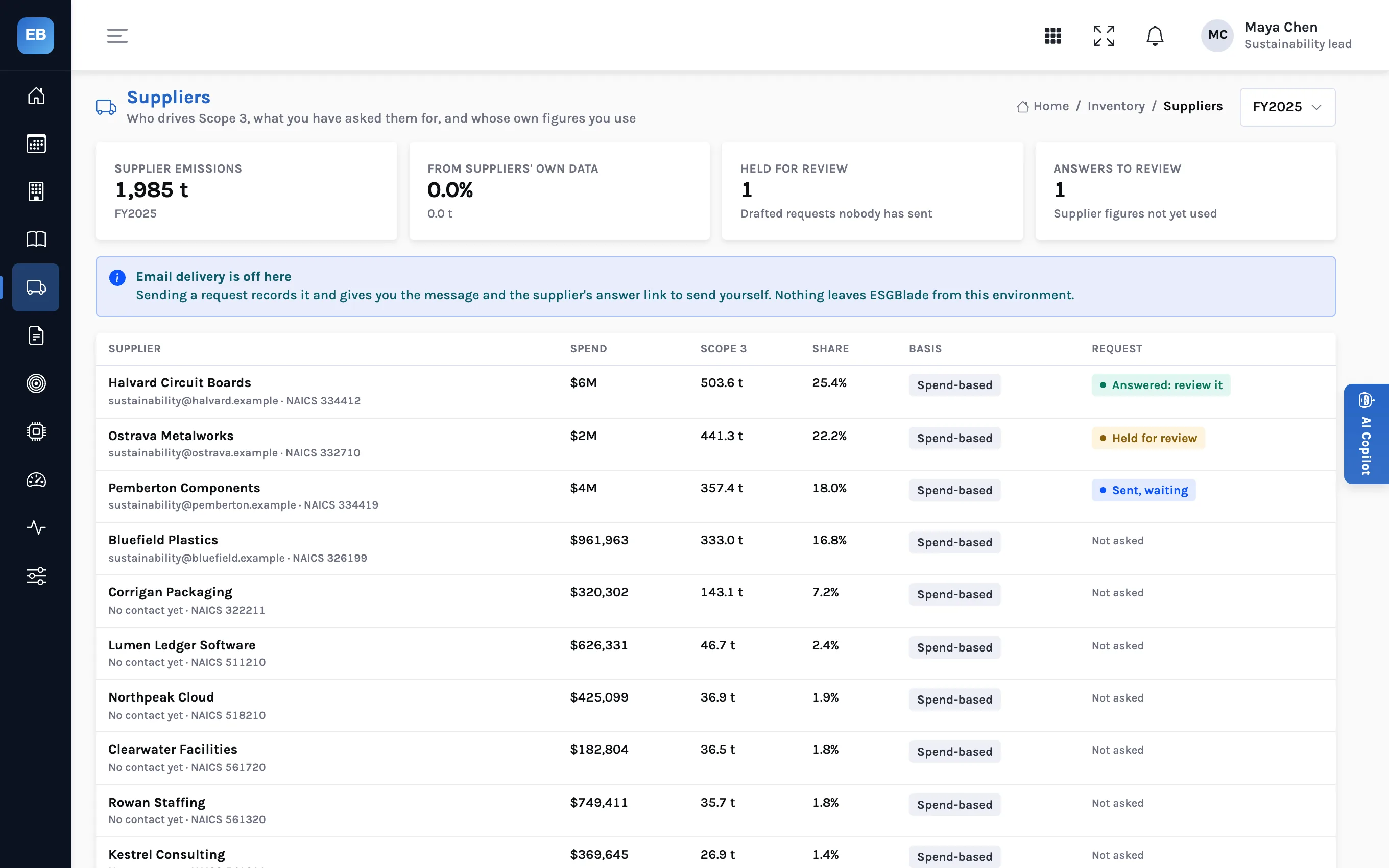
How to request emissions data from your largest suppliers, what the supplier sees on its no-login answer page, and how a person decides whether the supplier's figure replaces the spend-based estimate.
Why ESGBlade writes "Needs input"
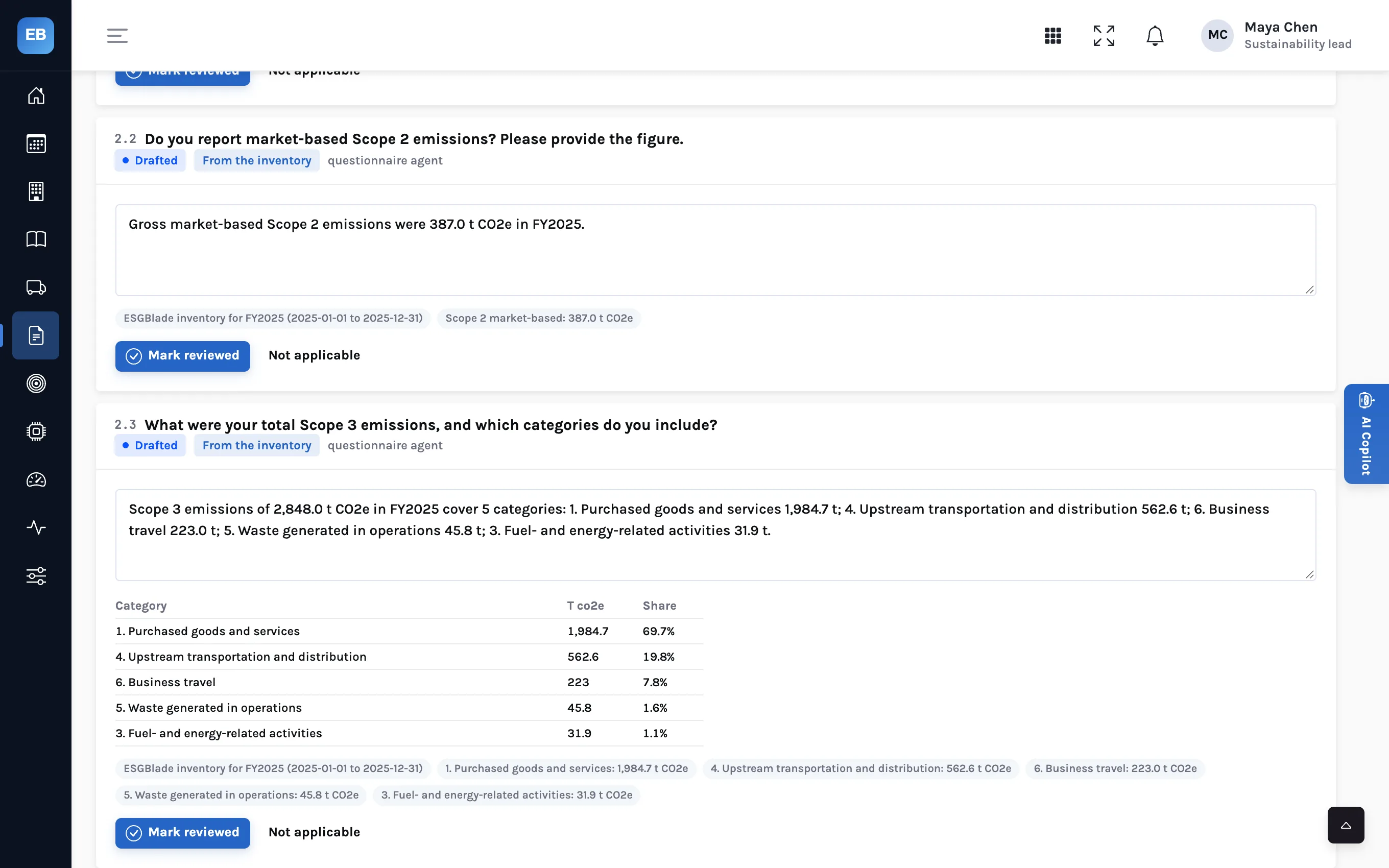
The drafting agents never invent a target, policy, commitment, credit or figure. How each item is drafted three ways, how grounding throws away numbers that aren't in the facts, and why Mark reviewed is blocked while a gap remains.
Emissions accounting for food and beverage processors
Refrigerant top-ups by mass and GWP, natural gas for process heat, ingredients and packaging by spend, and waste by material and treatment: a processor's inventory, built for the retailers who ask.
The missing bill and the bill entered twice
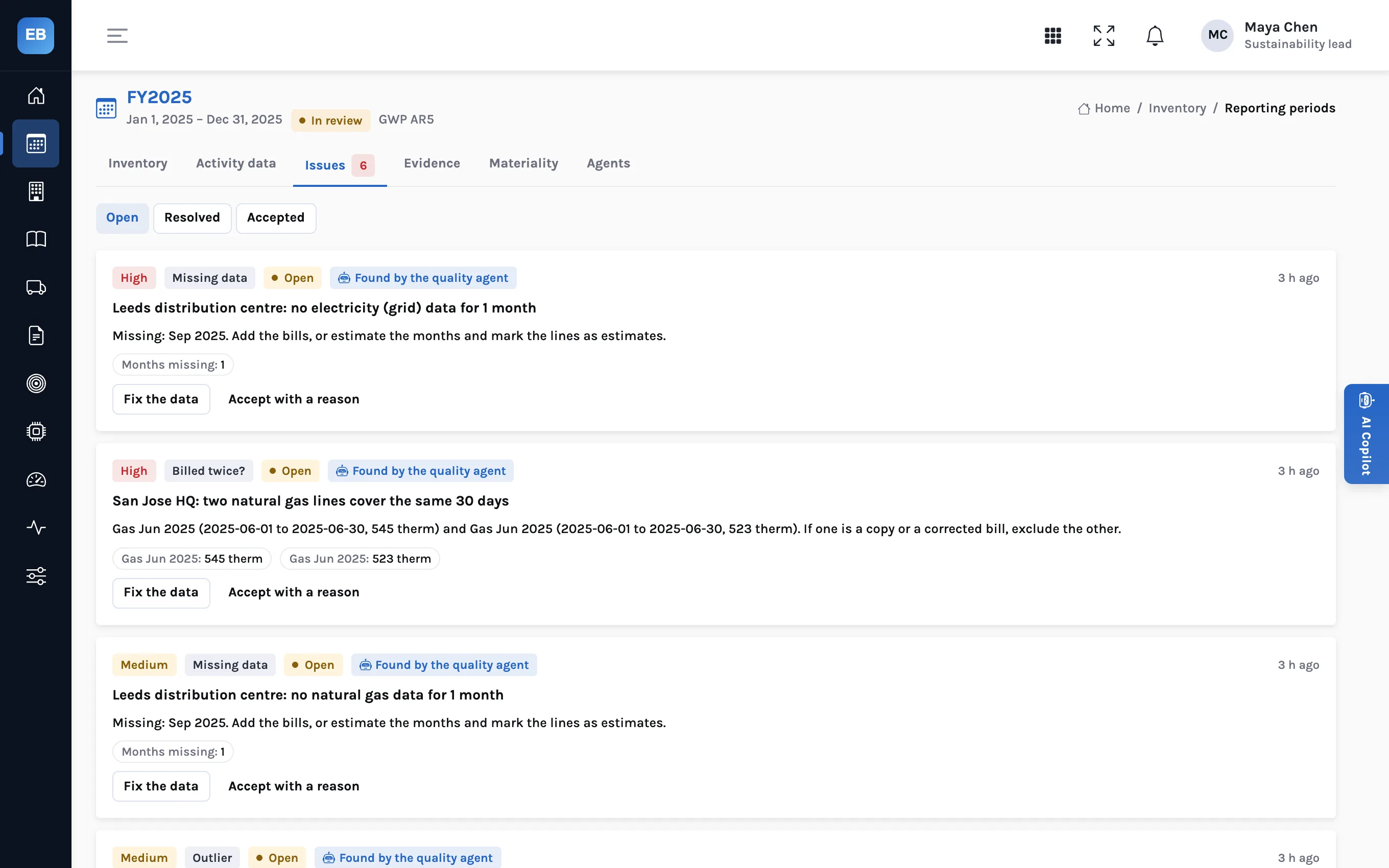
The data-quality checks that run on an inventory before it can be signed: gaps, duplicates, outliers, estimates, lines that can't be calculated and missing grid regions, worked through on the demo's six open issues.
Medical device suppliers: answering health systems' sustainability questions
Health systems are adding emissions questions to supplier procurement. How a device maker builds the inventory behind the answers, reports market-based Scope 2 and tracks a target.
Double materiality, scored topic by topic
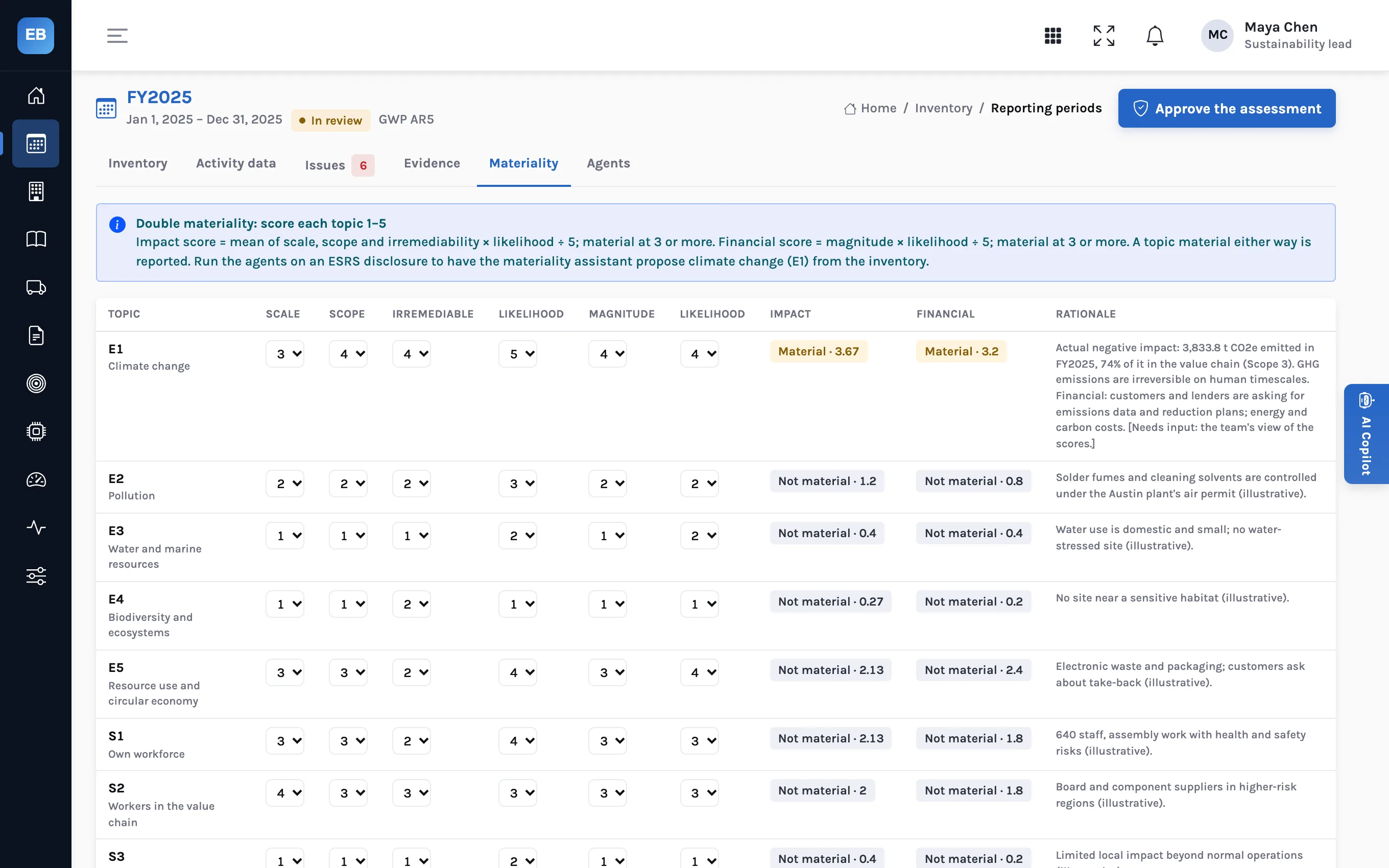
Impact and financial materiality explained, the ten ESRS topics, and the exact scoring ESGBlade uses: two formulas, a 3.0 threshold, an assistant's proposal for climate, and the team's scores approved by the lead.
Emissions accounting for construction and engineering contractors
Diesel in generators and plant, a mixed fleet, materials and capital goods by spend, and sites that open and close with each project: a contractor's company inventory, built for tenders that ask for carbon data.
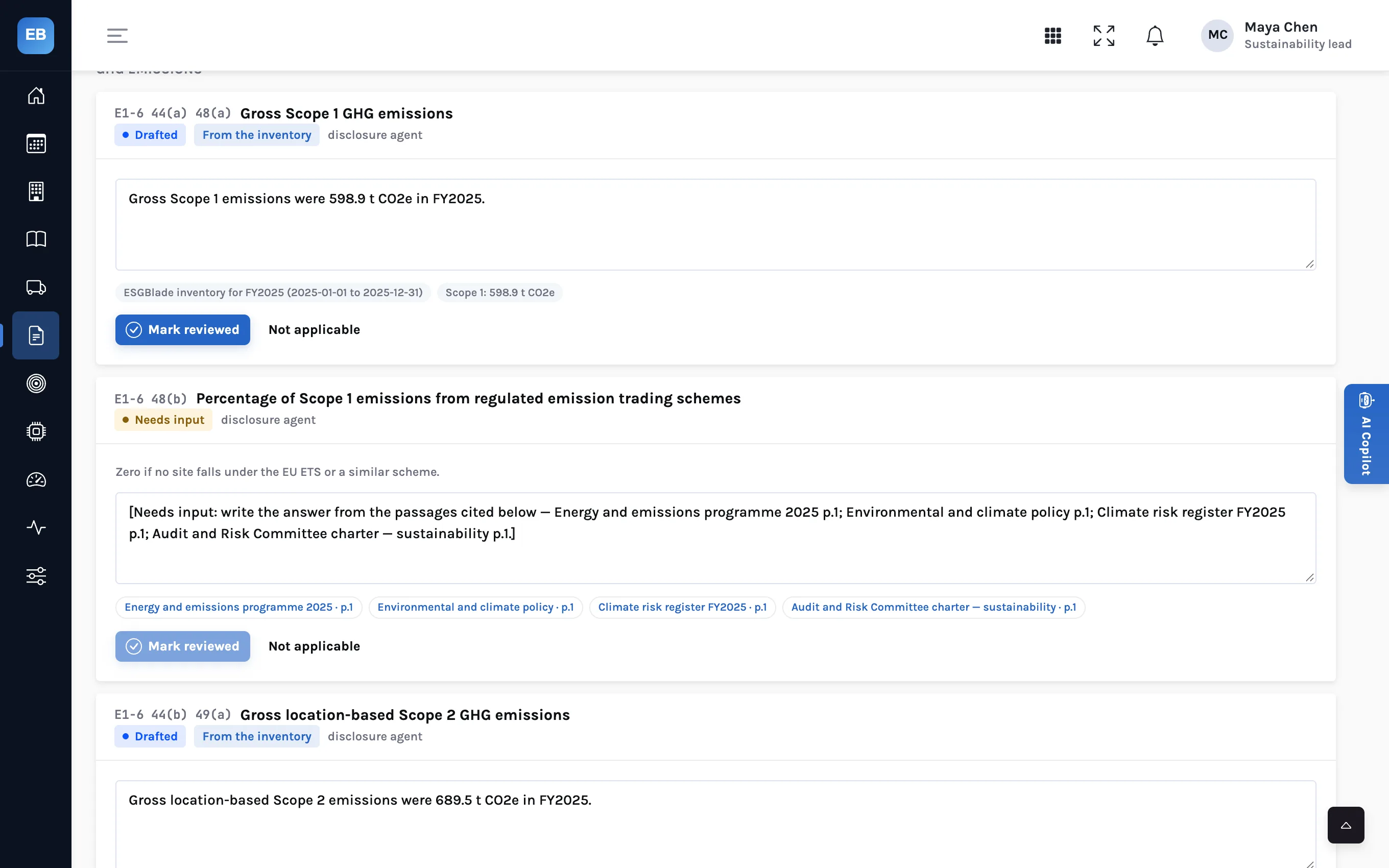
IFRS S2 from your emissions inventory
IFRS S2's four pillars, the GHG metrics an inventory can fill (Scope 1, Scope 2 and its instruments, Scope 3 by category, methodology, boundary), and the governance, strategy and scenario answers that stay with people.
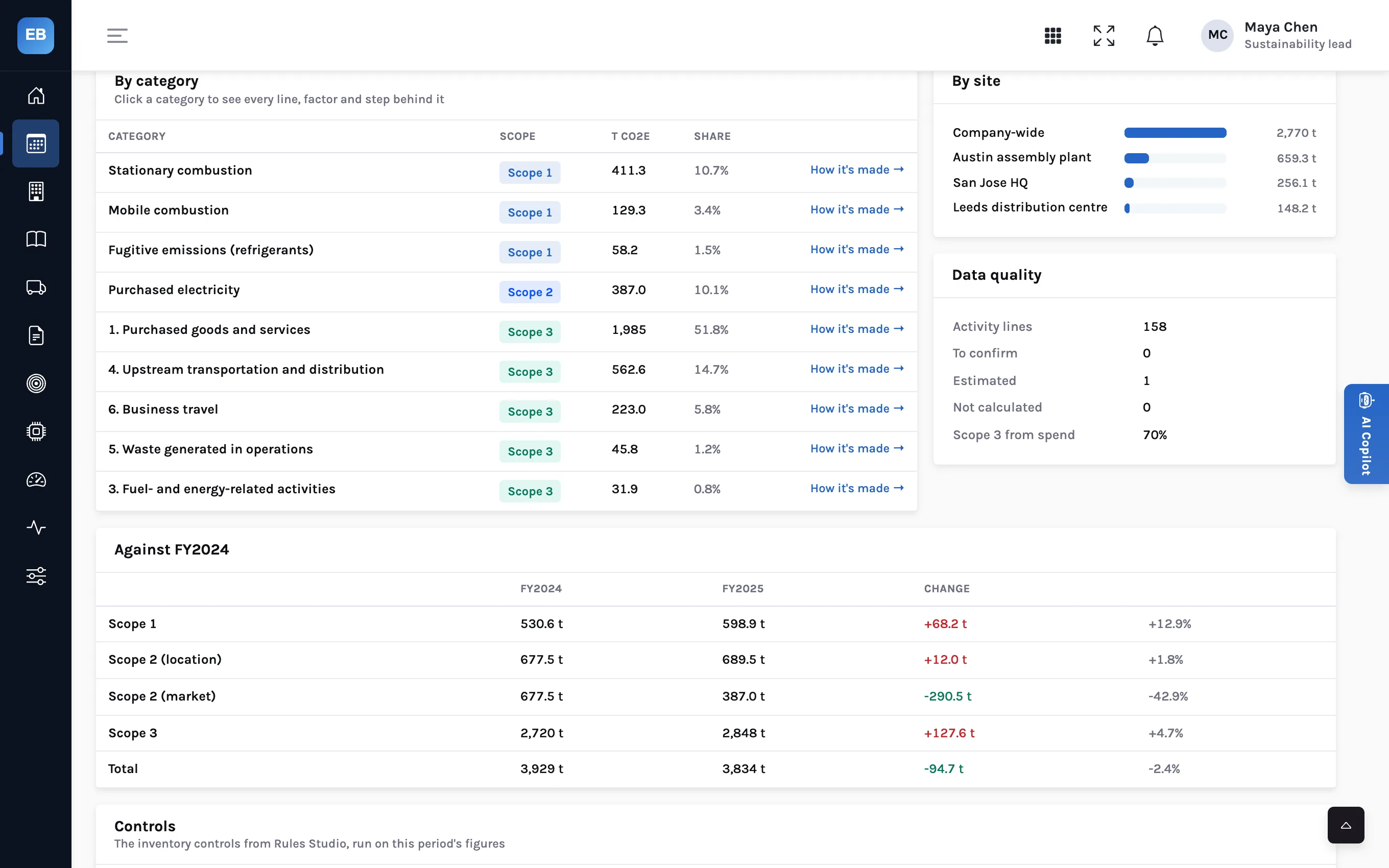
Location-based and market-based Scope 2
Why purchased electricity is reported twice, what goes into each figure, and how ESGBlade calculates both from the same bills, with the demo's 689.5 t location-based and 387.0 t market-based Scope 2.
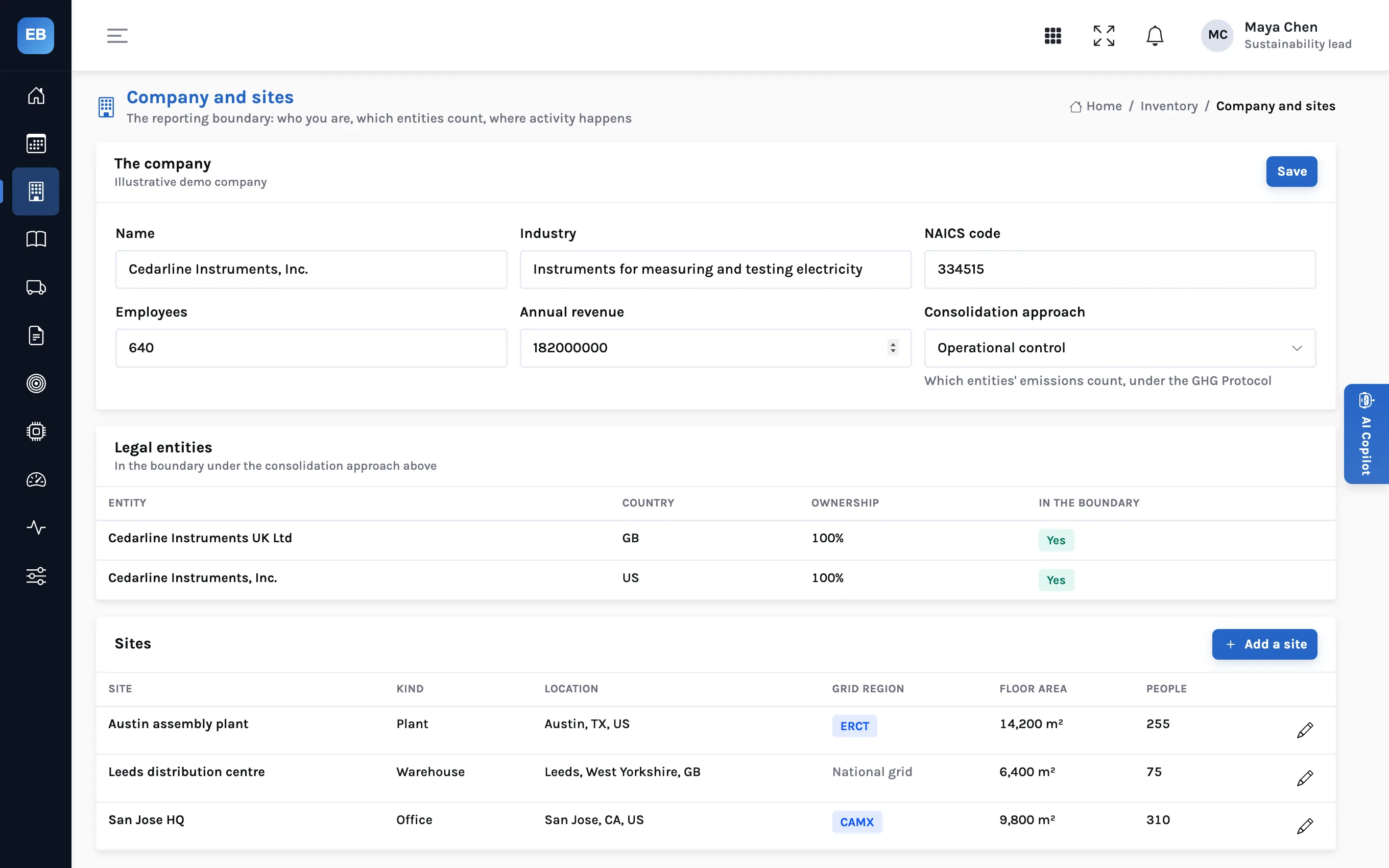
Emissions for multi-site retail and hospitality businesses
Dozens of stores or hotels, each with its own bills and grid, refrigerant leaks in the cold chain, and months that go missing. How to build one inventory from many sites.
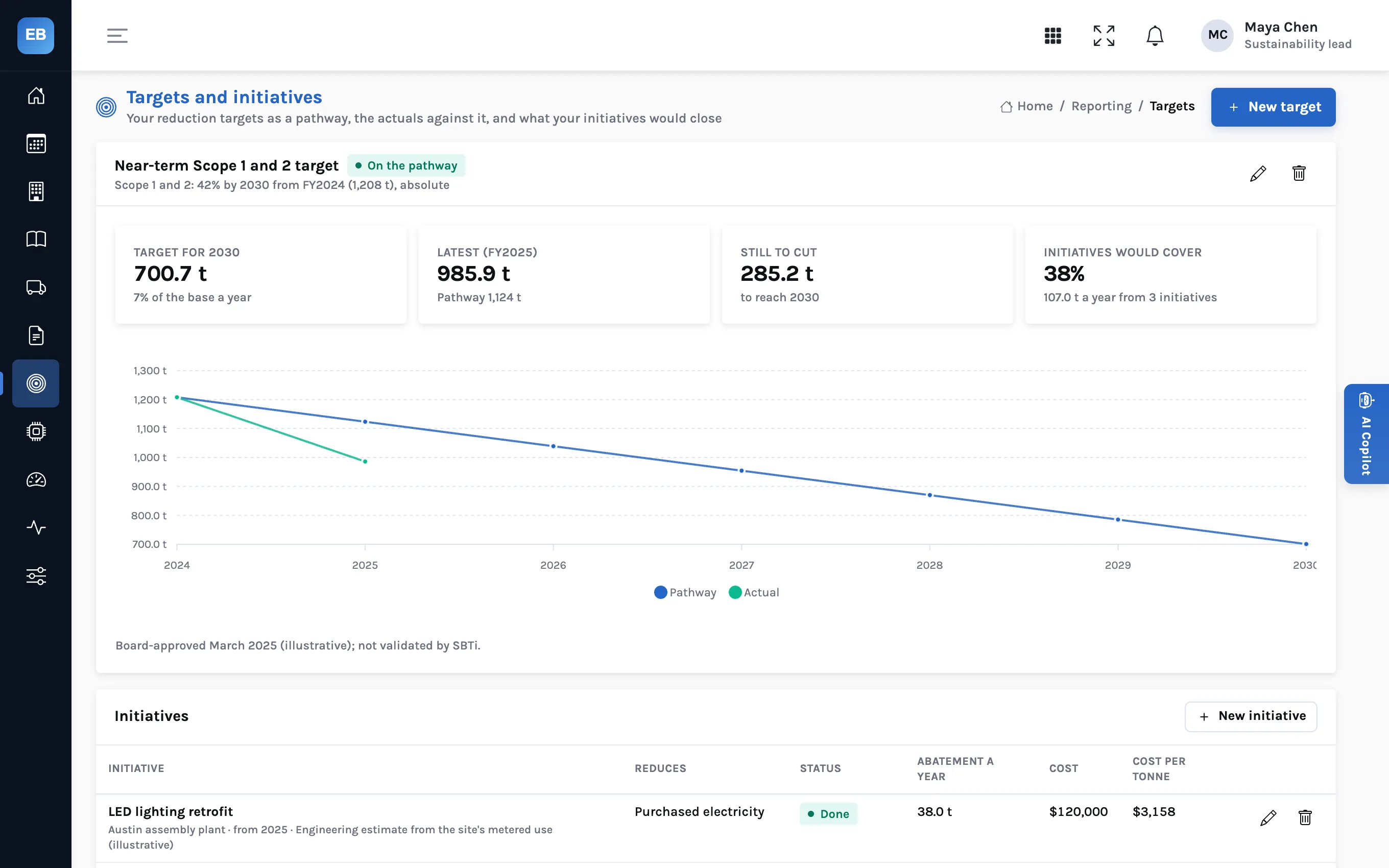
A reduction target you can track
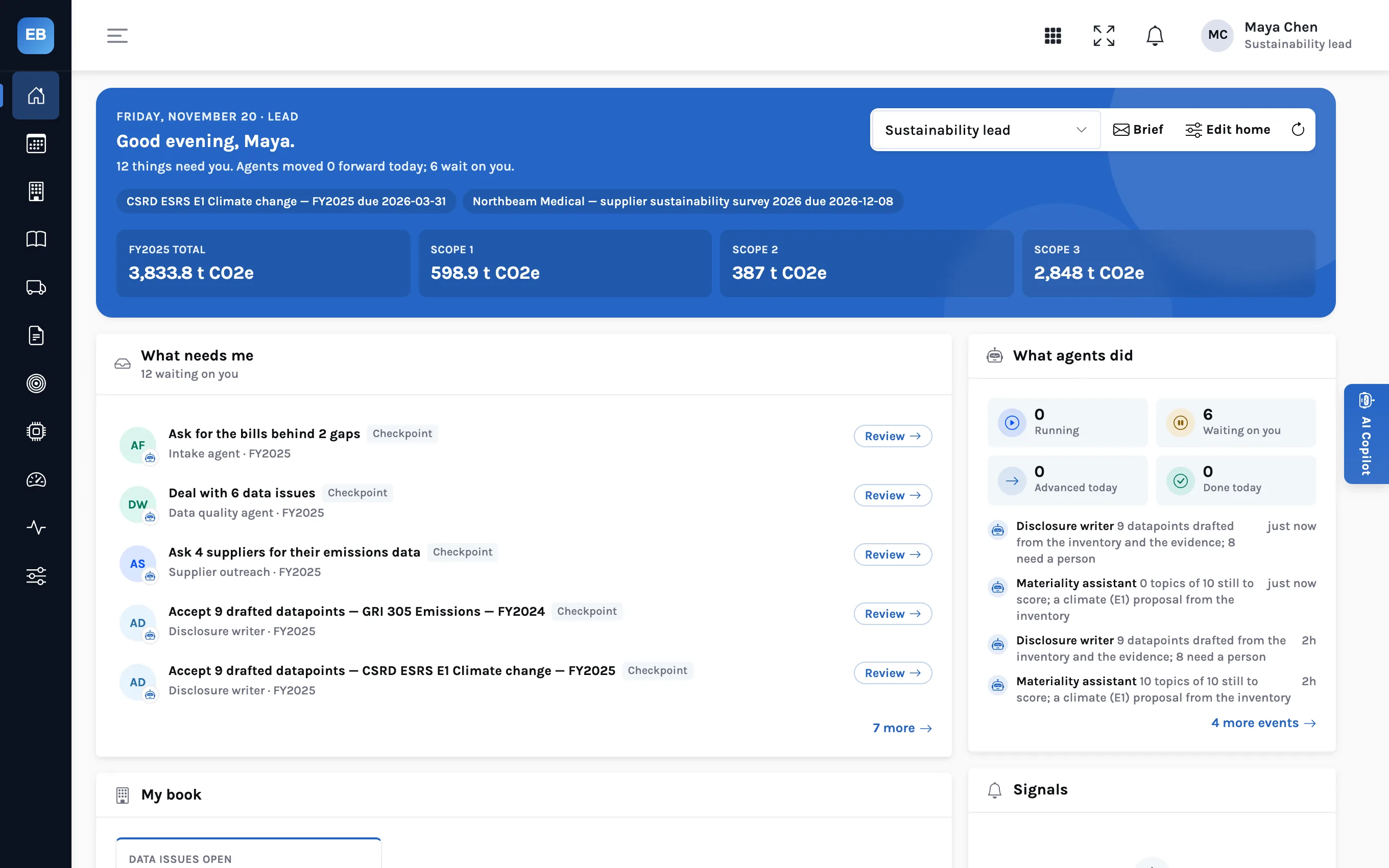
Setting an absolute emissions target from a signed base year, drawing a straight-line pathway, and checking each year's actual against it, with the initiatives that would close the gap and their cost per tonne.
The yearly emissions pack for a private equity portfolio company
When an owner or lender asks for emissions every year: reporting periods, a base year, sign-off on the decision record, GRI 305 or ISSB S2 exports, and an absolute target you can track.
Emissions accounting for plastics and packaging converters
Electricity and gas for moulding, extrusion and printing, resin bought by spend and then from resin makers' own figures, scrap and waste, and reduction initiatives priced per tonne.
California SB 253: what to prepare
Who California's Climate Corporate Data Accountability Act covers, the order it asks for Scope 1, 2 and 3 and for assurance, why companies below the threshold still get asked, and how ESGBlade prepares the seven items.
Spend-based Scope 3 and when to replace it
How a purchase ledger becomes Scope 3 with USEEIO factors by NAICS industry, why a first inventory is mostly spend-based, and how to decide which suppliers to ask for their own figures first.
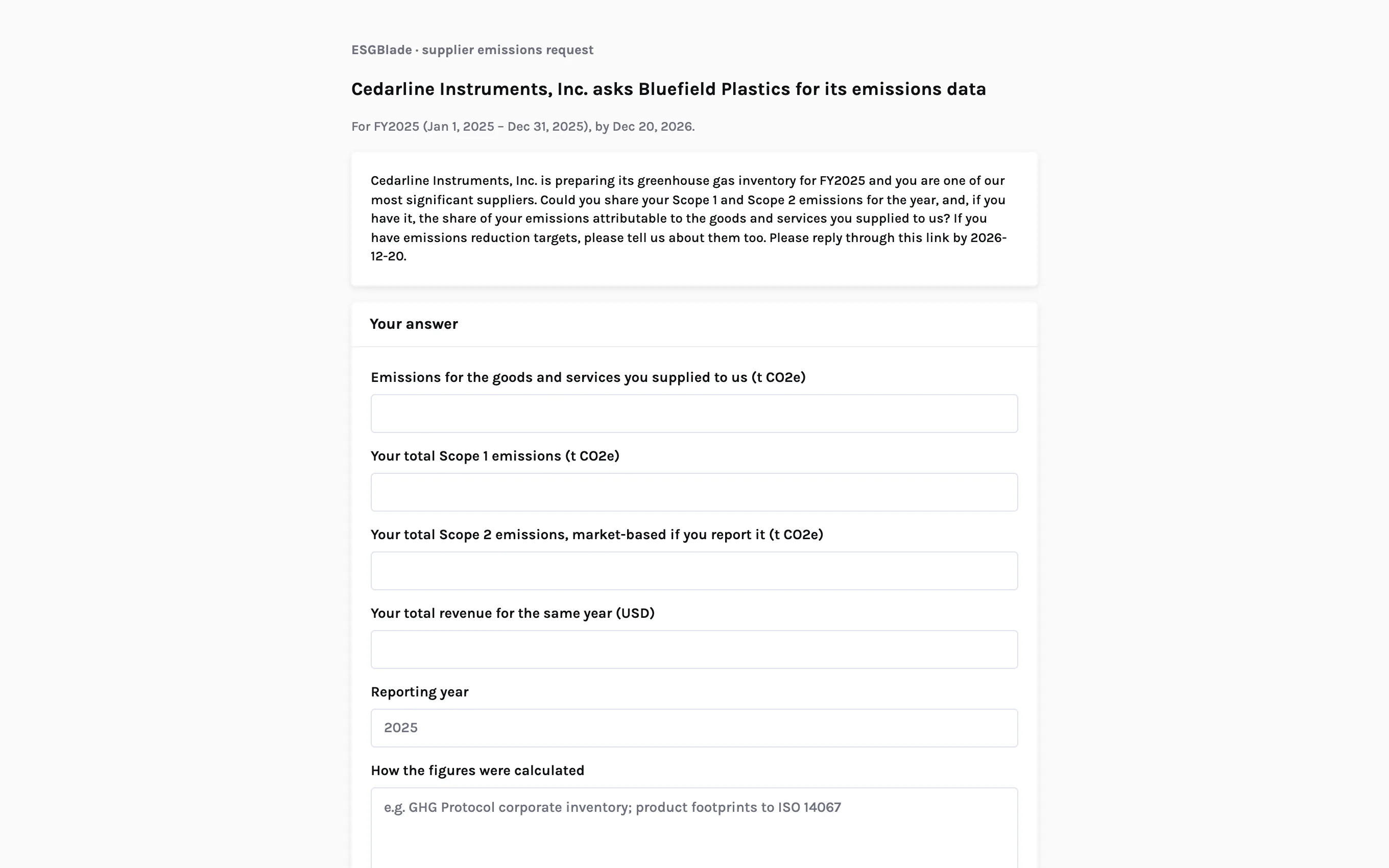
Automotive parts suppliers: answering OEMs and asking your own suppliers
Tier-2 and tier-3 suppliers are asked by vehicle makers and tier-1s for emissions and targets. How to build the inventory, report market-based Scope 2, and ask your own suppliers in turn.
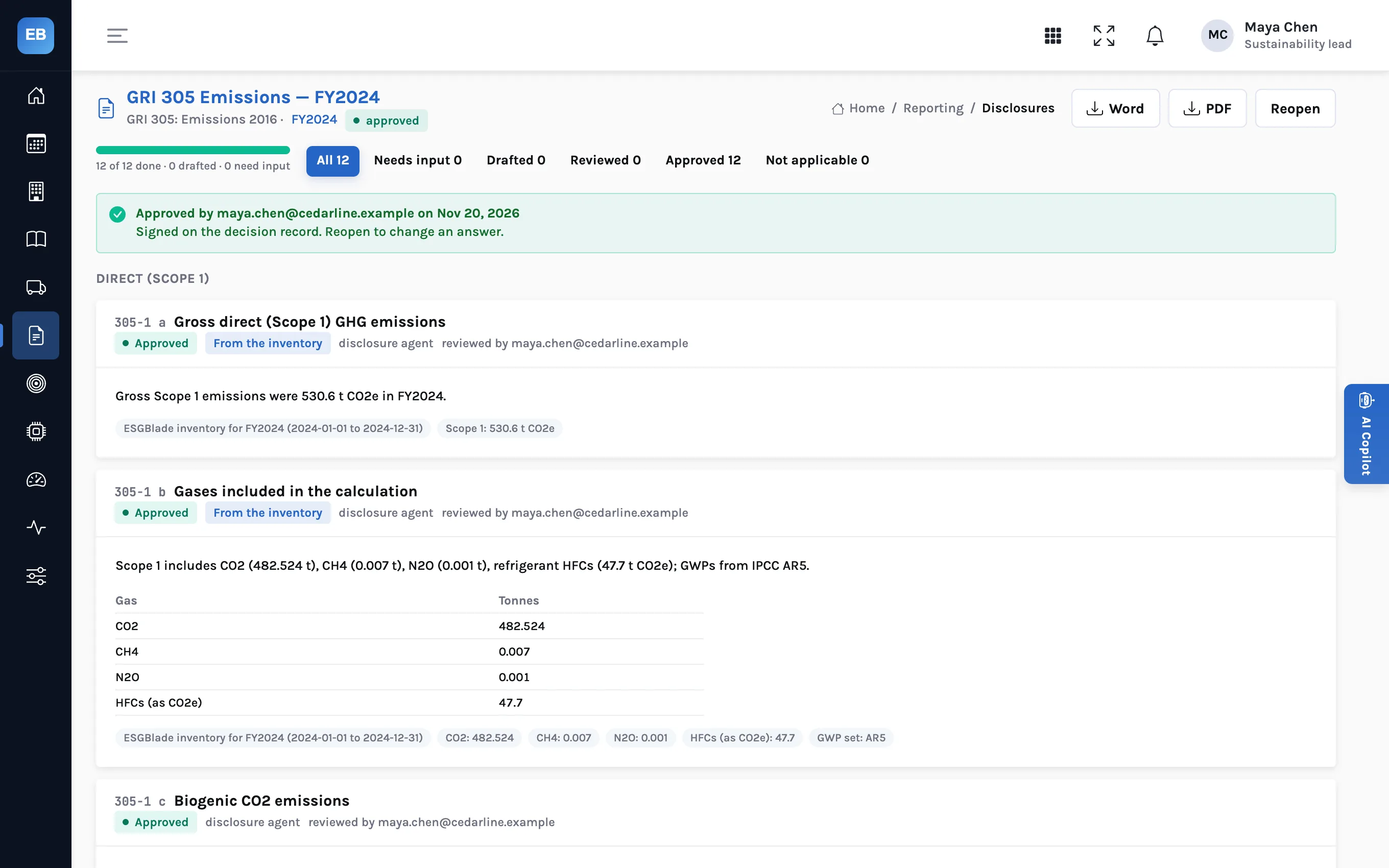
GRI 305 emissions disclosures, step by step
What GRI 305-1 to 305-5 ask: gross Scope 1 by gas, biogenic CO2, base year, consolidation approach, Scope 2 both ways, Scope 3, intensity and reductions. Then a full FY2024 example, drafted from the inventory and approved by the lead.
Run your next inventory in ESGBlade
ESGBlade is free: no paid plan and no card. Tell us about your company and we'll set up your workspace.