The same inventory, a different shape in every industry
A logistics company's emissions sit in its fleet, a software company's in what it buys, a food processor's in gas and refrigerants. Here is where they sit, who is asking, and what ESGBlade calculates. Each use case is worked through with a made-up company.
Electronics and instrument makers
Scope 1: Gas for heating and process, refrigerant top-ups
Scope 2: Plant and office electricity
Scope 3: Components and boards (by far the largest), freight, travel, waste
Who asks: Customers' supplier questionnaires; parents and lenders asking for Scope 1 and 2; customers in scope of CSRD asking for ESRS figures.
Logistics and distribution
Scope 1: Fleet diesel and gasoline, forklift propane, warehouse refrigerants
Scope 2: Warehouse electricity in many grid regions
Scope 3: Subcontracted freight by truck, rail, sea and air; capital goods
Who asks: Shippers asking for the emissions of their freight; tenders asking for a fleet transition plan.
Software and professional services
Scope 1: Little or none: perhaps office gas
Scope 2: Office electricity
Scope 3: Cloud hosting, software and services spend, business travel, hotel nights
Who asks: Enterprise customers' vendor sustainability questionnaires and RFP sections; investors.
Food and beverage processing
Scope 1: Natural gas for process heat and steam, refrigerant leaks from cold stores
Scope 2: Processing and cold-storage electricity
Scope 3: Ingredients and packaging spend, freight, waste by material and treatment
Who asks: Retailers and brands asking suppliers for emissions and reduction targets.
Medical device and healthcare suppliers
Scope 1: Plant gas, sterilisation and process fuels
Scope 2: Manufacturing and office electricity
Scope 3: Purchased components, freight, travel
Who asks: Health systems' supplier sustainability questionnaires asking for emissions, targets and plans.
Construction and engineering
Scope 1: Diesel for generators and plant, fleet fuel
Scope 2: Site and office electricity
Scope 3: Materials and capital goods spend, subcontractors, waste
Who asks: Public-sector and developer tenders asking for carbon data and reduction plans.
Multi-site retail and hospitality
Scope 1: Refrigerant leaks in the cold chain, heating gas
Scope 2: Electricity across dozens of sites and grid regions
Scope 3: Goods for resale, freight, waste, hotel nights
Who asks: Landlords, lenders and corporate customers; owners asking for a yearly emissions pack.
Private equity portfolio companies
Scope 1: Whatever the business burns
Scope 2: Whatever it buys in electricity
Scope 3: Whatever it buys
Who asks: The fund's yearly ESG data request; lenders' sustainability-linked terms; buyers' due diligence.
Plastics and packaging converters
Scope 1: Gas for drying and curing
Scope 2: Electricity for extrusion, moulding and printing
Scope 3: Resin, film, board and ink purchases; scrap and waste
Who asks: Brand owners asking for emissions, recycled content and targets.
Automotive parts suppliers
Scope 1: Process gas, furnace fuels, refrigerants
Scope 2: Plant electricity, often the largest Scope 2 line
Scope 3: Steel, aluminium and components, freight
Who asks: OEMs and tier-1 suppliers asking for emissions data, targets and renewable electricity.
Offices and service businesses
Scope 1: Heating gas, standby generators, office refrigerants
Scope 2: Office electricity, location- and market-based
Scope 3: Purchased services, IT, travel, commuting
Who asks: Corporate clients' supplier questionnaires; banks and insurers asking for Scope 1 and 2.
Chemicals and process industries
Scope 1: Fuels and refrigerants burned and leaked at the plants
Scope 2: Electricity and purchased steam
Scope 3: Raw materials, freight, waste
Who asks: Customers' questionnaires and regulators. ESGBlade covers the energy side; process emissions need another tool.
Start with the bills and the ledger
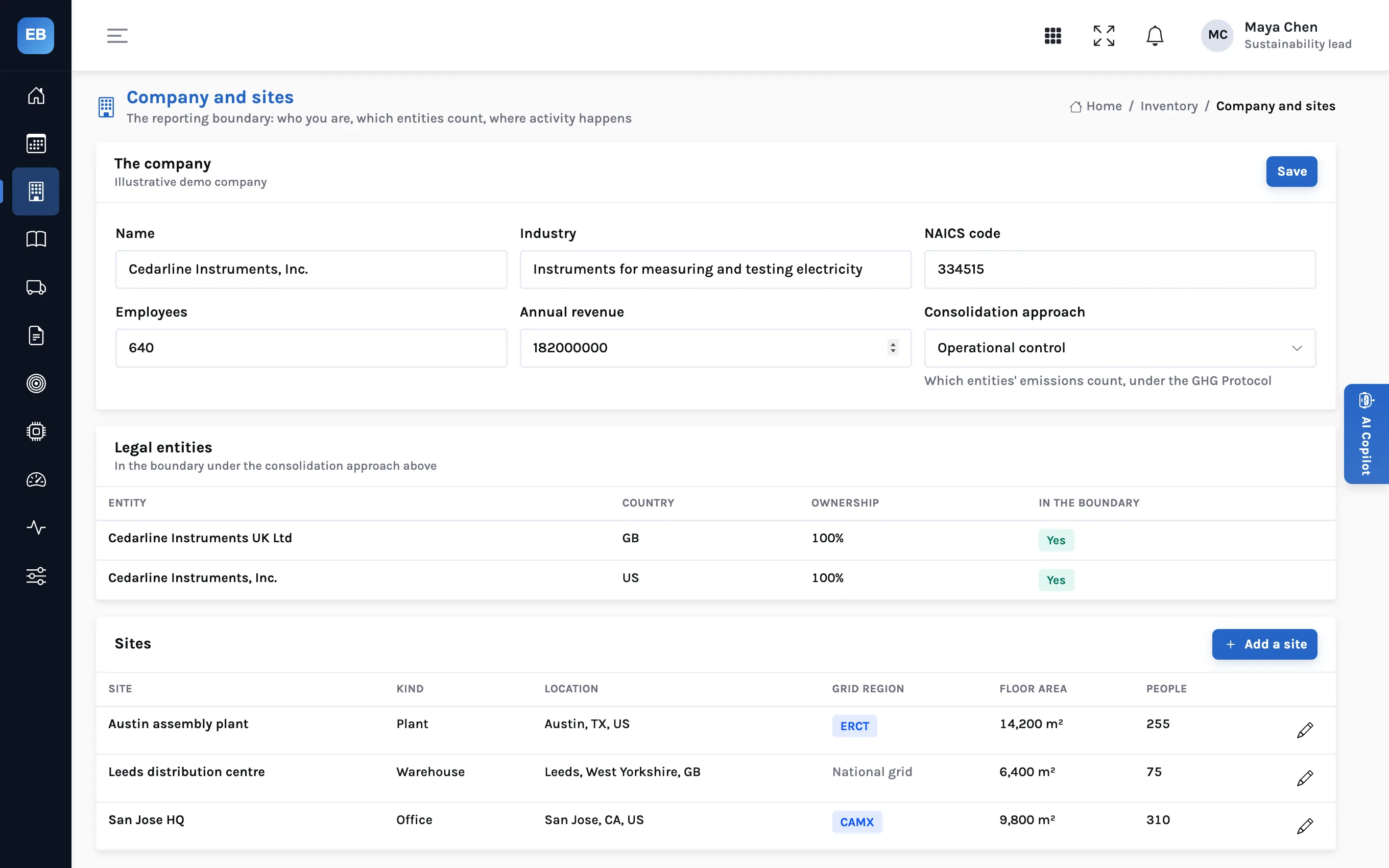
Every industry starts the same way: the sites, the energy bills and the purchase ledger. That gives Scope 1 and 2 from measured data and a first, spend-based Scope 3 that shows which suppliers to ask. The agents find what's missing; the frameworks and questionnaires draw on the same figures.
- Activity types from natural gas to hotel nights
- Grid factors by US eGRID subregion or national grid
- Spend-based Scope 3 by industry code, replaced by suppliers' figures over time
What the inventory covers
Scope 1 from fuels and refrigerants, Scope 2 both ways, and Scope 3 categories 1 to 6, each traced to its source and factor. Agents prepare the work in every industry; your people decide.
Run your next inventory in ESGBlade
ESGBlade is free: no paid plan and no card. Tell us about your company and we'll set up your workspace.