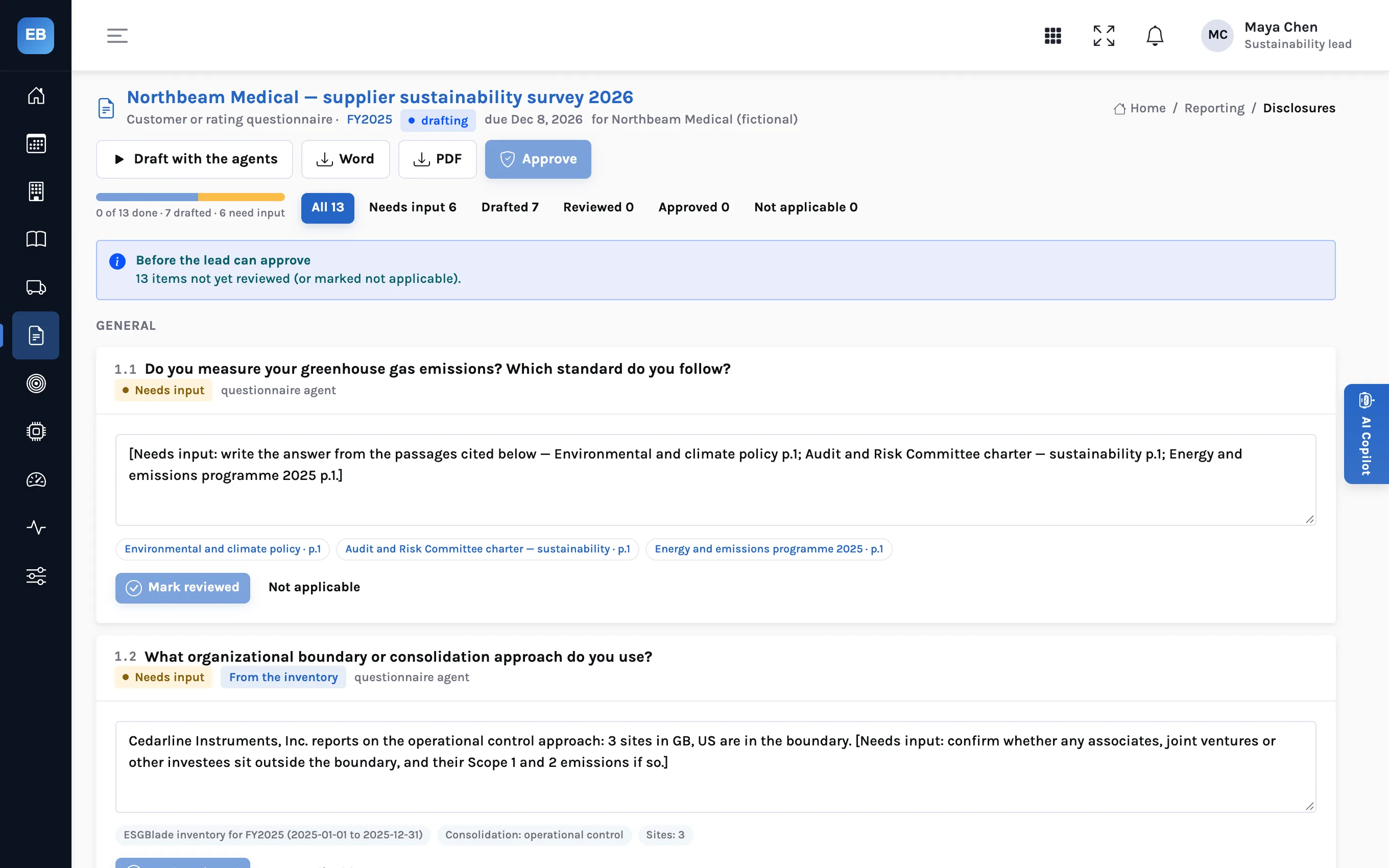
California's Climate Corporate Data Accountability Act, Senate Bill 253, requires large companies doing business in California to disclose their greenhouse gas emissions every year. Most mid-sized companies are well below its threshold. Many of them are still being asked for its numbers, by customers who are not.
This post covers what the law asks, what is still being settled, and what to prepare whether or not you are covered. The example is Cedarline Instruments, the fictional instruments maker in ESGBlade's demo.
The rules are still being written
The California Air Resources Board (CARB) is responsible for the regulations that put SB 253 into practice, and its rule-making, timing and the law itself have been subject to change and challenge. This post doesn't give deadlines. Check CARB's current guidance, and take legal advice on whether and when you are covered. ESGBlade helps prepare the figures and text; it isn't legal advice, assurance or a filing.
Who it covers
SB 253 applies to a "reporting entity": a partnership, corporation, limited liability company or other business entity formed under US law with total annual revenue above $1 billion that does business in California. Both conditions apply. How revenue is measured and what counts as doing business in California are among the points CARB's rules address, so read the current definitions rather than relying on a summary.
What it asks, in order
- Scope 1 and Scope 2 first, measured and reported under the GHG Protocol standards. In practice that means both location-based and market-based Scope 2.
- Scope 3 from a later year. The law anticipates that Scope 3 estimates will lean on secondary data and industry averages, especially early on.
- Independent third-party assurance, starting at limited assurance and moving to reasonable assurance for Scope 1 and 2.
- Reports go to a reporting organisation that CARB designates, with an annual fee.
A companion law, SB 261, deals with reports on climate-related financial risk and has its own threshold and rules. ESGBlade doesn't draft SB 261 reports.
Why a $182 million company is being asked
Cedarline Instruments has revenue of $182 million and its headquarters are in San Jose. It does business in California, but it is nowhere near the revenue threshold, so it is not a reporting entity.
Its larger customers may be. A covered company reporting Scope 3 has to estimate the emissions of what it buys, and a share of Cedarline's emissions sits in that customer's purchased goods and services. The customer can use a spend-based estimate, or ask Cedarline for its own figures. That is the practical reason a mid-sized supplier ends up preparing SB 253-shaped numbers: Scope 1 and 2 under the GHG Protocol, both Scope 2 methods, a clear boundary and a stated methodology.
It works the other way too. Cedarline's own Scope 3 depends on its suppliers, which is why it asks them for data. See asking suppliers for their own numbers.
The seven items ESGBlade prepares
| Item | What it asks | Source in ESGBlade |
|---|---|---|
| Applicability | Revenue above $1 billion and doing business in California? | From the company profile; a person confirms |
| Scope 1 | Under the GHG Protocol | From the inventory |
| Scope 2 | Location-based and market-based | From the inventory |
| Scope 3 | From the year after Scope 1 and 2 begin | From the inventory |
| Boundary | Organizational boundary and consolidation approach | From the inventory set-up |
| Methodology | Factors, GWPs and calculation methods | From the inventory set-up |
| Assurance | Provider and level | Needs a person; never invented |
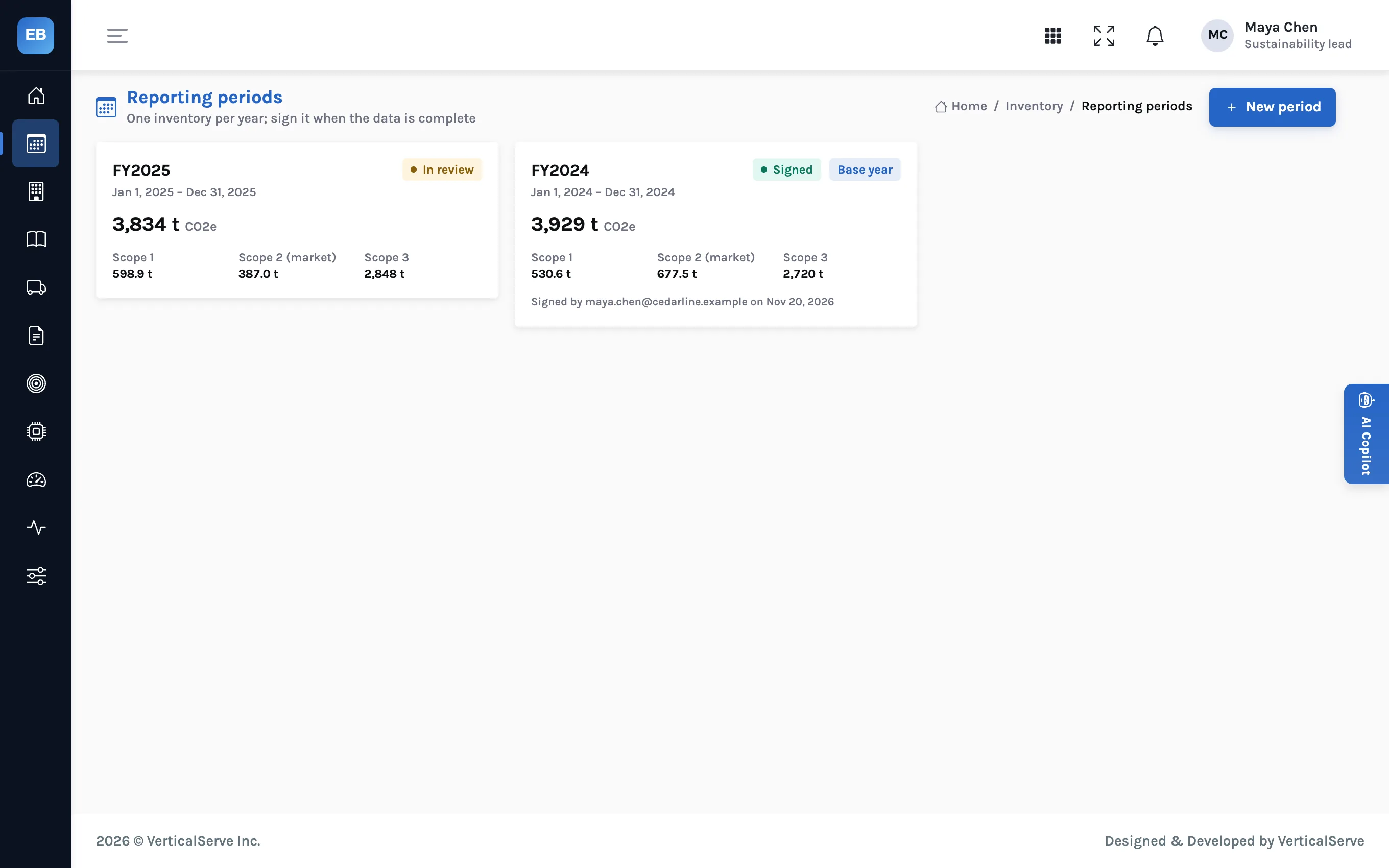
For Cedarline's FY2025, that means Scope 1 of 598.9 t CO2e, Scope 2 of 689.5 t location-based and 387.0 t market-based, and Scope 3 of 2,848.0 t. The applicability item reads the profile: $182 million in revenue, below the threshold. Answer it carefully; it's a legal question, and the profile is only as current as the last person who edited it.
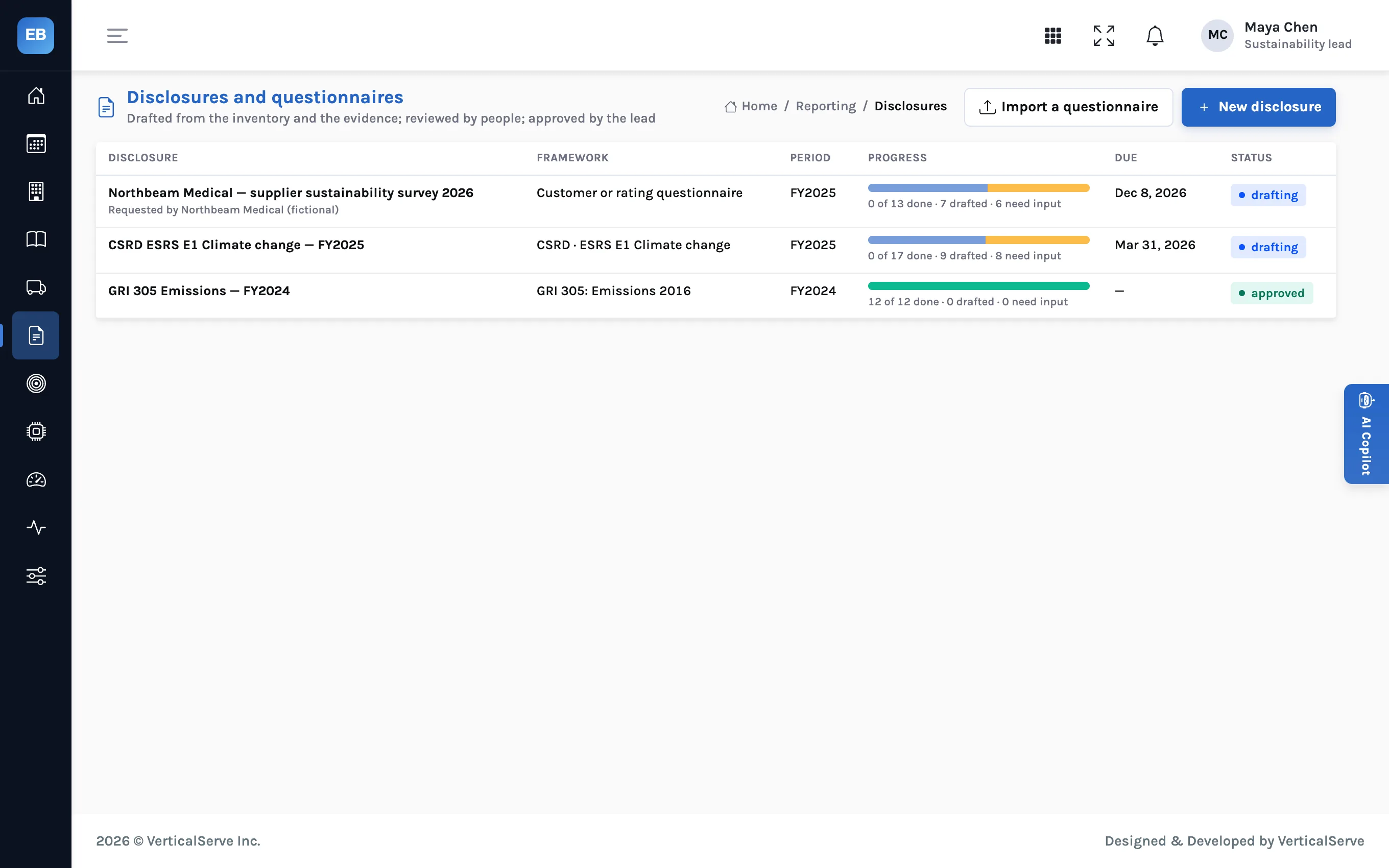
The assurance item is never drafted. ESGBlade doesn't provide assurance and won't name a provider or a level you haven't engaged.
Getting the numbers ready for an assurer
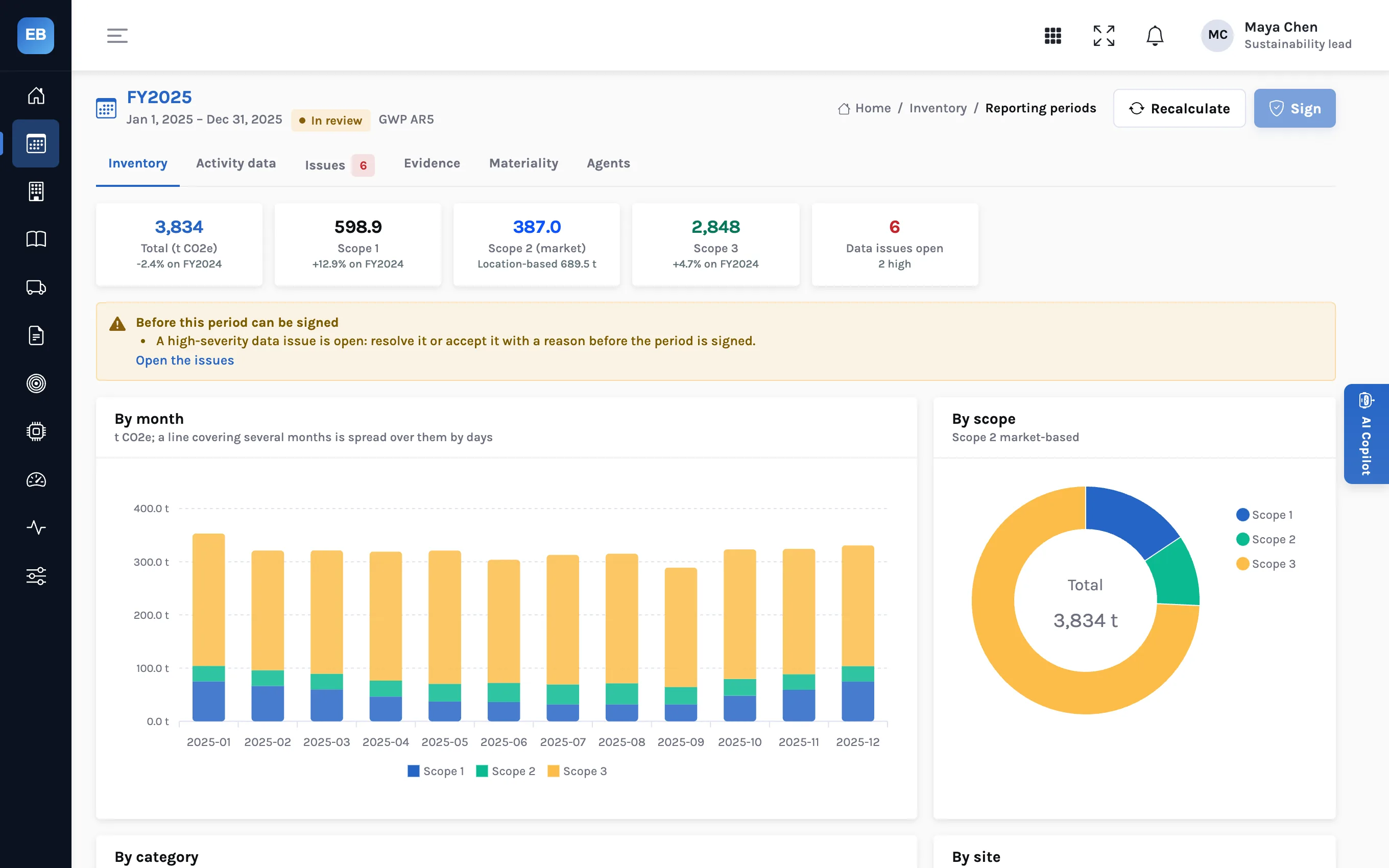
If you are covered, or a customer asks for assured figures, the inventory has to stand up to someone checking it. In ESGBlade each figure keeps its calculation trace: the activity line, the bill page it came from, the factor and its edition. Data issues (missing months, bills entered twice, large swings on last year) are either resolved or accepted with a reason, and the lead signs the period on the decision record. None of that is assurance; it's the record an assurer would ask to see.
Step by step
- Confirm your revenue and California presence with your adviser, and check CARB's current rules and dates.
- Build the inventory for the period: Scope 1 and both Scope 2 methods first, then Scope 3.
- Resolve the data issues and have the lead sign the period.
- Create the SB 253 disclosure and press Draft with the agents.
- Review each item. Confirm applicability yourself, and write the assurance item from your engagement letter, or mark it not applicable.
- The lead approves. Export to Word or PDF for your filing team or your customer.
Where people stay in charge
- The company files. ESGBlade prepares the figures and the record; your company files with CARB's reporting organisation.
- Your assurance provider gives assurance. A person writes the assurance item from the engagement letter; ESGBlade never names a provider or a level.
- A person confirms applicability. The applicability item reads your profile, and your team, with legal advice, decides whether you are covered.
- The lead signs and approves. The lead signs the period and approves the disclosure on the decision record.
Related: Scope 1, 2 and 3 from the bills you already have, and the full list of frameworks.
You may never file under SB 253, but your customers might, and they'll want your numbers measured the same way.
Try it on your own data
ESGBlade is free. Tell us about your company and we'll set up a workspace for your first reporting period.
Request a demo