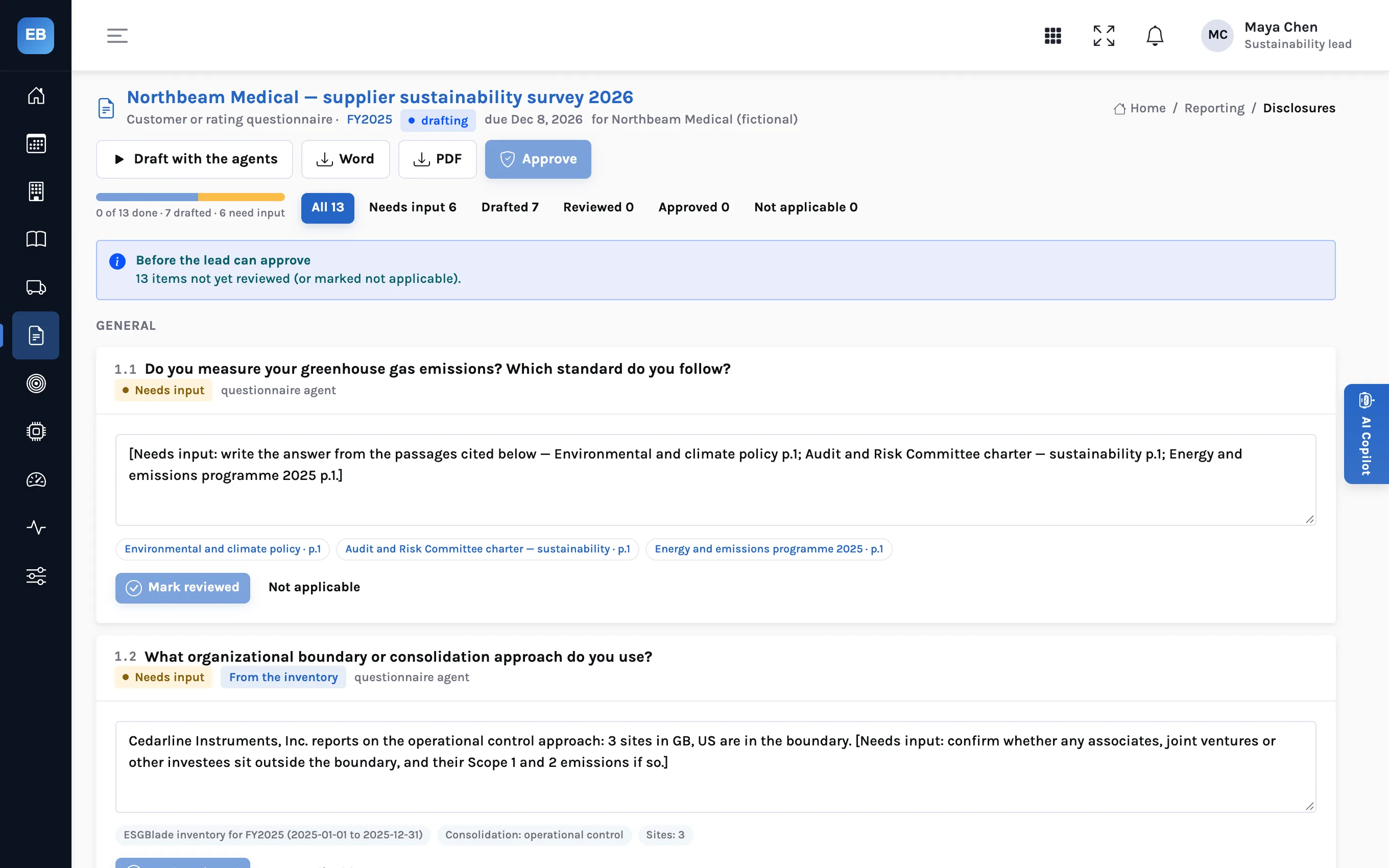
Hospitals and health systems have started asking the companies that supply them about emissions. A device maker that has never measured its footprint may find a section of questions in a tender, a supplier survey from a large customer, or a request to state a reduction target. The questions are usually reasonable and specific, and they assume you already have an inventory.
This post covers what a medical device supplier's emissions look like, what health system buyers tend to ask, and how to answer from a signed inventory in ESGBlade.
Who is asking, and how
In several countries, public and private health systems have made commitments on their own emissions, and because much of a health system's footprint sits in what it buys, procurement teams are asking suppliers for data. The form varies: a supplier sustainability questionnaire sent as a spreadsheet, a scored section of a tender, or a requirement to publish a carbon reduction plan. Specific programmes, thresholds and dates differ by country and buyer and have been changing, so read the request in front of you rather than a summary of it.
The common questions are:
- Do you measure your greenhouse gas emissions, and to which standard?
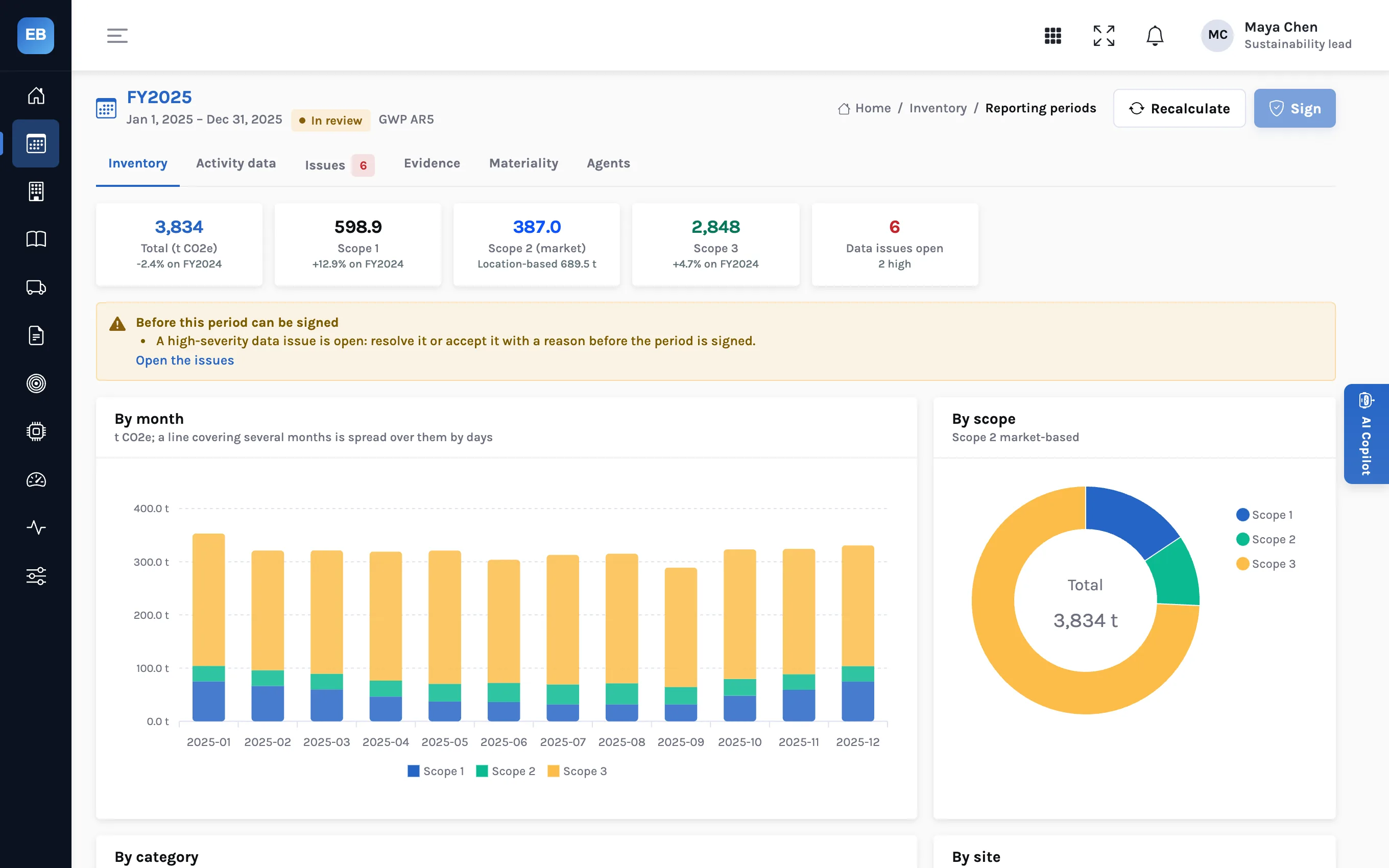
- What were your Scope 1 and Scope 2 emissions last year, and on which Scope 2 basis?
- Do you report Scope 3, and by which categories?
- Do you have a reduction target, and is it externally validated?
- What renewable electricity do you buy?
Where a device maker's emissions are
Market-based Scope 2
Buyers often ask which basis your Scope 2 figure uses. ESGBlade calculates both. Location-based uses the eGRID subregion for US sites or the national grid factor elsewhere. Market-based uses the instruments you enter: RECs, PPAs, green tariffs or supplier-specific instruments, each with MWh and a certificate reference. The headline uses market-based when any instrument exists and says so.
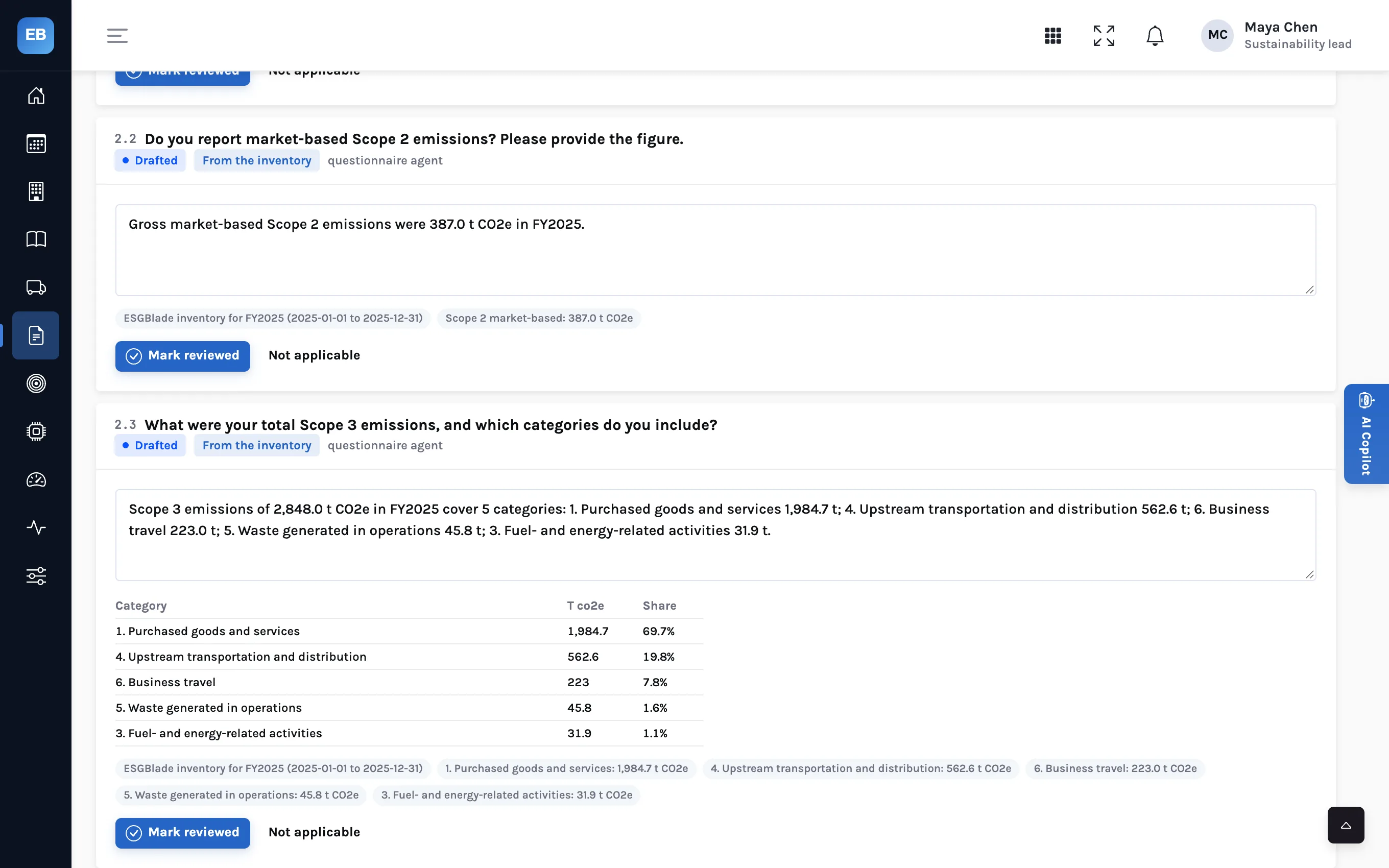
More on the two bases in location-based and market-based Scope 2.
How ESGBlade handles it, step by step
- Build the inventory. Sites with eGRID subregions, bills read into lines cited to the page, the ledger and travel imported. Enter REC purchases as market-based instruments.
- Run the agents and clear the issues. The data quality agent finds gaps and duplicates; the supervisor won't prepare sign-off while a high-severity issue is open.
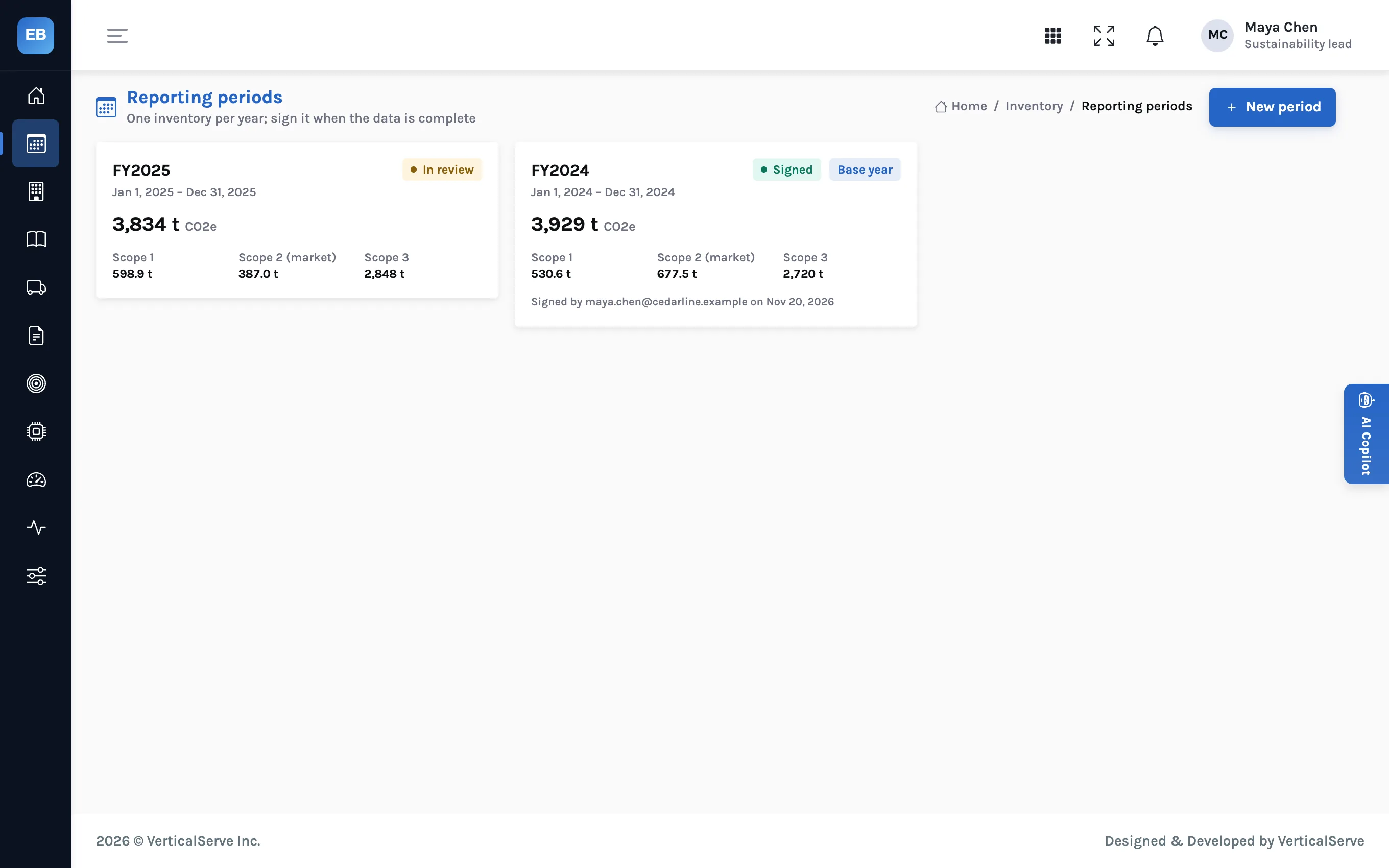
- Sign the period. The lead signs on the decision record.
- Add evidence documents. Your environmental policy, the board paper on the target, an energy programme. The questionnaire responder cites passages from them by page.
- Import the survey. A spreadsheet with a column called "question" (optional id and section). Each answer is drafted from the inventory, from evidence, or marked Needs input.
- Review every item, fill in what needs input, Mark reviewed, and export to Word or PDF.
Targets are never invented
If a question asks for your target and no document states one, the draft says Needs input. Once a target is set, ESGBlade tracks it as an absolute reduction against a base year. It is a calculator: it does not say whether a target is science-based, and it does not validate one.
For setting up the target, see a reduction target you can track. For the questionnaire flow, answering a customer's sustainability questionnaire.
Where people stay in charge
- Sign before answering. The lead signs the period on the decision record; the supervisor prepares sign-off once no high-severity issue is open.
- Targets come from your board. If a question asks for your target and no document states one, the draft says Needs input, and a person writes the board's own wording.
- A person reviews every item. Fill in what needs input, Mark reviewed, and export to Word or PDF.
- You submit. Your team sends the answers to the buyer's procurement portal.
What to do first
- Get the request in writing and note exactly which scopes and year it asks for
- Collect a year of bills for every site and any REC or green tariff paperwork
- Gather the documents that state your policy and any target
- Build and sign the inventory before drafting a single answer
Answer the health system from a signed inventory, and leave blank what you can't support.
Try it on your own data
ESGBlade is free. Tell us about your company and we'll set up a workspace for your first reporting period.
Request a demo