A contractor's footprint moves around. A site compound opens with a diesel generator, runs for eighteen months and closes. Plant is hired in and out. The yard and head office stay put. Meanwhile the largest share of the carbon is in the concrete, steel and asphalt bought for each job.
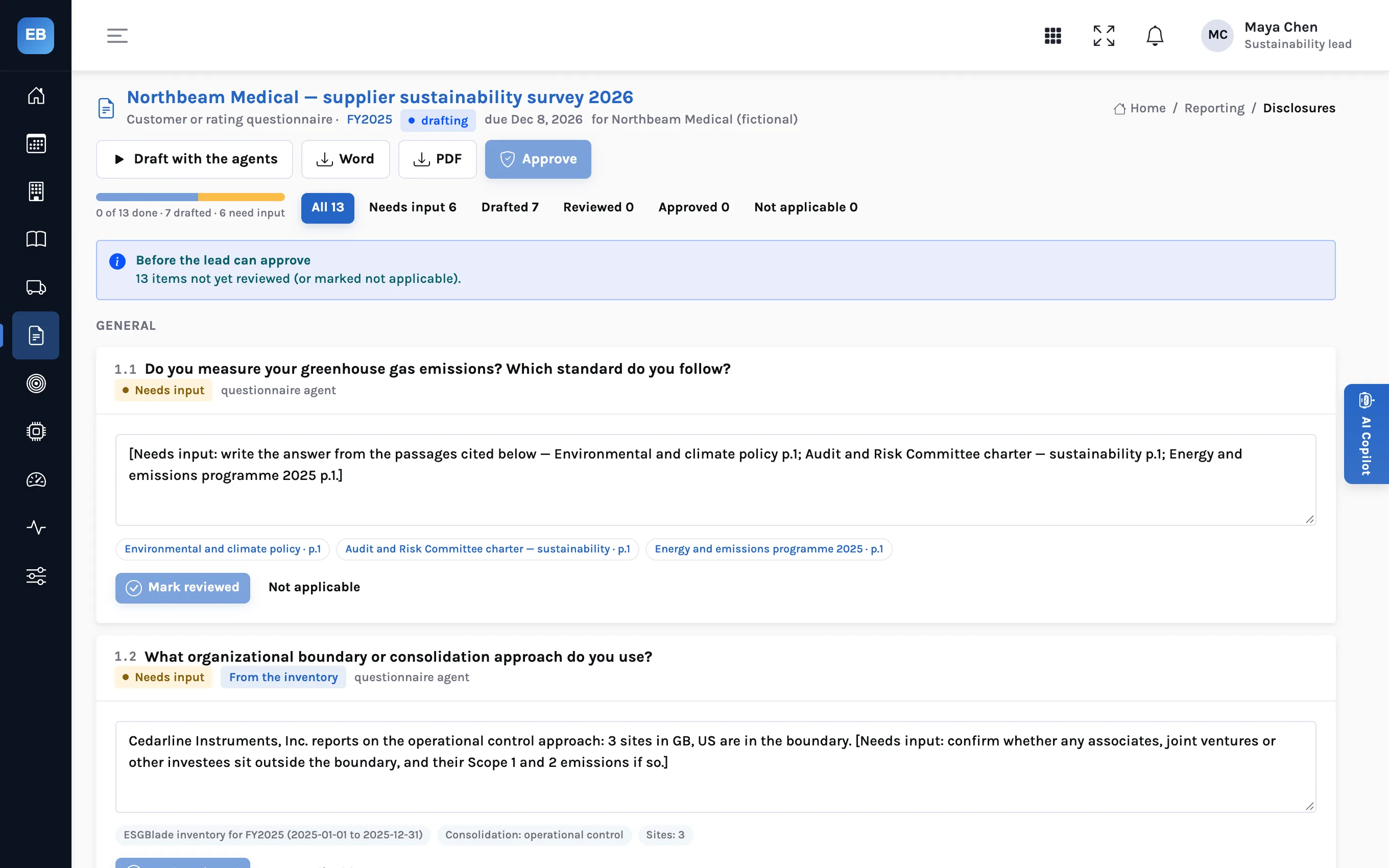
Tenders now ask about it. This post maps a contractor's sources to the GHG Protocol, describes who asks and in what form, and walks through building the company inventory in ESGBlade.
The sources, by scope
| Record | Activity type in ESGBlade |
|---|---|
| Fuel delivery notes to site generators | Diesel (generators) |
| Fuel cards for vans and pickups | Diesel or gasoline (company vehicles) |
| Red diesel or off-road fuel for plant | Diesel (generators, stationary) for fixed plant, or diesel (company vehicles); there is no separate off-road machinery type |
| Electricity bills for site connections | Grid electricity, by site |
| Supplier invoices for concrete, steel, aggregates | Spend, category 1 |
| Purchases of excavators, vehicles, site cabins | Spend, category 2 (capital goods) |
| Skip and waste transfer notes | Waste by material and treatment |
| Haulage invoices with tonnes and distance | Freight by truck, ton-miles or tonne-km |
Who is asking
Public-sector clients and large developers, mostly. Some governments ask bidders on larger contracts for a company carbon footprint or a carbon reduction plan; developers and infrastructure owners with their own targets ask for emissions data and reduction commitments in pre-qualification questionnaires. Some also ask for project-level figures or embodied carbon in materials. The requirements differ by country and client and have been changing, so check the tender documents themselves.
Sites that change by project
In ESGBlade a site is a place where activity happens. A contractor creates one for each yard, office and project compound, with its country, an eGRID subregion for US sites, floor area where it makes sense, and headcount. Activity lines carry the site, so the inventory comes out by site as well as by scope and month. A project that ran for part of the year simply has lines for those months.
Gaps are expected on closed sites
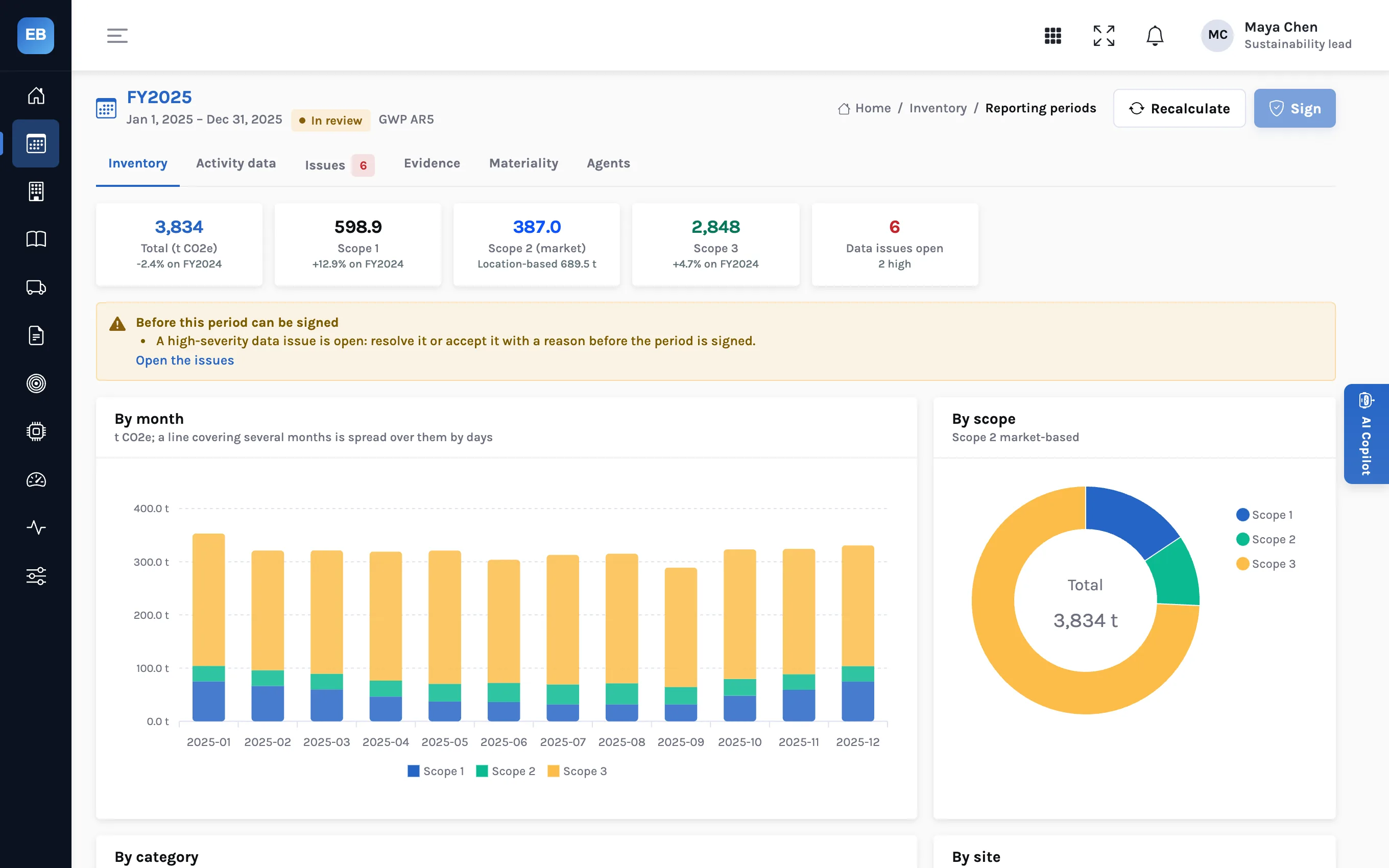
The data quality agent flags missing months per site and fuel. When a site closed in June, the July gap is correct; accept the issue with a reason ("compound demobilised 30 June") and it is kept in the audit trail.
How ESGBlade handles it, step by step
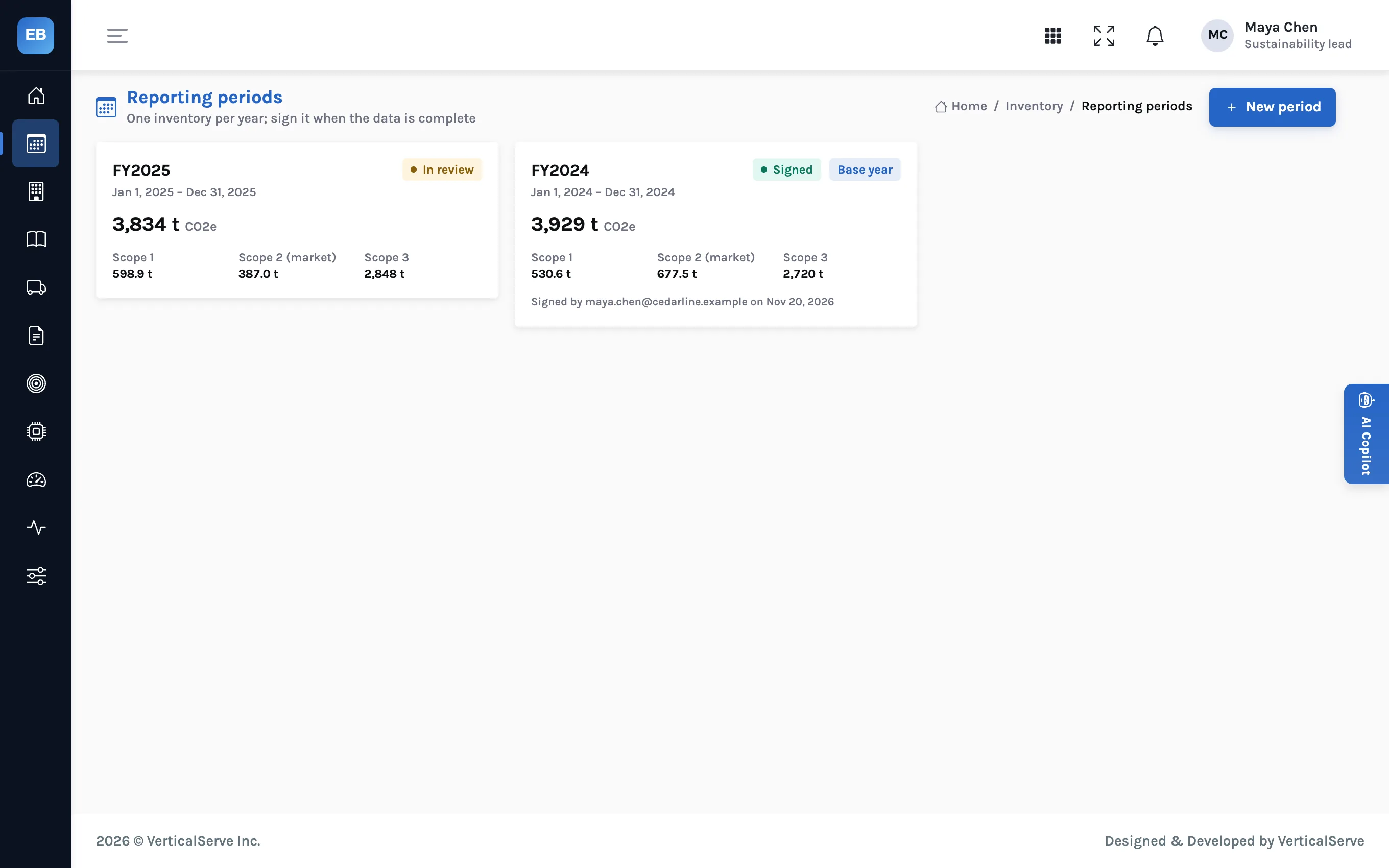
- Set up the boundary. Entities, joint ventures with their ownership percentage, the consolidation approach, and a site for each yard, office and project.
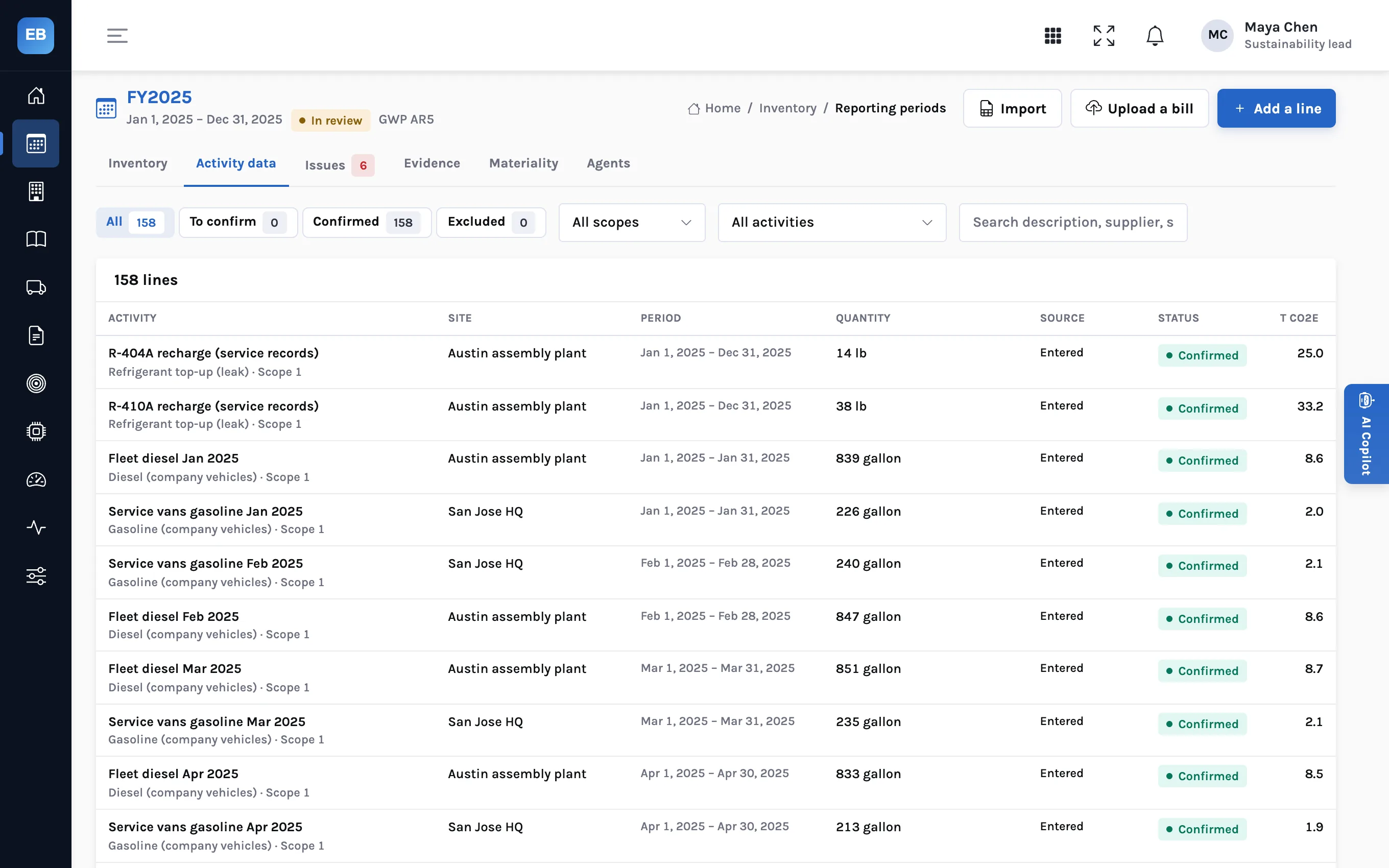
- Bring in fuel. Generator diesel and fleet fuel come in through the fuel template or by hand; fuel statements in PDF with a text layer are read into draft lines cited to the page.
- Upload electricity bills for every connection in your name.
- Import the purchase ledger. Materials and subcontracts get USEEIO spend factors by NAICS industry; plant and vehicle purchases go to category 2.
- Run the agents. The intake agent says which site and month each upload covers and prepares requests for bills still missing; the data quality agent flags gaps, duplicates and outliers. Accept the genuine gaps with a reason.
- Sign the period, then answer the tender's questions from the inventory.
Materials will be the largest category and they start as spend-based estimates. When a concrete or steel supplier can give you its own figure for what it supplied, use it: spend-based Scope 3 and when to replace it. For the reduction plan, a reduction target you can track covers targets and initiatives.
Where people stay in charge
- Accepted gaps carry a reason. When a site closes, a person accepts the gap with a reason that stays in the audit trail.
- Bill requests wait for a person. The intake agent prepares requests for missing bills; each is held until a person sends it.
- Supplier figures by choice. A concrete or steel supplier's own figure is used only when a person chooses to use it.
- The lead signs. The period is signed on the decision record, and the tender's questions are answered from that inventory.
What to do first
- List every yard, office and project compound active in the year
- Collect fuel delivery notes for generators by site and month
- Export fuel card data and the purchase ledger
- Ask waste contractors for tonnes by material and treatment
Treat every project compound as a site. The gaps then tell you something true.
Try it on your own data
ESGBlade is free. Tell us about your company and we'll set up a workspace for your first reporting period.
Request a demo