IFRS S2 Climate-related Disclosures is the International Sustainability Standards Board's climate standard. Jurisdictions are adopting it at different speeds and in different forms: some require it for listed companies, some allow it voluntarily, some adapt it into local rules. Whether and when it applies to you depends on your regulator, so check that first. Lenders and investors sometimes ask for S2-style information before any rule requires it.
This post explains how S2 is organised, which parts an emissions inventory can answer, and which parts no software can answer for you. The example is the demo company's FY2025 inventory.
The four pillars
S2 follows the structure of the earlier TCFD recommendations, in four parts:
- Governance: which body oversees climate-related risks and opportunities, and management's role (paragraph 6 onward).
- Strategy: the risks and opportunities that could affect the company's prospects and over what time horizons, how the company is responding (including any transition plan), and how resilient its strategy is under climate scenarios (paragraphs 10 to 22).
- Risk management: how climate risks are identified, assessed, prioritised and monitored (paragraph 25).
- Metrics and targets: greenhouse gas emissions, other cross-industry and industry-based metrics, and targets (paragraphs 27 to 37).
The first three pillars describe judgement and process. Only the fourth is mostly measurement, and within it, the GHG emissions requirements in paragraph 29(a) are where an inventory does the work.
What S2 asks about emissions
S2 requires emissions measured under the GHG Protocol Corporate Standard, reported as absolute gross Scope 1, Scope 2 and Scope 3. Some details matter:
- Scope 2 is location-based, with information about contractual instruments (RECs, PPAs, green tariffs) that helps users understand it. Many companies also give the market-based figure.
- Scope 3 by category: say which of the 15 categories are included.
- Measurement approach: the inputs, assumptions and methods used, and why.
- Boundary split: Scope 1 and 2 separated between the consolidated accounting group and other investees, such as associates and joint ventures.
S2 also includes transition reliefs, for example on Scope 3 in the first reporting year. Check how your jurisdiction applies them.
Which of the 14 items ESGBlade can fill
| S2 item | What it asks | Source in ESGBlade |
|---|---|---|
| 6 | Governance body and management's role | From evidence (e.g. a committee charter) |
| 10 | Risks and opportunities and time horizons | From evidence (e.g. a risk register) |
| 14 | Response in strategy, including any transition plan | Needs a person |
| 22 | Resilience and scenario analysis | Needs a person |
| 25 | Risk management process | From evidence |
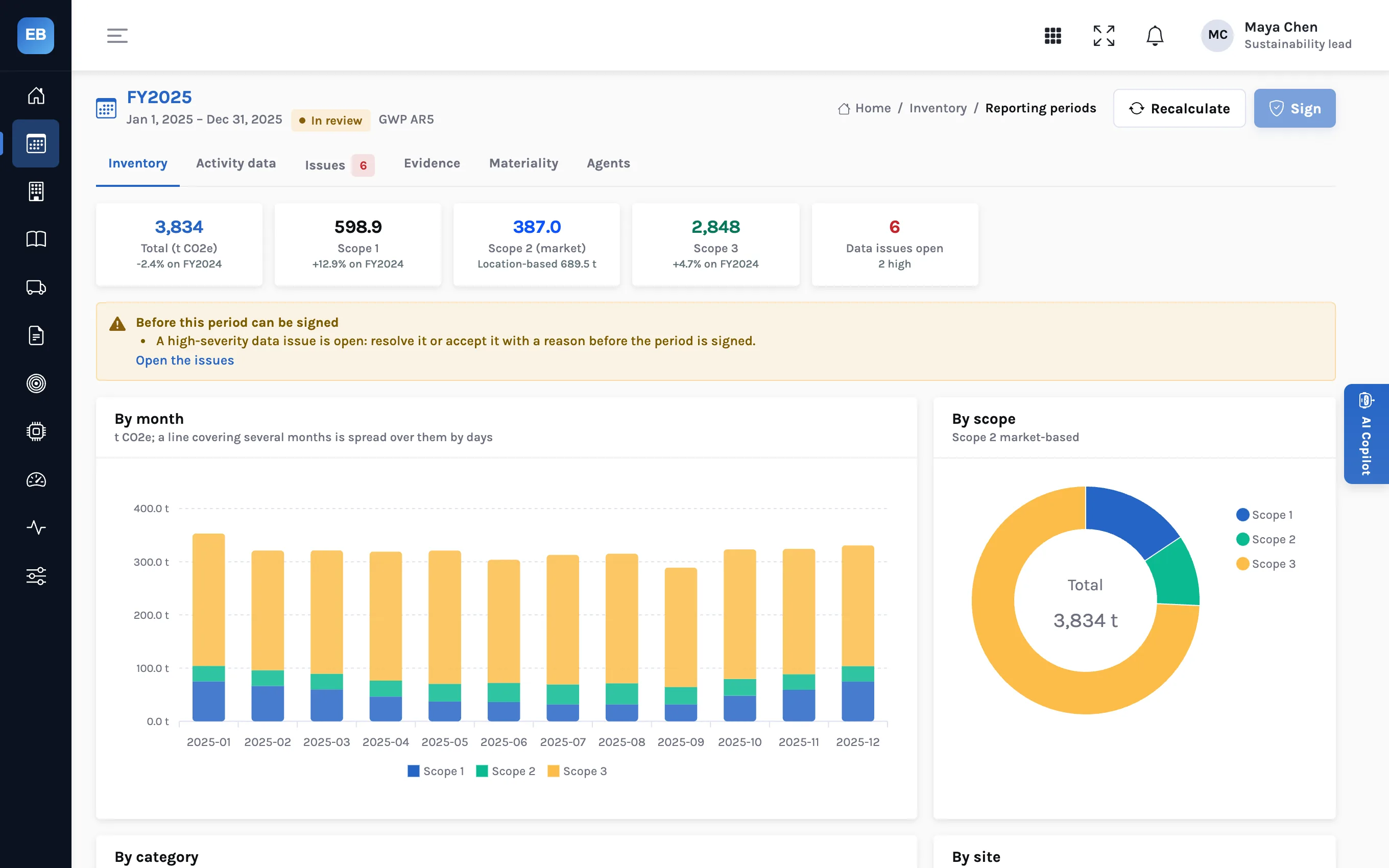
| 29(a)(i)(1) | Absolute gross Scope 1 | From the inventory |
| 29(a)(i)(2) | Scope 2, location-based | From the inventory |
| 29(a)(v) | Contractual instruments and the market-based figure | From the inventory |
| 29(a)(i)(3) | Absolute gross Scope 3 | From the inventory |
| 29(a)(vi) | Scope 3 categories included | From the inventory |
| 29(a)(iii) | Measurement approach, inputs, assumptions | From the inventory set-up |
| 29(a)(iv) | Scope 1 and 2: consolidated group vs other investees | From the boundary; a person confirms investees |
| 29(f) | Internal carbon price | Needs a person; never invented |
| 33 | Targets, base period, milestones, science-based or not | From targets set; never invented |
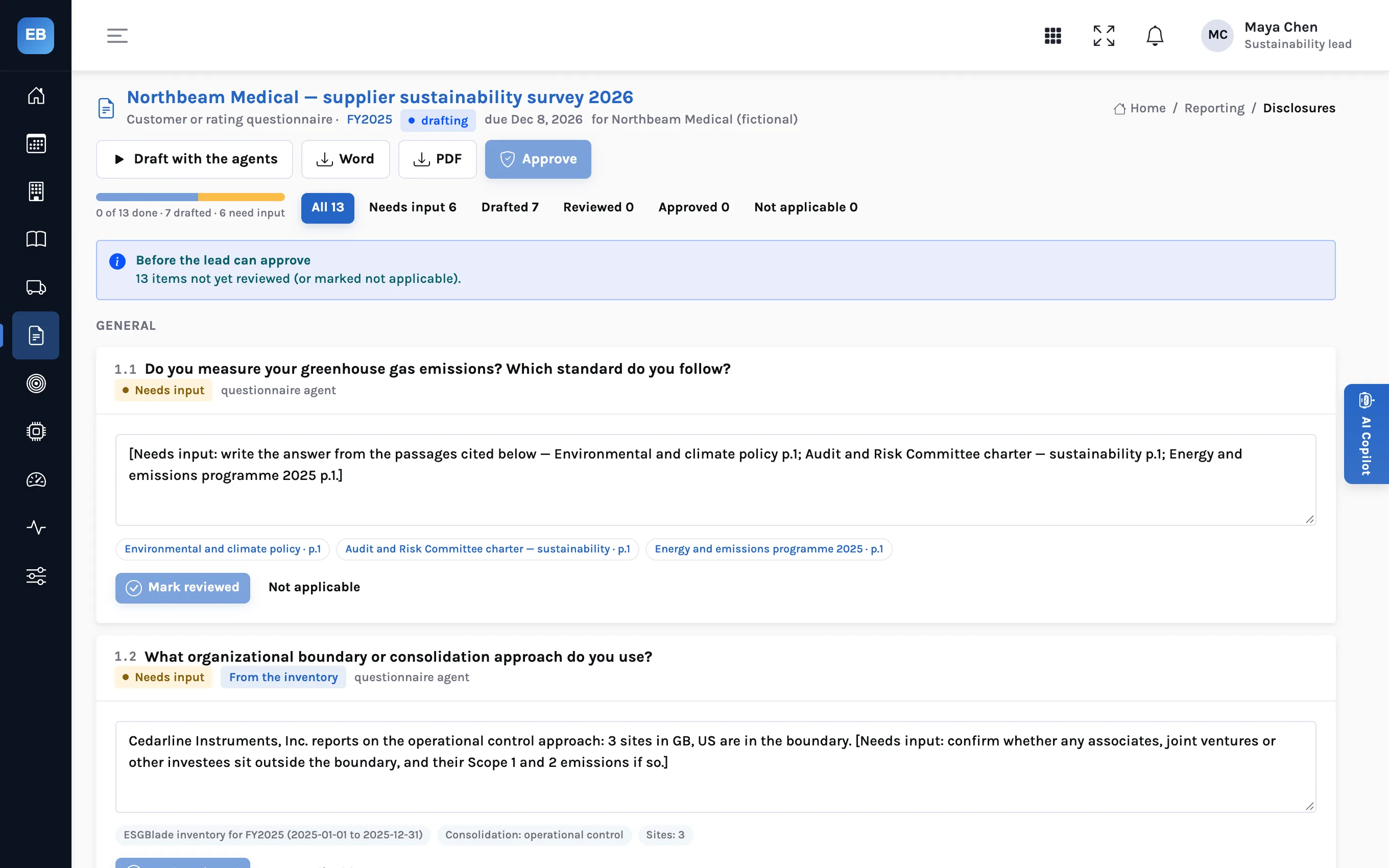
"From evidence" means the draft cites passages, by document and page, from what you uploaded. If nothing relevant is uploaded, the item says "[Needs input: …]" instead.
The demo's figures
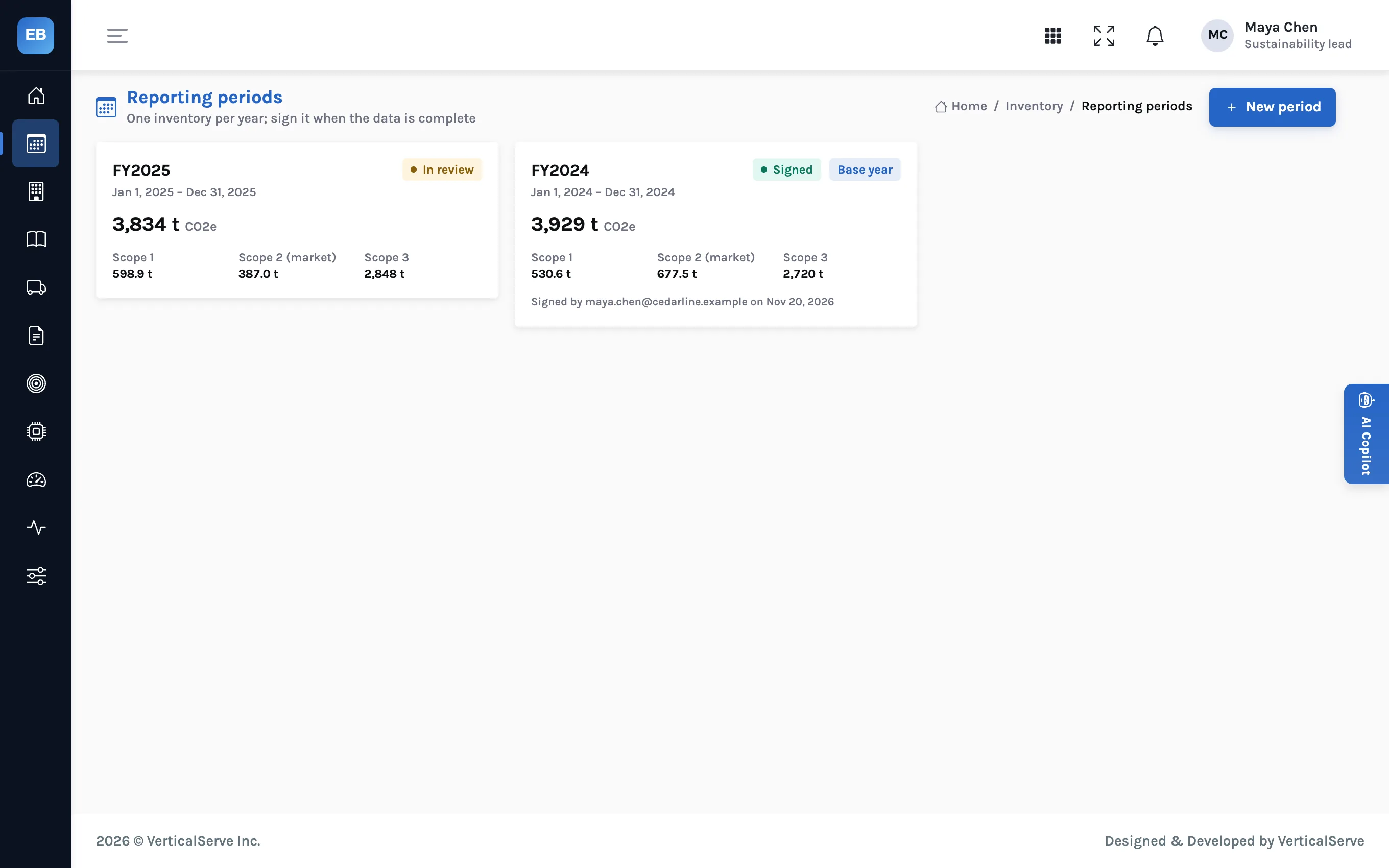
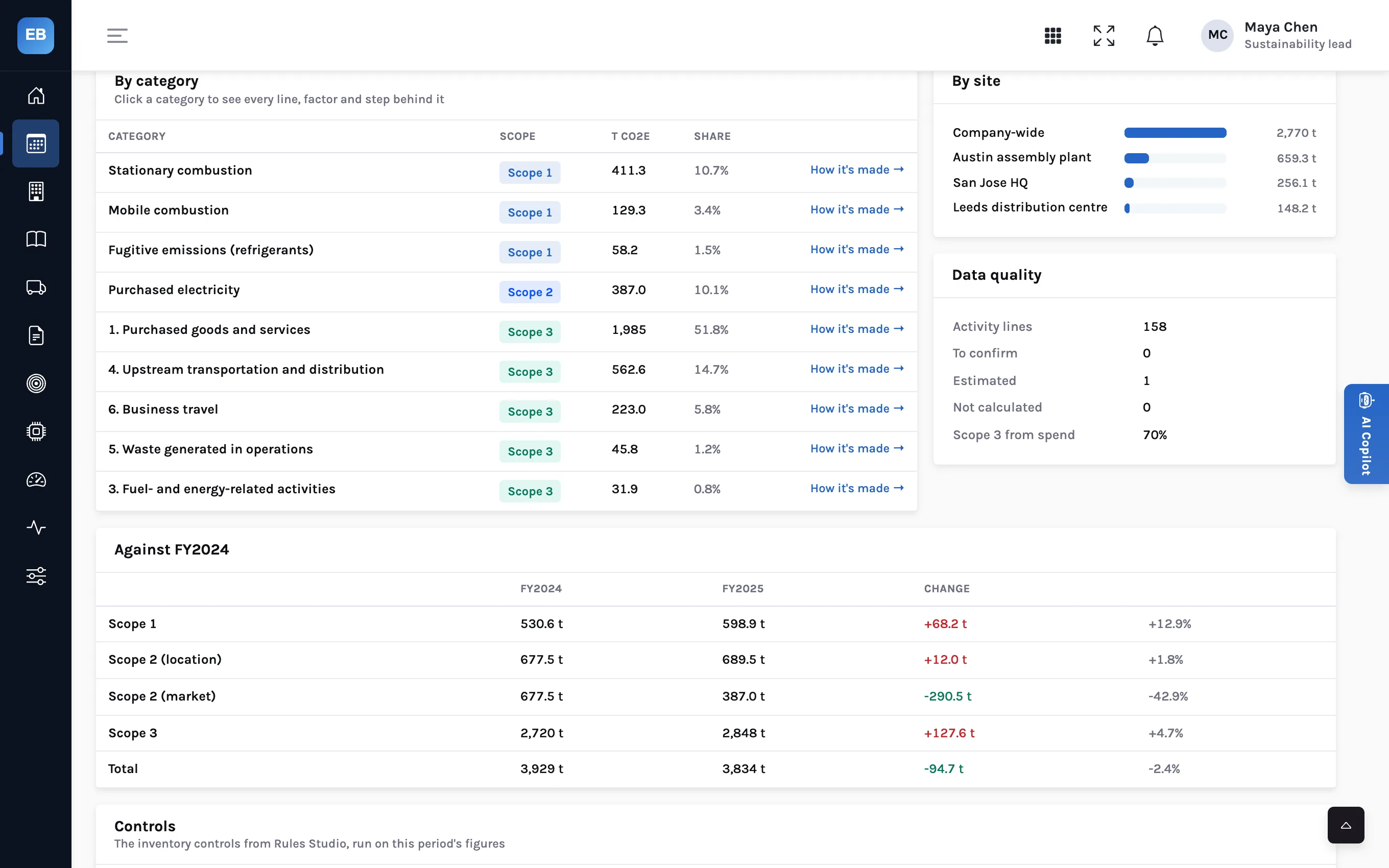
Each figure is drafted from the inventory and checked against it. For 29(a)(v), the instruments answer comes from the RECs entered against the Austin site, with their MWh and certificate reference, which is why the market-based figure is lower. See location-based and market-based Scope 2 for how both are calculated.
The measurement approach
Item 29(a)(iii) is where a careful answer earns trust. ESGBlade drafts it from what the inventory actually used: the GHG Protocol Corporate Standard with its Scope 2 and Scope 3 guidance; operational control; IPCC AR5 100-year GWPs; factors from the US EPA GHG Emission Factors Hub 2025, eGRID2023, UK DESNZ 2026 and USEEIO 1.3; spend converted to USD and adjusted to the factors' 2022 price year. If a supplier's own figure is used, the methodology says how much comes from supplier data. Read it, then add anything only you know, such as why a category was left out.
Spend-based Scope 3 is allowed, but say so
S2 asks you to explain your inputs and their quality. When most of Scope 3 is estimated from spend, say that plainly and say what you're doing about it. See spend-based Scope 3 and when to replace it.
The boundary split
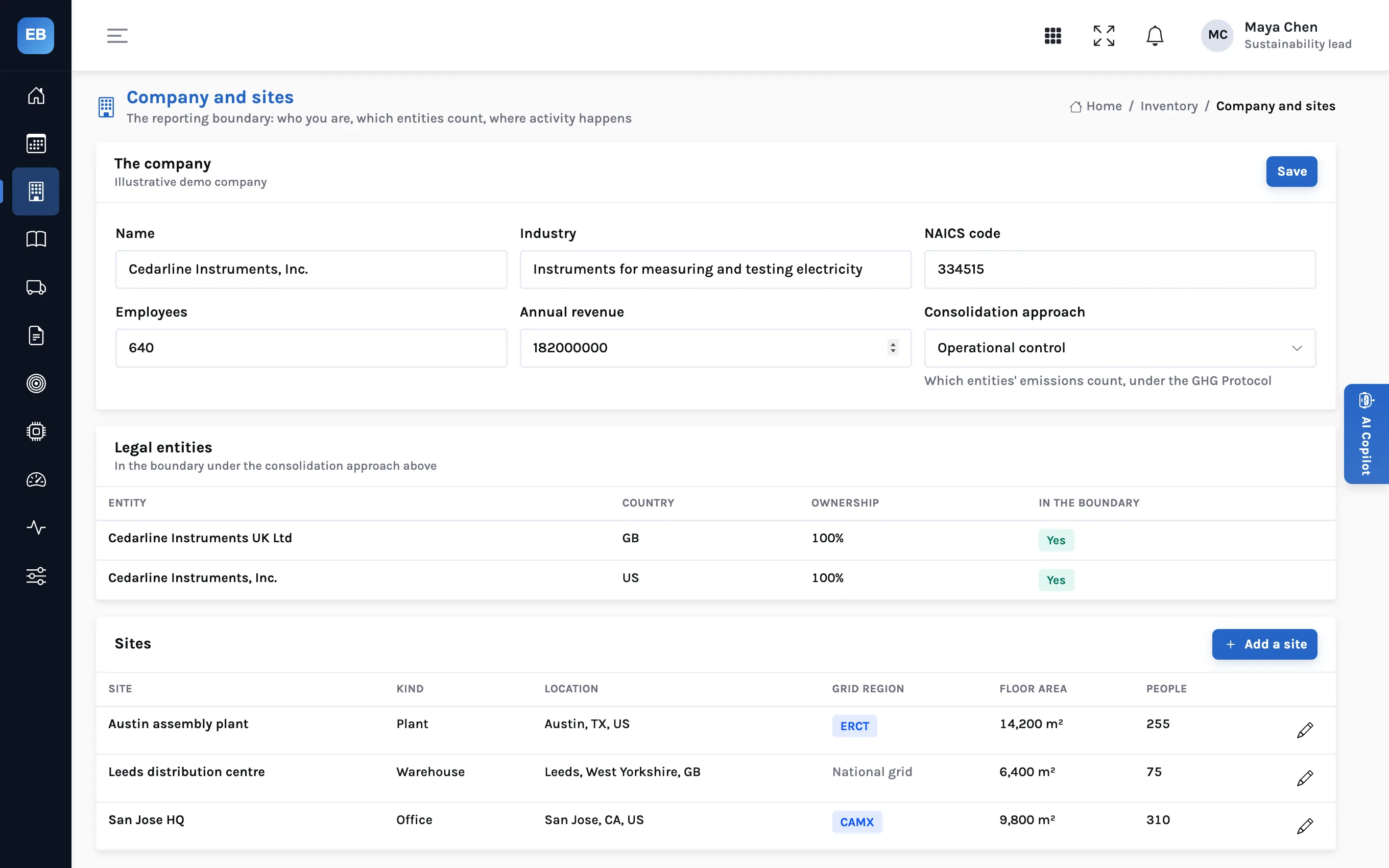
Item 29(a)(iv) separates the consolidated group from other investees. The draft states the consolidation approach and the entities and sites in the boundary, then asks a person to confirm whether any associates or joint ventures sit outside it. Cedarline has two entities, both 100% owned, under operational control.
What stays with people
Governance, strategy, scenario analysis and resilience are about how the board and management think and act. ESGBlade can point to the passage in your committee charter or risk register, but it won't describe a scenario analysis you haven't run, a strategic response you haven't decided, or a carbon price you don't use. On targets, it drafts from the targets you've set in ESGBlade (Cedarline's is a 42% cut in Scope 1 and 2 by 2030 from FY2024) and states whether it is science-based only as you recorded it. ESGBlade doesn't validate targets. If no target is set, the item says so and asks.
Step by step
- Check with your adviser or regulator whether, when and how S2 applies to you.
- Finish the period's inventory and have the lead sign it.
- Upload governance and risk documents: board or committee charter, risk register, any climate policy.
- Create the IFRS S2 disclosure for the period and press Draft with the agents.
- Review the figures, edit the measurement approach, and give the governance and strategy items to their owners.
- Mark each item reviewed or not applicable; the lead approves. Export to Word or PDF.
Where people stay in charge
- Strategy stays with the board. Governance, strategy, scenario analysis and resilience items are marked Needs input for people to write, with cited passages from your documents.
- A person confirms investees. Item 29(a)(iv) states the boundary and asks a person to confirm whether any associates or joint ventures sit outside it.
- The lead signs and approves. The lead signs the period and approves the disclosure on the decision record.
- You file; your assurance provider assures. ESGBlade exports Word and PDF; the company files, and its assurance provider gives assurance.
For how every figure can be explained, see every figure traces to a page and a factor.
The inventory answers paragraph 29. The rest of S2 is how your company thinks about climate, and only your company can write that.
Try it on your own data
ESGBlade is free. Tell us about your company and we'll set up a workspace for your first reporting period.
Request a demo