A logistics provider's footprint is easy to describe and tedious to collect. Trucks burn diesel. Warehouses use electricity, and the cold ones leak refrigerant. Freight you hand to other carriers moves by road, rail, sea and air. The data sits in fuel card statements, utility bills from a dozen landlords and carrier invoices, and your customers increasingly want a figure from it.
This post maps a 3PL's or distributor's sources to the GHG Protocol, says who is asking, and walks through how ESGBlade handles each one.
The sources, by scope
| Source | Scope and category | How it goes into ESGBlade |
|---|---|---|
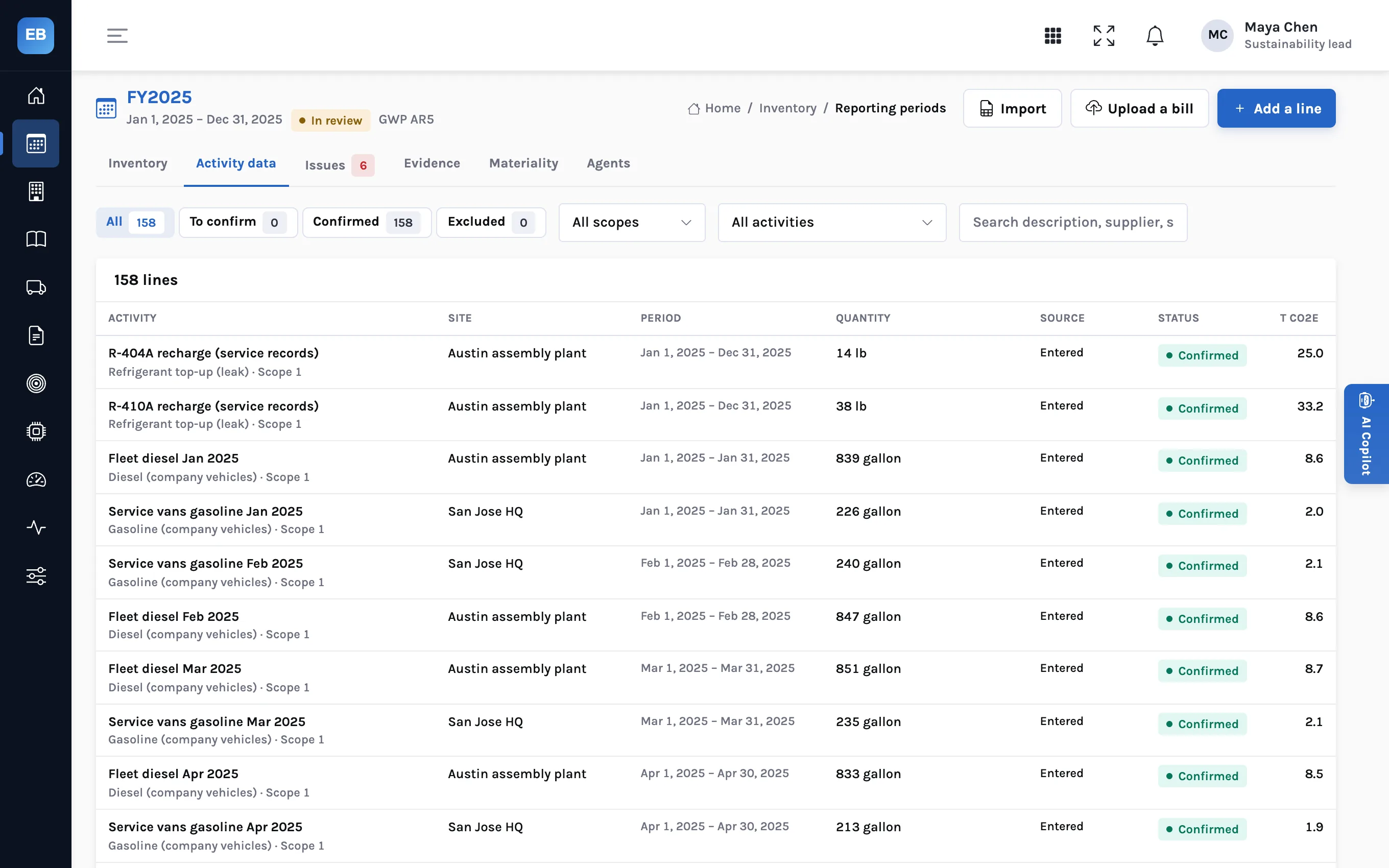
| Diesel and gasoline in your own trucks and vans | Scope 1, mobile combustion | Fuel lines by quantity, imported from the fuel template or entered by hand |
| Diesel in yard generators | Scope 1, stationary combustion | Diesel (generators) fuel lines |
| Natural gas or propane for warehouse heating | Scope 1, stationary combustion | Bills, read into draft lines |
| Refrigerant top-ups in cold stores and reefer units | Scope 1, fugitive | Mass topped up × GWP, e.g. R-404A or R-410A |
| Warehouse and office electricity | Scope 2 | Bills; location-based and market-based |
| Freight bought from other carriers | Scope 3, category 4 | Freight lines by mode: truck, rail, sea or air, in ton-miles or tonne-km |
| Pallets, packaging, outsourced services | Scope 3, category 1 | Purchase ledger spend, USEEIO by NAICS |
| Trucks, forklifts, racking bought this year | Scope 3, category 2 | Capital spend from the ledger |
| Waste: cardboard, film, pallets | Scope 3, category 5 | Waste lines by material and treatment |
| Grid losses on your electricity | Scope 3, category 3 | Derived automatically from electricity lines |
Your Scope 1 is your customer's Scope 3
When you move a shipper's goods in your own trucks, that diesel is your Scope 1 and part of their Scope 3. When you subcontract the move, it is your category 4 and theirs too. This is why shippers ask.
Who is asking
Mostly shippers. Retailers, manufacturers and brands that report their own Scope 3 want figures from their logistics providers rather than estimates from spend. The request comes as a questionnaire, a tender section, or a request for emissions per customer or per lane. Some ask for figures prepared under a transport-specific method such as ISO 14083 or the GLEC Framework. Lenders and parent companies ask for a company-level inventory.
Many sites, one inventory
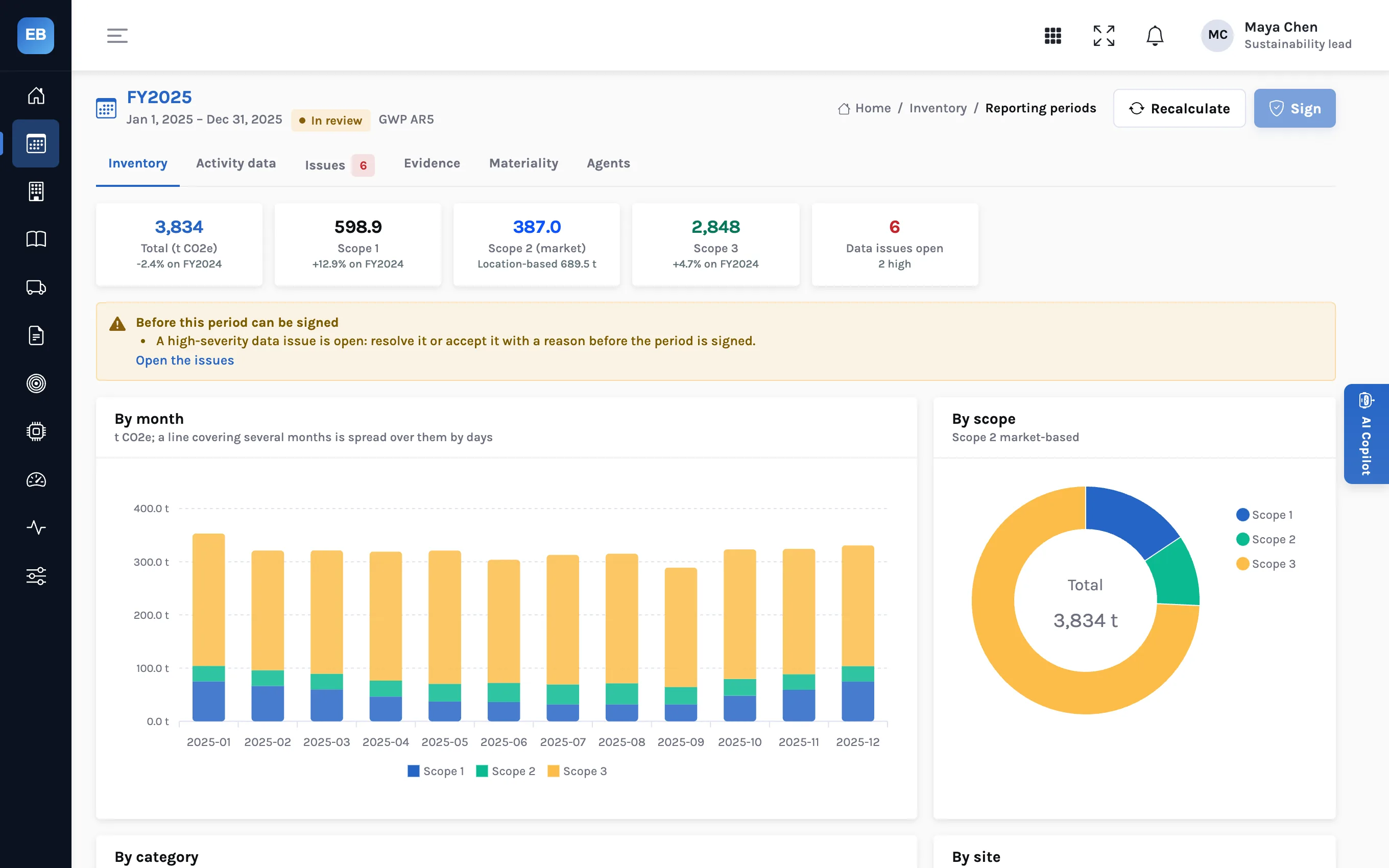
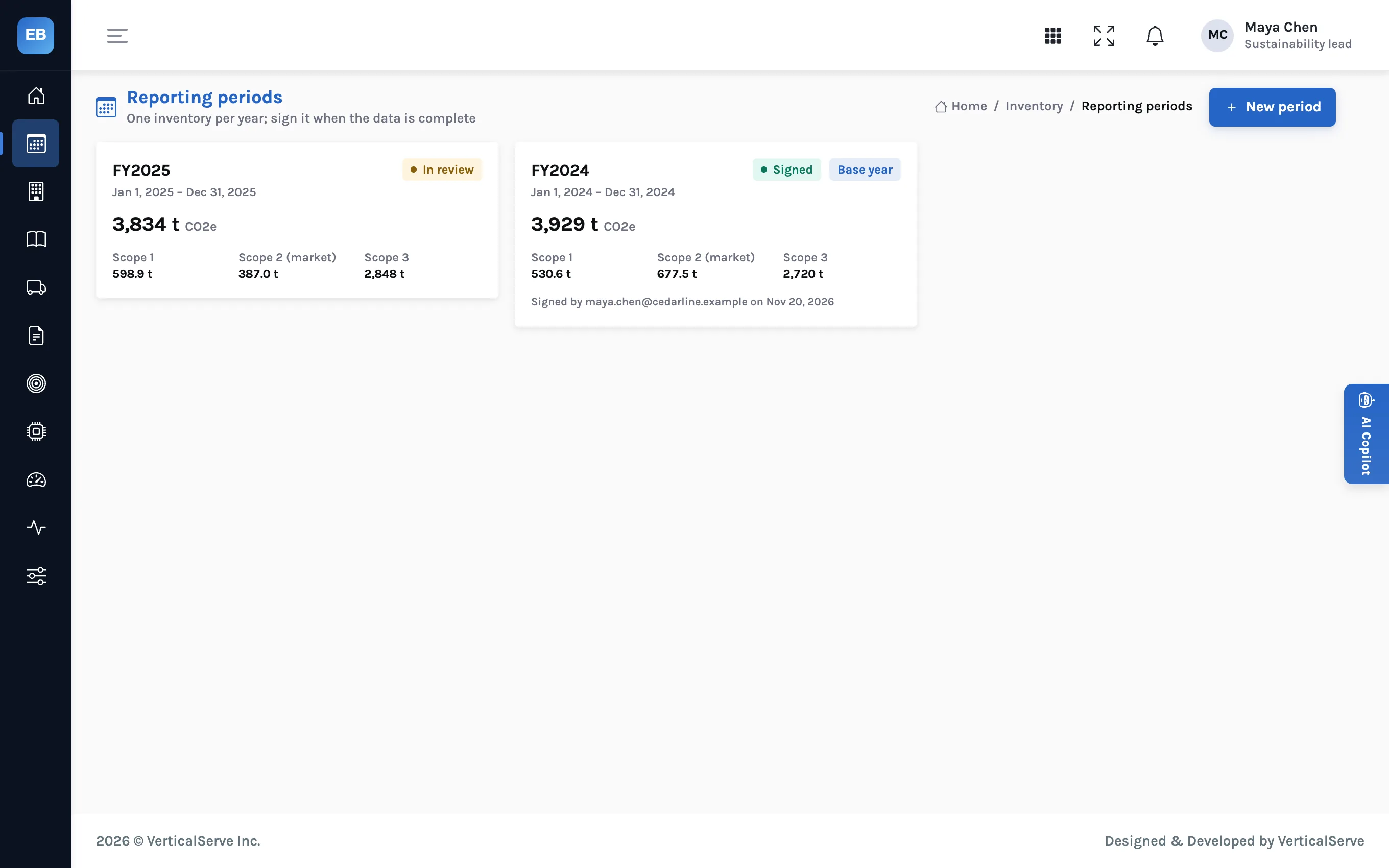
Each warehouse, cross-dock and yard is a site with its country, floor area and headcount. US sites carry their eGRID subregion so electricity gets the right grid factor; sites elsewhere use the national grid factor. Totals come out by scope, category, site and month, so you can answer "what did this one warehouse emit" without a separate workbook.
How ESGBlade handles it, step by step
- Set up the boundary. Legal entities with ownership, a consolidation approach, and every site.
- Upload the bills. The intake agent sorts them and says which site and month each covers. The extraction agent turns them into draft lines cited to the page and quote. Scanned PDFs with no text layer are refused; enter those by hand.
- Import fuel, freight and the ledger. Use the fuel, generic activity and purchase ledger templates. Freight lines carry mode and ton-miles or tonne-km.
- Let the factor matcher fill gaps. Lines that can't be calculated get a proposed factor from the library, with the reason. A factor you confirm for a kind of line is offered next time.
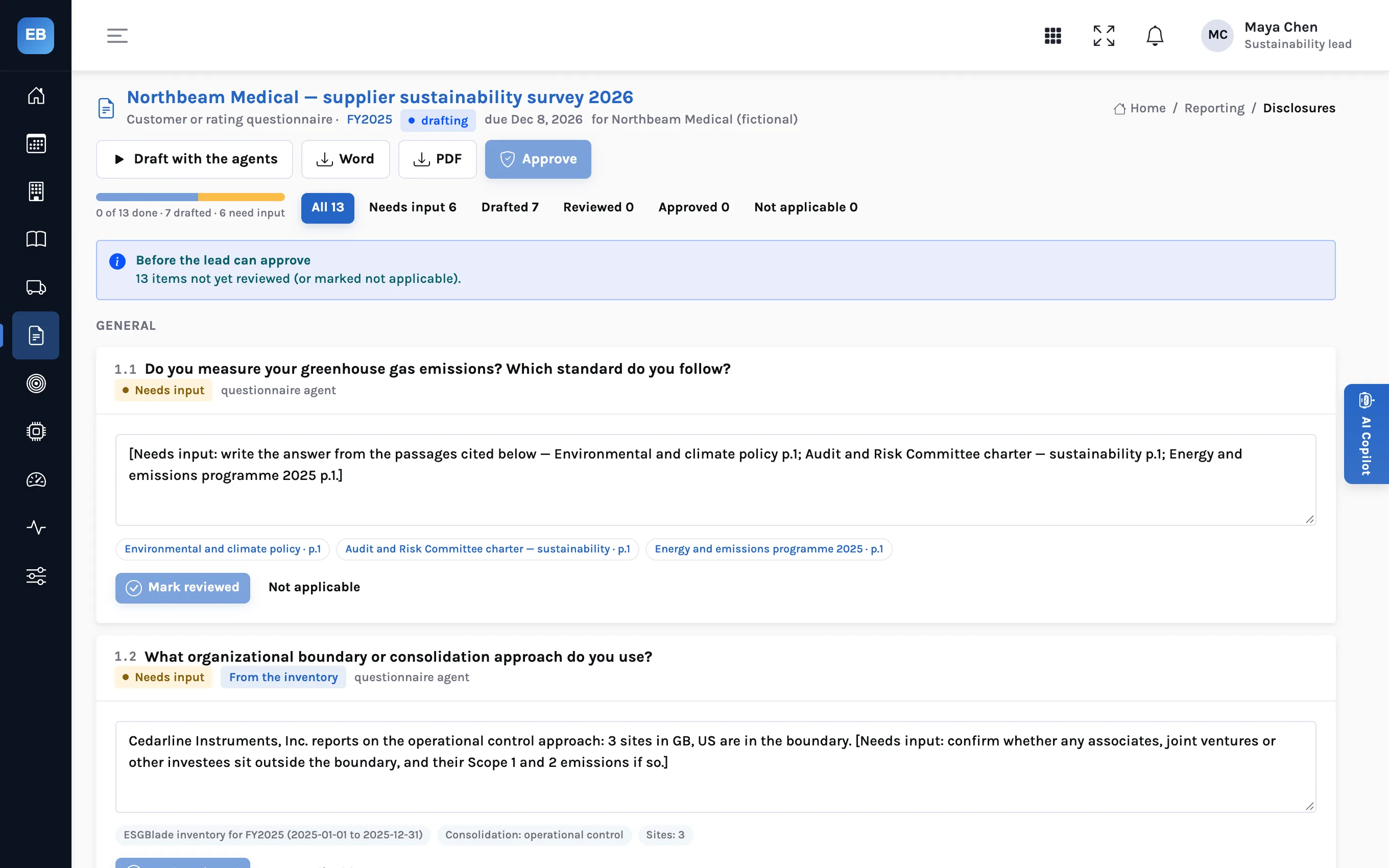
- Run the agents. The data quality agent looks for missing months per site and fuel, bills entered twice, and swings of 30% or more against the prior period. Each issue is fixed, or accepted with a reason.
- Sign the period. The supervisor checks the controls and prepares the lead's sign-off on the decision record.
Missing months are the usual problem with many landlords. See the missing bill and the bill entered twice.
Answering a shipper
Import the shipper's questionnaire as a spreadsheet with one question per row. The questionnaire responder drafts answers from the inventory with citations and writes Needs input where it can't answer. A person reviews every item. For your own subcontracted carriers, the supplier outreach agent can draft data requests that are held until you send them; see asking suppliers for their own numbers.
Where people stay in charge
- Issues fixed or accepted by a person. Each data issue is fixed, or accepted with a reason.
- The lead signs. The supervisor checks the controls and prepares the lead's sign-off on the decision record.
- A person reviews every answer. The shipper's questions the inventory can't answer are marked Needs input, and a person reviews every item before export.
- Carrier requests wait for you. Requests to your subcontracted carriers are held until a person sends them.
What to do first
- List every site, including yards and cross-docks, with eGRID subregions for US sites
- Get a year of fuel card data in one export
- Collect refrigerant service records for chilled sites, with kilograms or pounds topped up
- Ask your freight forwarders for moves by mode with weight and distance
Shippers will ask what you emit on their behalf. Start with a clean company inventory and you have something true to send.
Try it on your own data
ESGBlade is free. Tell us about your company and we'll set up a workspace for your first reporting period.
Request a demo