A converter turns resin, film, board and ink into parts and packaging. The machines that do it, injection moulders, extruders, thermoformers, printing presses, run on electricity and heat, often around the clock. And the resin itself carries most of the footprint before it arrives at the gate.
This post maps a converter's sources to the GHG Protocol, describes who is asking, and shows how to move resin from a spend-based estimate to your suppliers' own figures, and how to price reduction work per tonne.
The sources, by scope
Who is asking
Brand owners and retailers, mostly, because packaging is part of their own Scope 3 and often part of their public commitments. Requests come as supplier questionnaires, scorecards in annual reviews, or questions about recycled content and reduction targets. Converters supplying automotive, medical or electronics customers get the same questions through those supply chains. Packaging regulation in some markets adds its own reporting, mostly on materials and recyclability rather than emissions; check what applies to you.
Resin: from spend to your supplier's figure
Start with the purchase ledger. Each resin supplier's spend is converted to US dollars, adjusted to 2022 prices, and multiplied by a USEEIO 1.3 factor for the supplier's NAICS industry. That gives a first category 1 figure quickly, but it tracks price: if resin prices rise, the estimate rises with them although the tonnes did not.
The better figure comes from the resin maker. ESGBlade's supplier outreach agent ranks suppliers by spend-based Scope 3 and drafts requests to the ones that make up about 70% (up to eight). Each request is held until a person edits and sends it with a no-login answer link. The supplier can give emissions for what it supplied, cradle-to-gate preferred, or its Scope 1, Scope 2 and revenue for ESGBlade to allocate.
More in asking suppliers for their own numbers.
Scrap and waste
Regrind fed back into your own process isn't waste. What leaves the site is: purged material, off-cuts and rejects sold for recycling, contaminated scrap to landfill or incineration, and packaging from inbound materials. Waste lines carry the material and the treatment, so recycling and landfill get different factors.
Initiatives priced per tonne
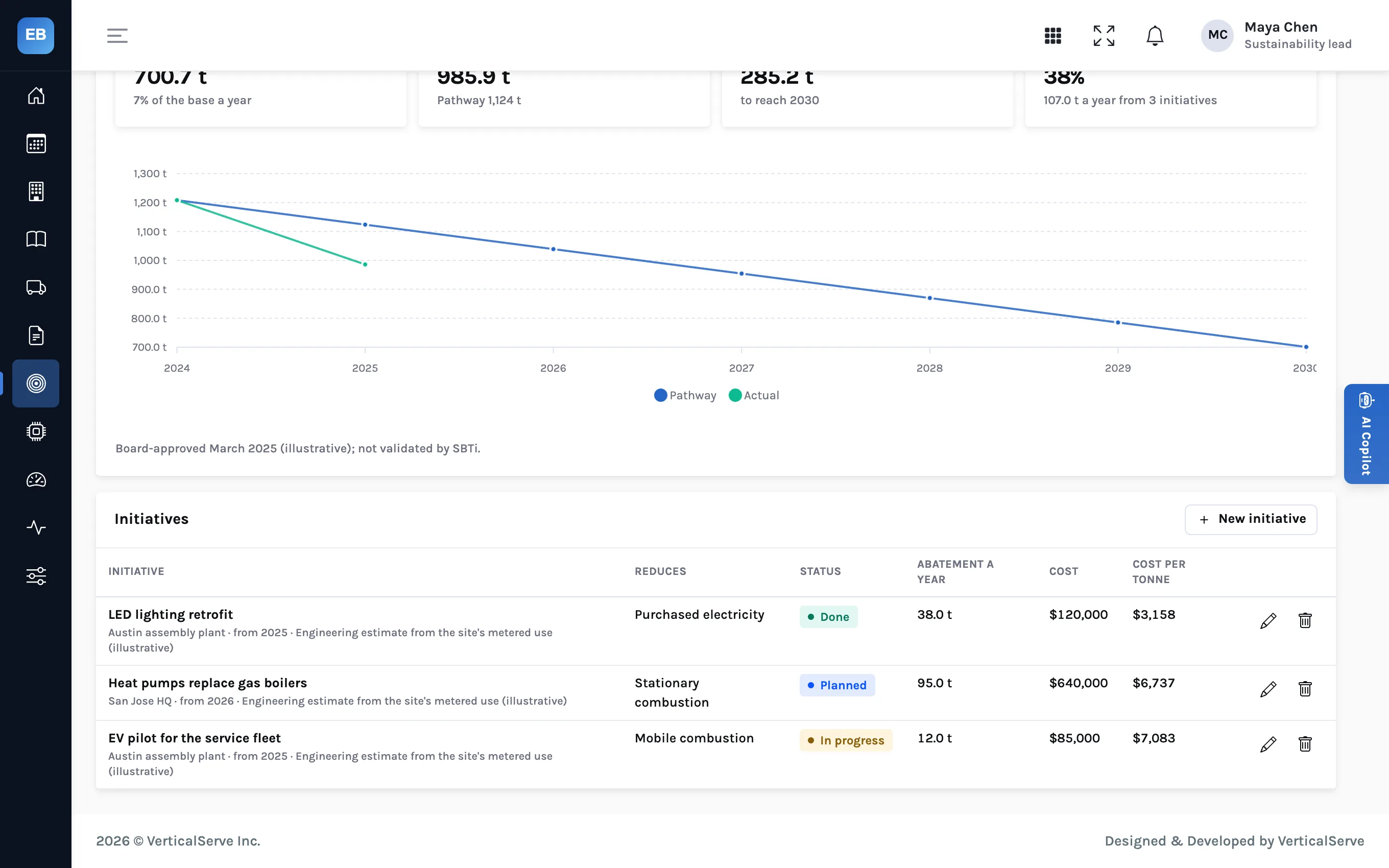
Once there is a base year and an absolute target, initiatives record what you plan to do: the category it reduces, the site, status (idea, planned, in progress, done), estimated abatement with how it was estimated, cost and owner. ESGBlade works out the cost per tonne and how much of the remaining gap open initiatives would cover.
| Field | Why it matters for a converter |
|---|---|
| Category and site | Compressed air at plant 1 and moulders at plant 2 are tracked separately |
| How it was estimated | Required: the estimate needs a source, such as a metering study |
| Cost and cost per tonne | Lets you compare a press replacement with a leak programme |
| Status | Only open initiatives count towards the gap still to close |
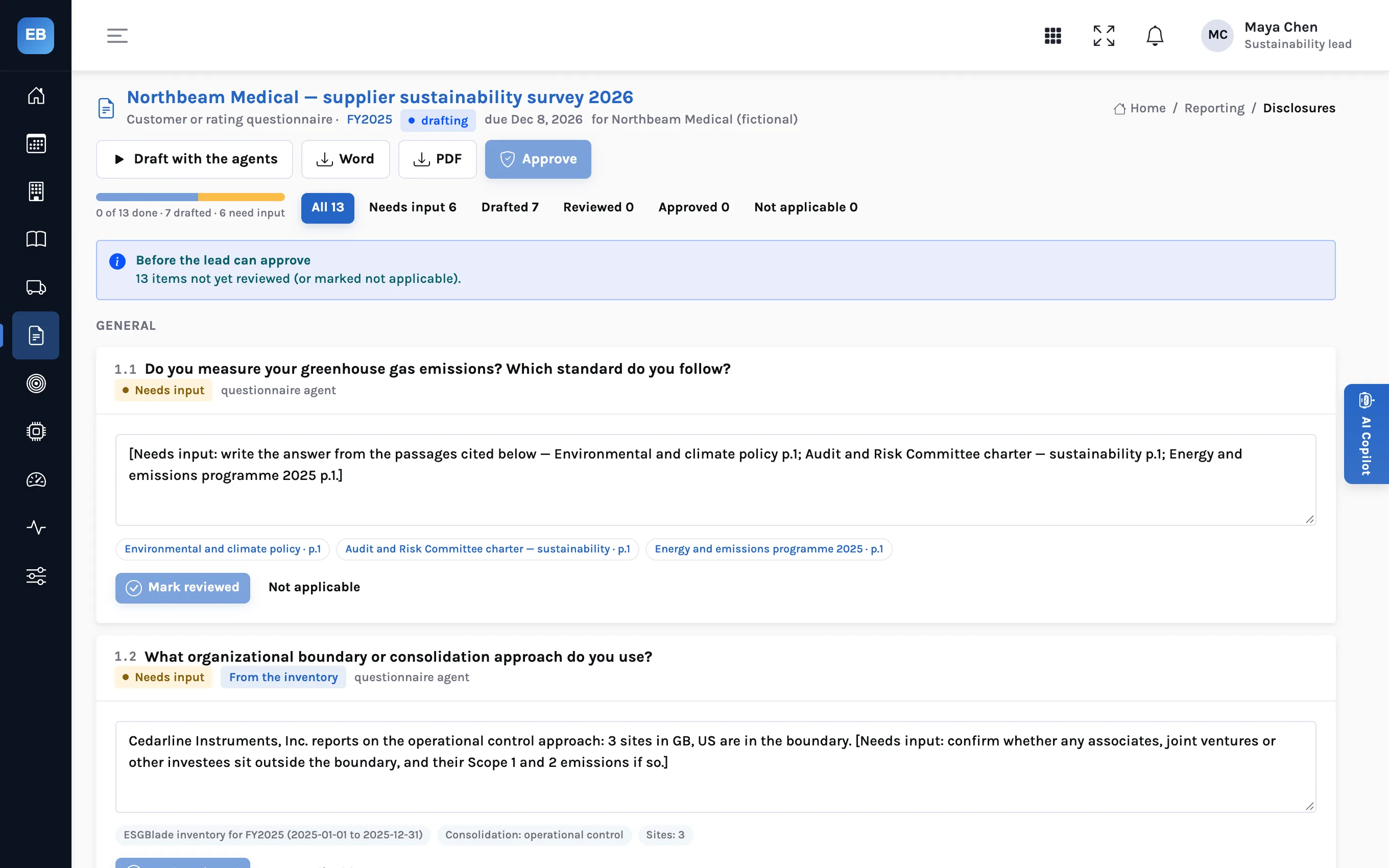
See a reduction target you can track.
How ESGBlade handles it, step by step
- Set up the plants as sites, with eGRID subregions for US sites.
- Upload bills; the extraction agent drafts lines cited to the page.
- Import the purchase ledger and the waste report.
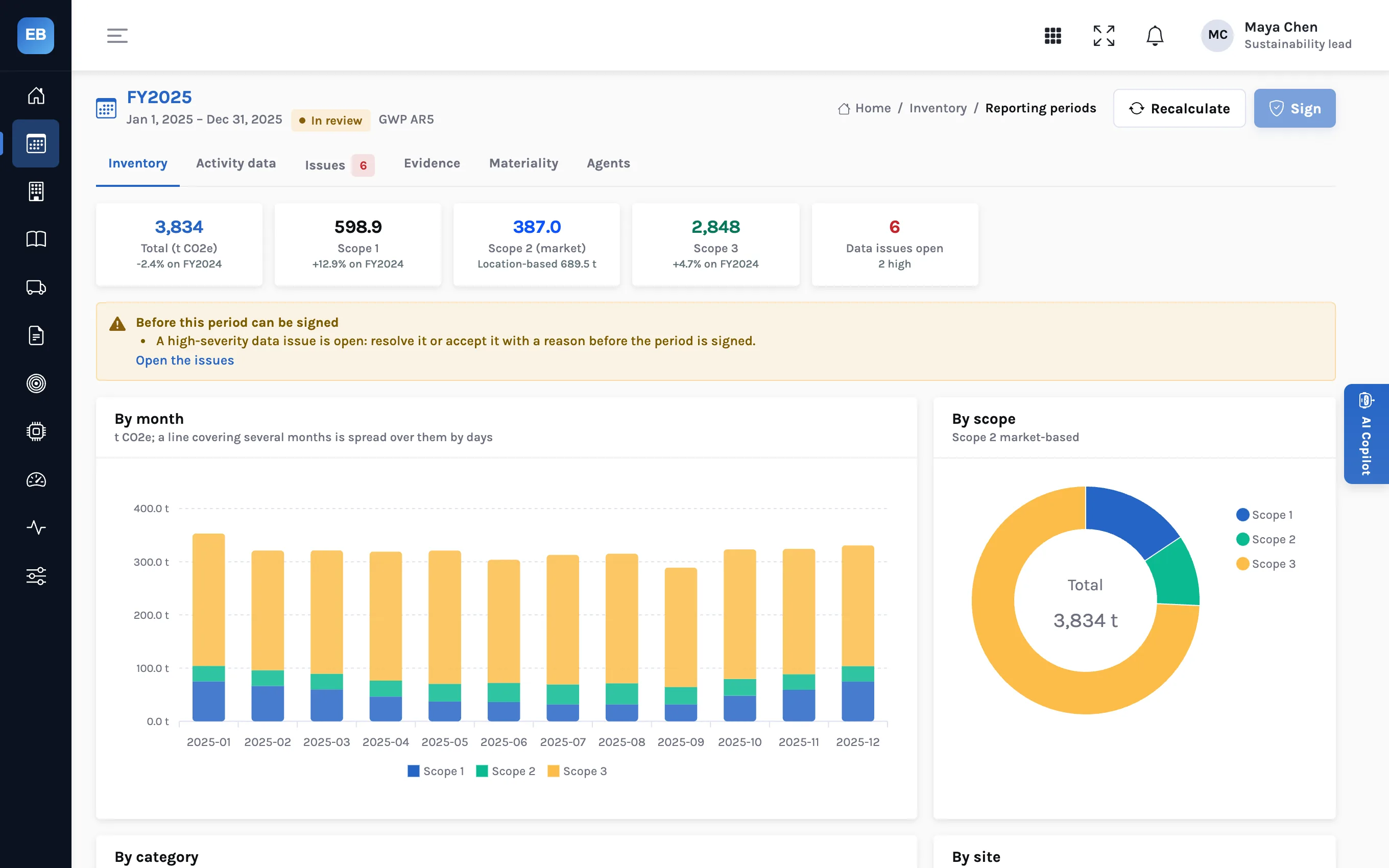
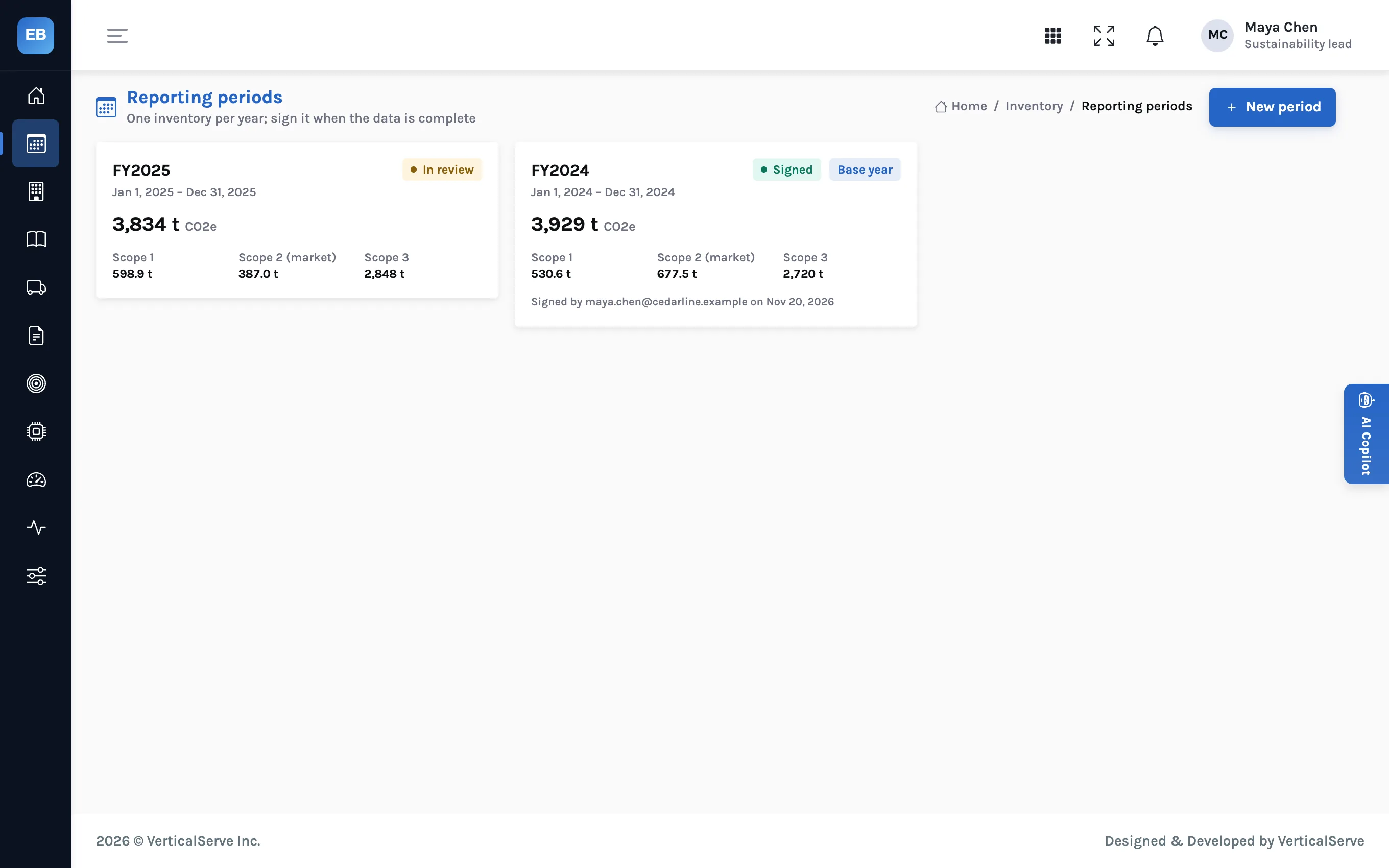
- Run the agents, clear the data issues and sign the base year.
- Send the held supplier requests to your largest resin makers and decide on each answer.
- Set an absolute target and add initiatives with their estimates and costs.
Where people stay in charge
- Resin requests wait for you. Each request is held until a person edits and sends it with a no-login answer link.
- The resin maker's figure by choice. A supplier's figure is used only when a person chooses to use it.
- Abatement estimates are yours. Initiative tonnes are entered with the method you record.
- The lead signs the base year on the decision record before targets are tracked against it.
What to do first
- Collect a year of electricity and gas bills for every plant
- Export the purchase ledger with resin suppliers named consistently
- Ask your waste contractor for tonnes by material and treatment
- List the reduction projects you already have in mind, with cost and how you estimated the savings
Resin bought by the dollar is an estimate. Ask the resin maker for the real number, and decide when to use it.
Try it on your own data
ESGBlade is free. Tell us about your company and we'll set up a workspace for your first reporting period.
Request a demo