Portfolio companies are asked for emissions by their owners, and increasingly by their lenders. The request usually arrives as a template from the fund's ESG team, once a year, with a deadline set by the fund's own reporting. The company may be an industrial business, a software firm or a distributor; the request looks much the same.
This post describes what such a request typically covers, how the company's sources map to the GHG Protocol, and how to produce the same pack each year from ESGBlade without rebuilding it.
What an investor's request usually covers
Requests vary by fund and lender, but most ask for some of the following. Read your own template; this list is general.
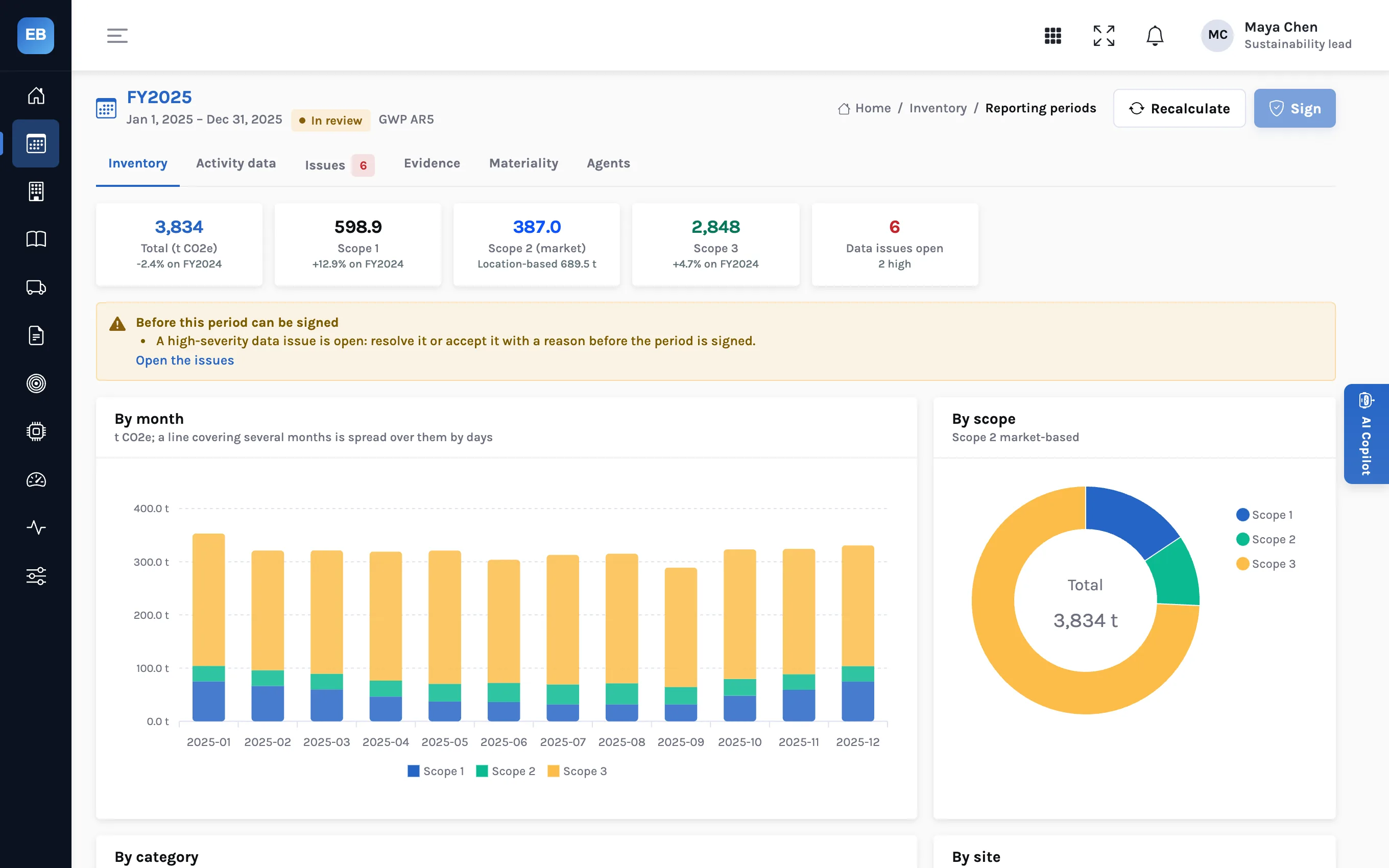
- Scope 1 and Scope 2, often with both location-based and market-based Scope 2
- Scope 3, sometimes all relevant categories, sometimes only an estimate or a statement of which categories are included
- The standard followed and the consolidation approach
- Whether the figures are estimated or measured, and what share of Scope 3 is spend-based
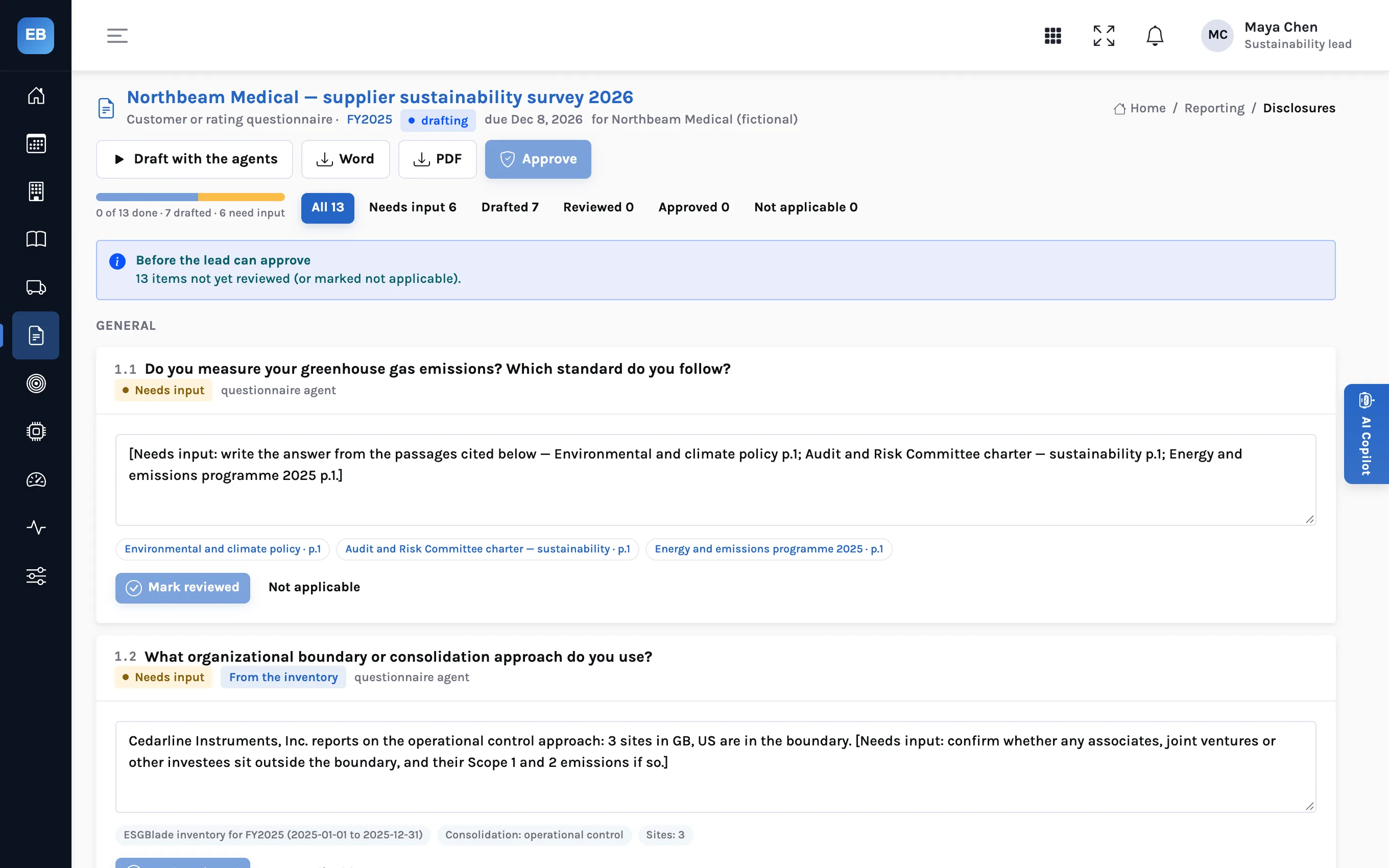
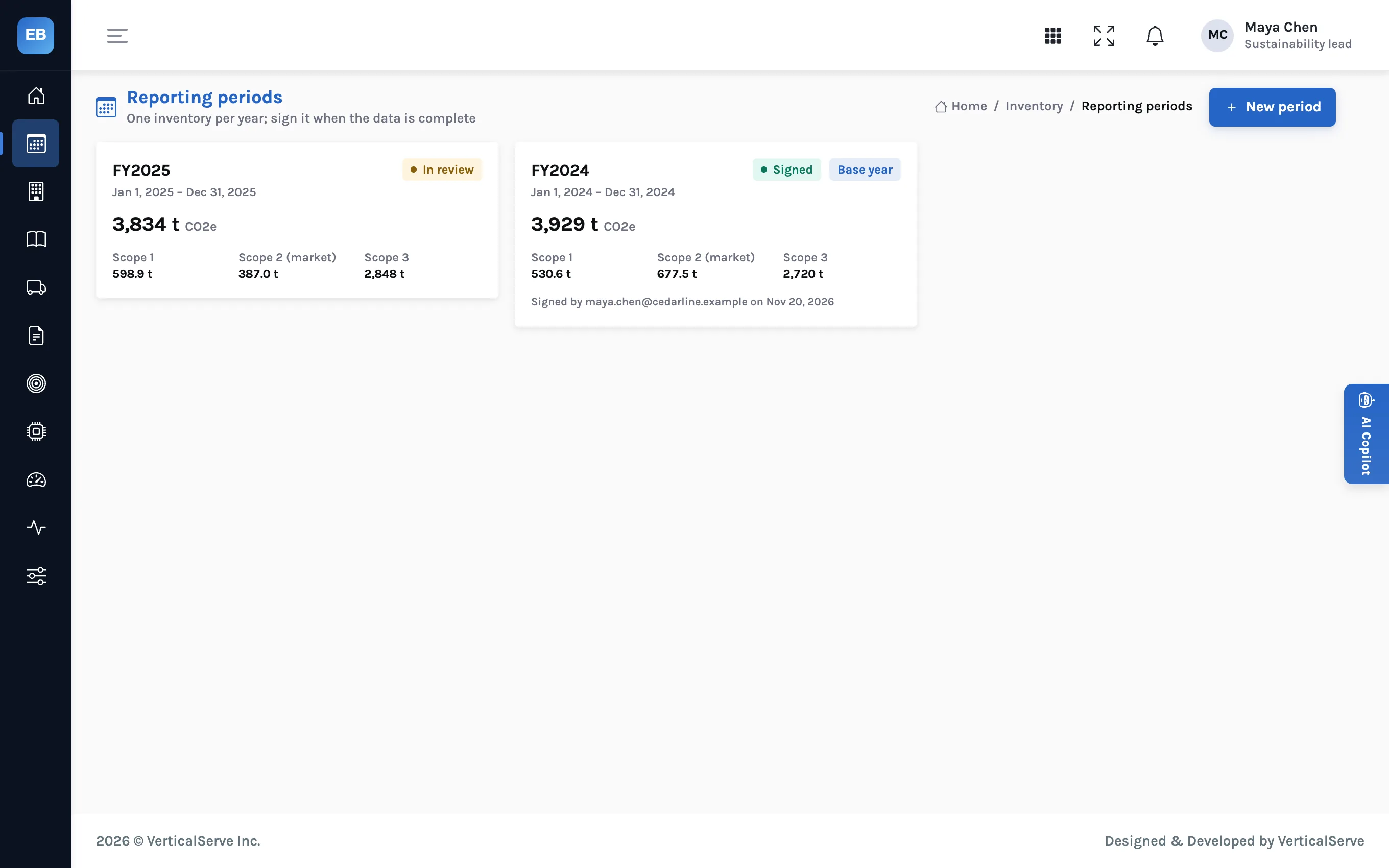
- A base year and change against it
- Whether there is a reduction target, and progress against it
- Who approved the figures and whether they were externally assured
Lenders with sustainability-linked terms may ask for a specific metric against an agreed baseline. That is a contract question; check the loan terms with your advisers.
Where the emissions are
| Scope | Typical sources | Calculated in ESGBlade from |
|---|---|---|
| Scope 1 | Gas and other fuels, company vehicles, refrigerant top-ups | Bills, fuel imports, refrigerant mass × GWP |
| Scope 2 | Electricity, purchased steam or heat | Bills; eGRID subregion or national grid; RECs, PPAs and green tariffs for market-based |
| Scope 3 | Categories 1 to 6: purchases, capital goods, grid losses, inbound freight, waste, business travel | Purchase ledger (USEEIO by NAICS), freight, waste and travel imports, supplier figures |
The same pack, every year
A reporting period covers one year. The first complete, signed year is usually the base year; every later period shows its change against the prior period, and a target compares each period with a pathway from the base. When a period is signed it is locked until someone reopens it, so the figure you sent the fund last year is still the figure in the system.
How sign-off works
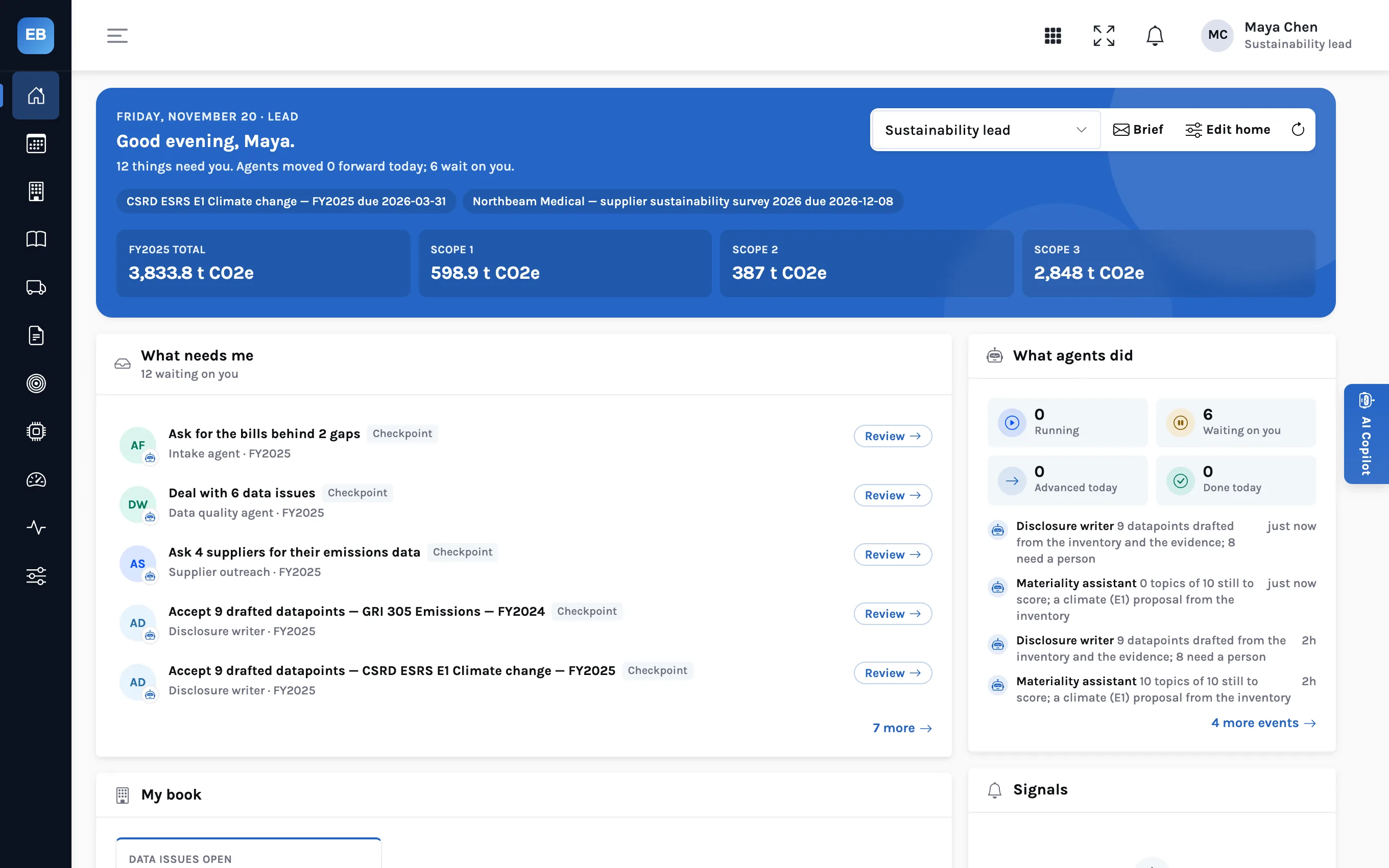
The supervisor agent runs the inventory controls and either prepares the lead's sign-off or says what blocks it, for example a high-severity data issue still open. Agents prepare; people decide. Every Accept, Reject or Ask is written to the decision record with who and when, and so is the sign-off. See agents prepare, people decide.
Not assurance
A signed period in ESGBlade is the company's own approval. ESGBlade does not provide assurance. If the fund asks whether figures were externally assured, the honest answer comes from your assurance provider, not the software.
Exports: GRI 305 and IFRS S2
Many fund templates map to GRI 305 or to ISSB's IFRS S2 climate disclosures. ESGBlade drafts GRI 305 (12 items) and IFRS S2 (14 items) from the inventory and from evidence documents, and marks anything it can't support as Needs input. Targets, transition plans and assurance statements are never invented. Once every item is reviewed and the period is signed, the lead approves and exports to Word or PDF. Walkthroughs: GRI 305 step by step and ISSB S2 from your inventory. If the fund sends its own spreadsheet, import it as a questionnaire.
Where people stay in charge
- The company signs. The lead signs each period on the decision record, and a signed period is locked until someone reopens it.
- Your assurance provider gives assurance. If the fund asks whether figures were externally assured, the answer comes from your assurance provider.
- The board sets the target. The target is entered as the board approved it, with its base year, and ESGBlade tracks progress against the pathway.
- You send the pack. Answers export to Word or PDF, and the company sends them to the fund.
What to do first
- Get this year's fund template and note which scopes, bases and year it asks for
- Decide the base year with the fund before you report against it
- Build and sign the first period
- Keep the evidence documents (policy, board minutes on targets) in one place to attach
Build the inventory once, sign it each year, and send the fund the same pack.
Try it on your own data
ESGBlade is free. Tell us about your company and we'll set up a workspace for your first reporting period.
Request a demo