Collect the data
Sort what came in by site and month, read bills and fuel statements into activity lines cited to their page, and prepare the request for the bills still missing.
- Intake agent
- Extraction agent
When customers, lenders or a parent company ask for your emissions, ten AI agents turn bills, ledgers and travel reports into a Scope 1, 2 and 3 inventory, every figure traced to a source page and a versioned emission factor, and draft ESRS E1, ISSB S2, SB 253, GRI 305 and questionnaires. Nothing is sent or signed without a person.
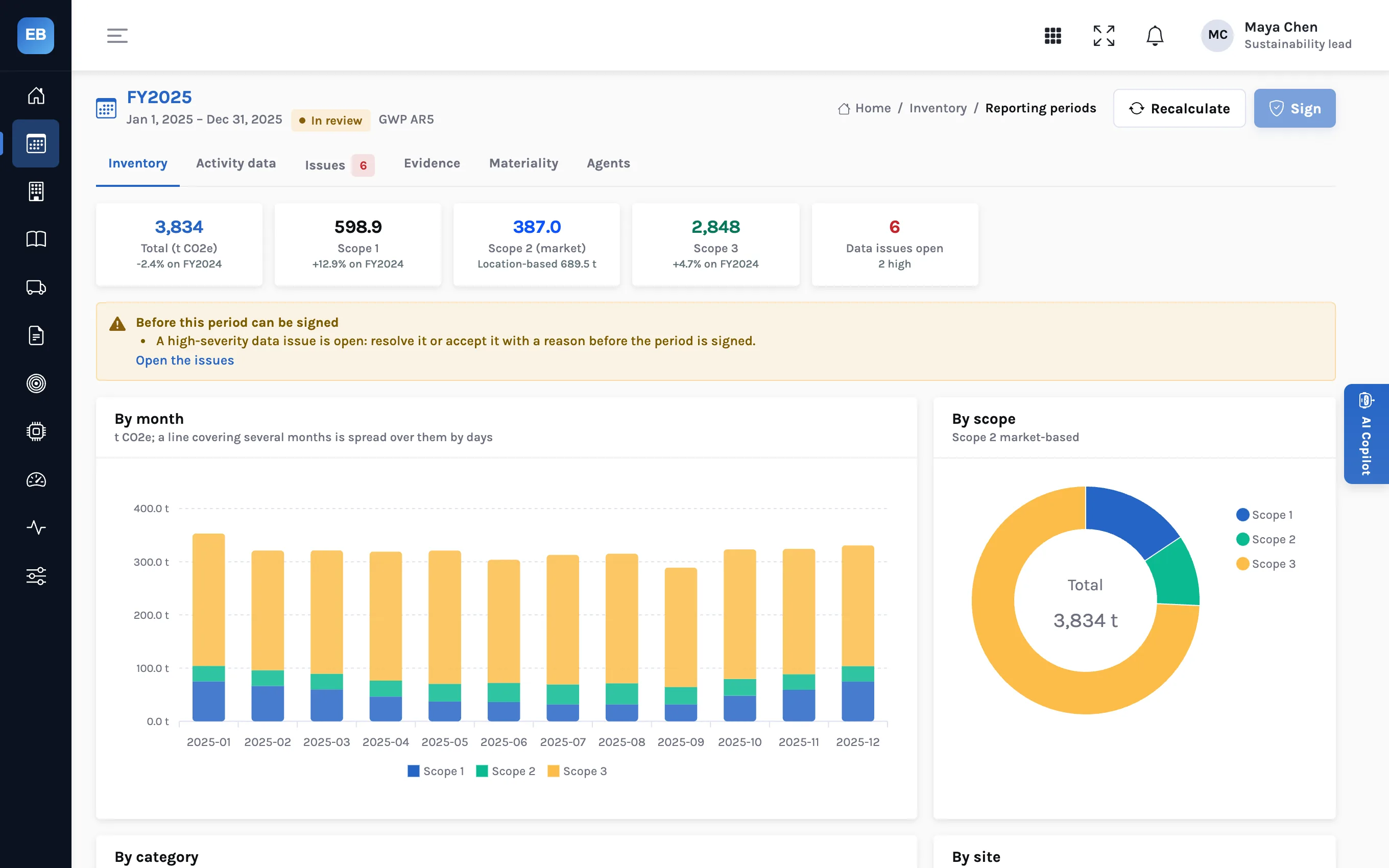
Each agent has one job. It reads the period's data, checks and evidence, and prepares a decision with the facts behind it. A person answers Accept, Reject or Ask, and no agent acts above "Ask first".
Sort what came in by site and month, read bills and fuel statements into activity lines cited to their page, and prepare the request for the bills still missing.
Propose a library factor for lines that can't be calculated, recalculate the period, find gaps, bills entered twice and outliers, and prepare the fixes.
Explain what moved, ask the suppliers that matter, run the controls before sign-off, and draft disclosures, questionnaire answers and climate materiality scores.
Run the agents on a reporting period and they read what came in, check it, explain what moved and prepare decisions: request the two missing bills, set aside the second copy of a gas bill, ask the four suppliers that make up most of Scope 3.
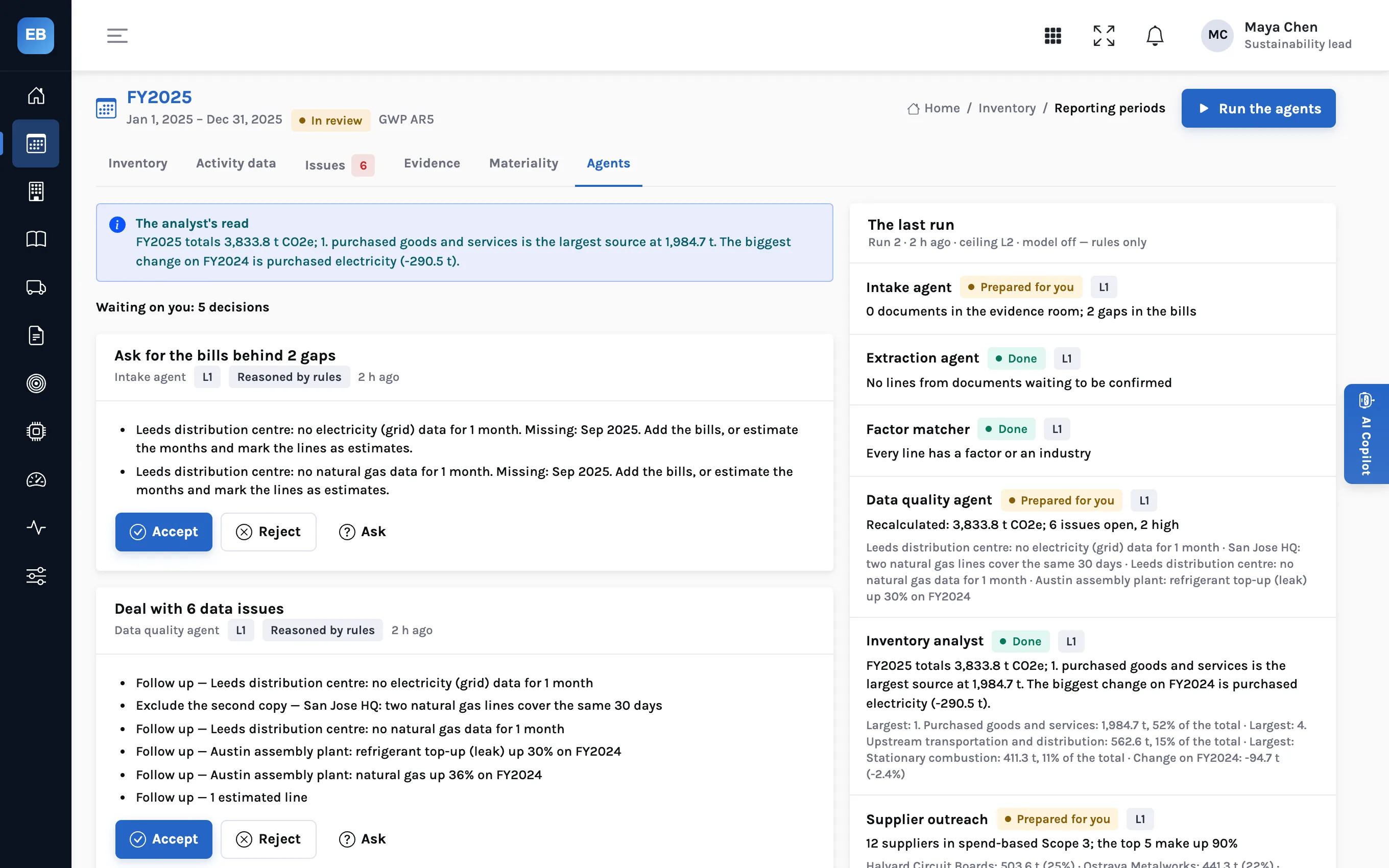
The same agents, the same decision record and the same figures carry through every stage of the year.
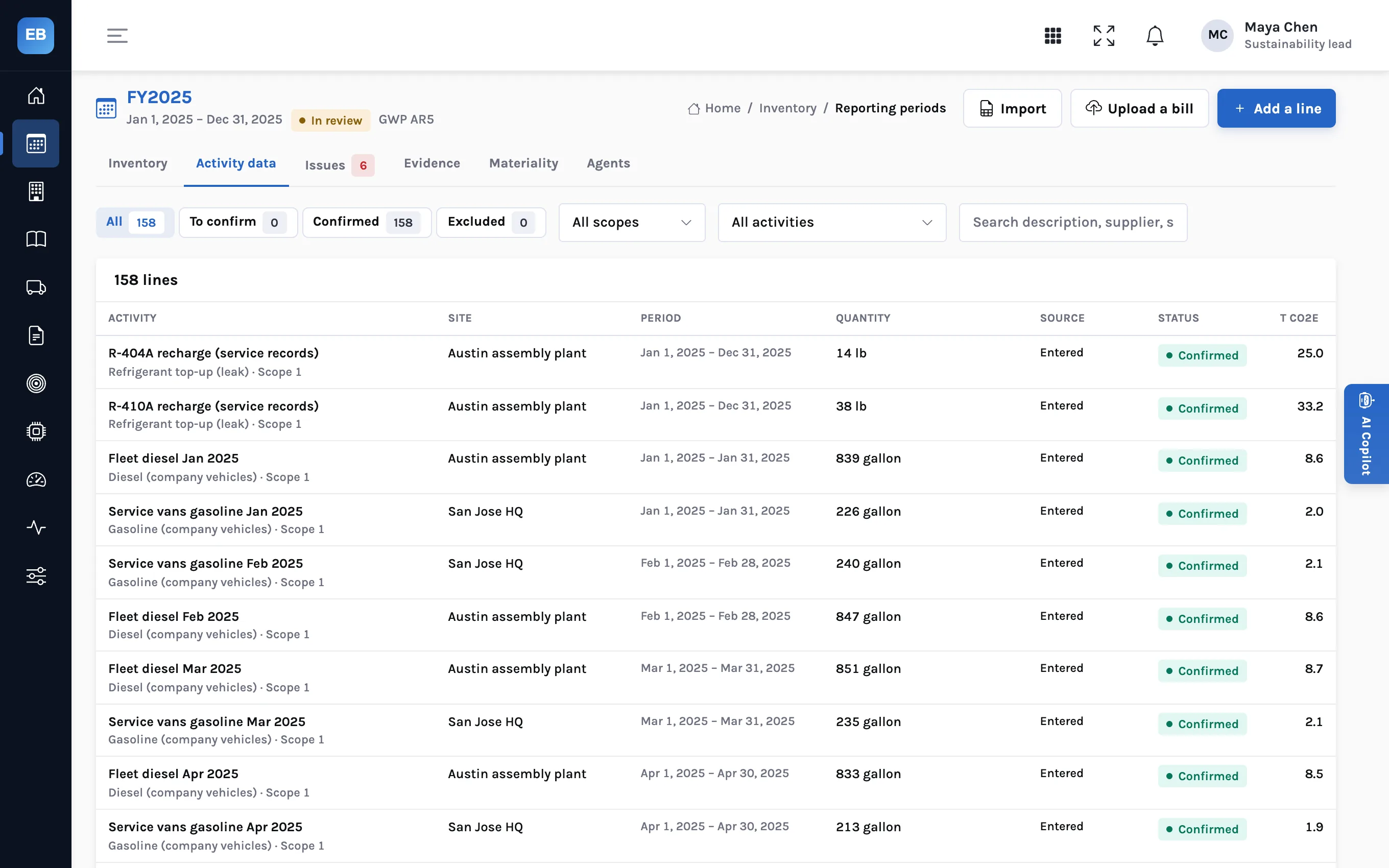
Upload a utility or fuel bill, import the purchase ledger, the travel report or fuel cards from a spreadsheet, or enter a line by hand.
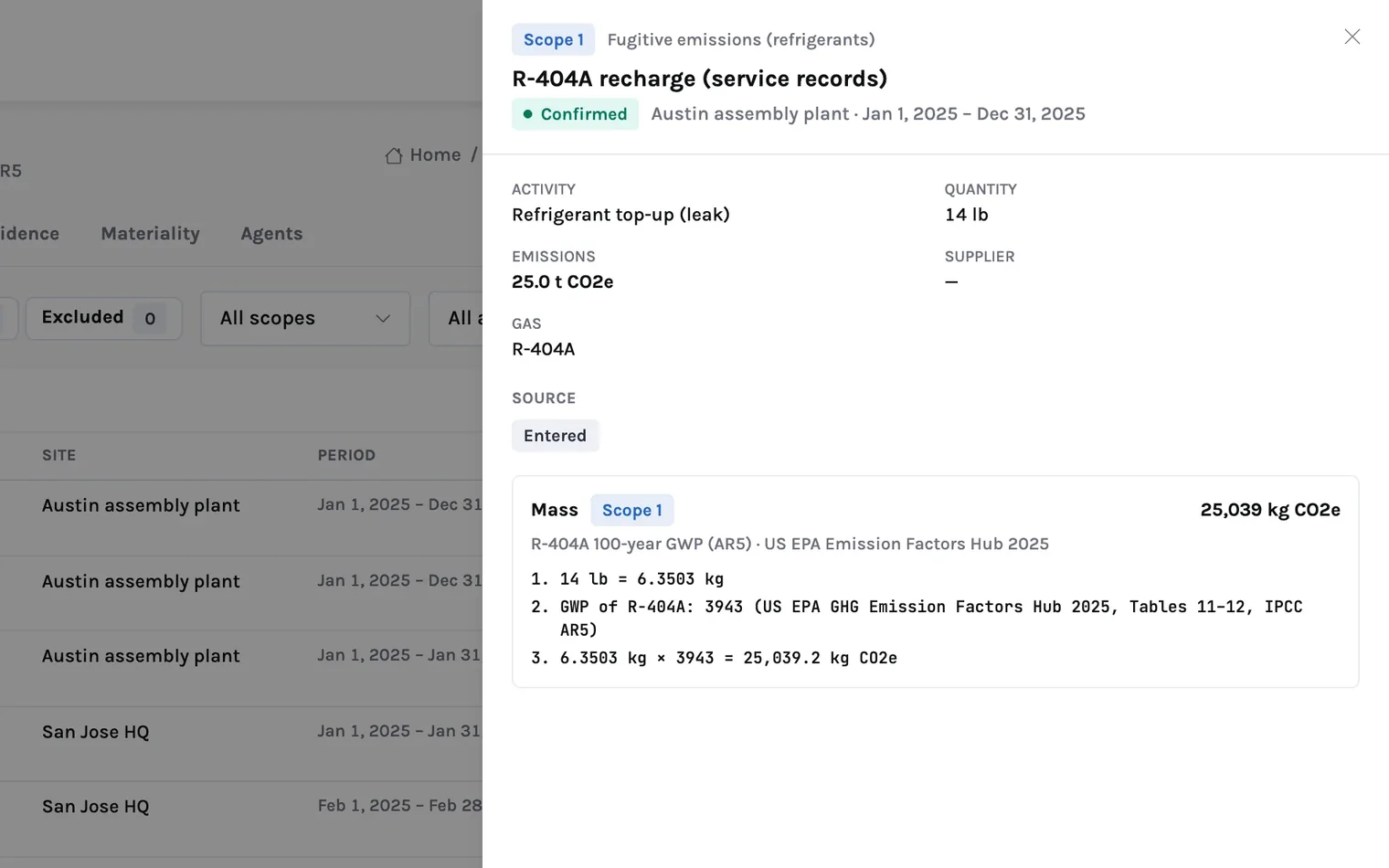
Every line is calculated in code with a factor from a versioned public library (US EPA Hub 2025, eGRID2023, UK DESNZ 2026, USEEIO 1.3), and keeps the factor, its edition and each step of the arithmetic.
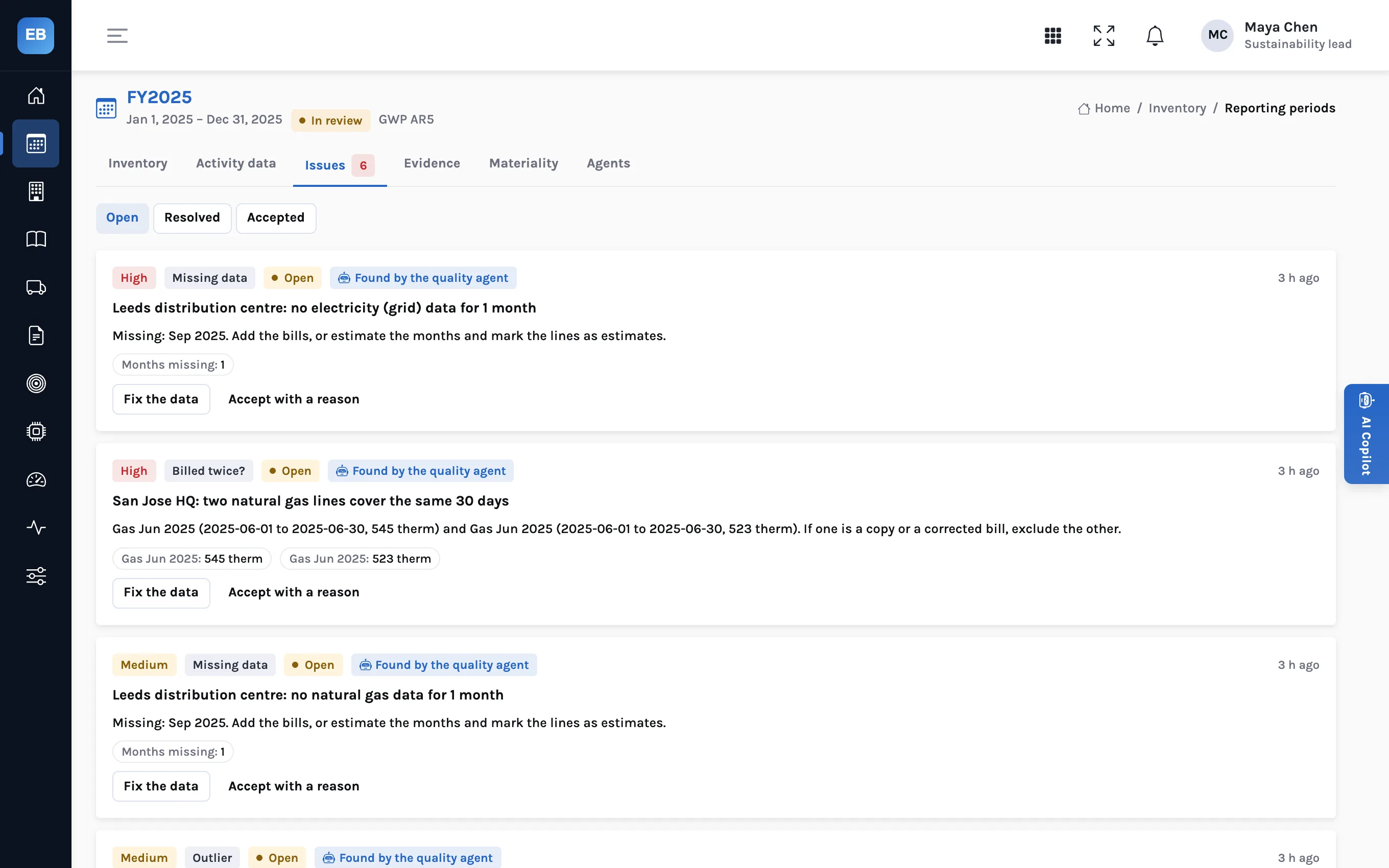
Each period is checked for missing months per site and fuel, two bills covering the same days, changes of 30% or more, estimates and lines that can't be calculated.
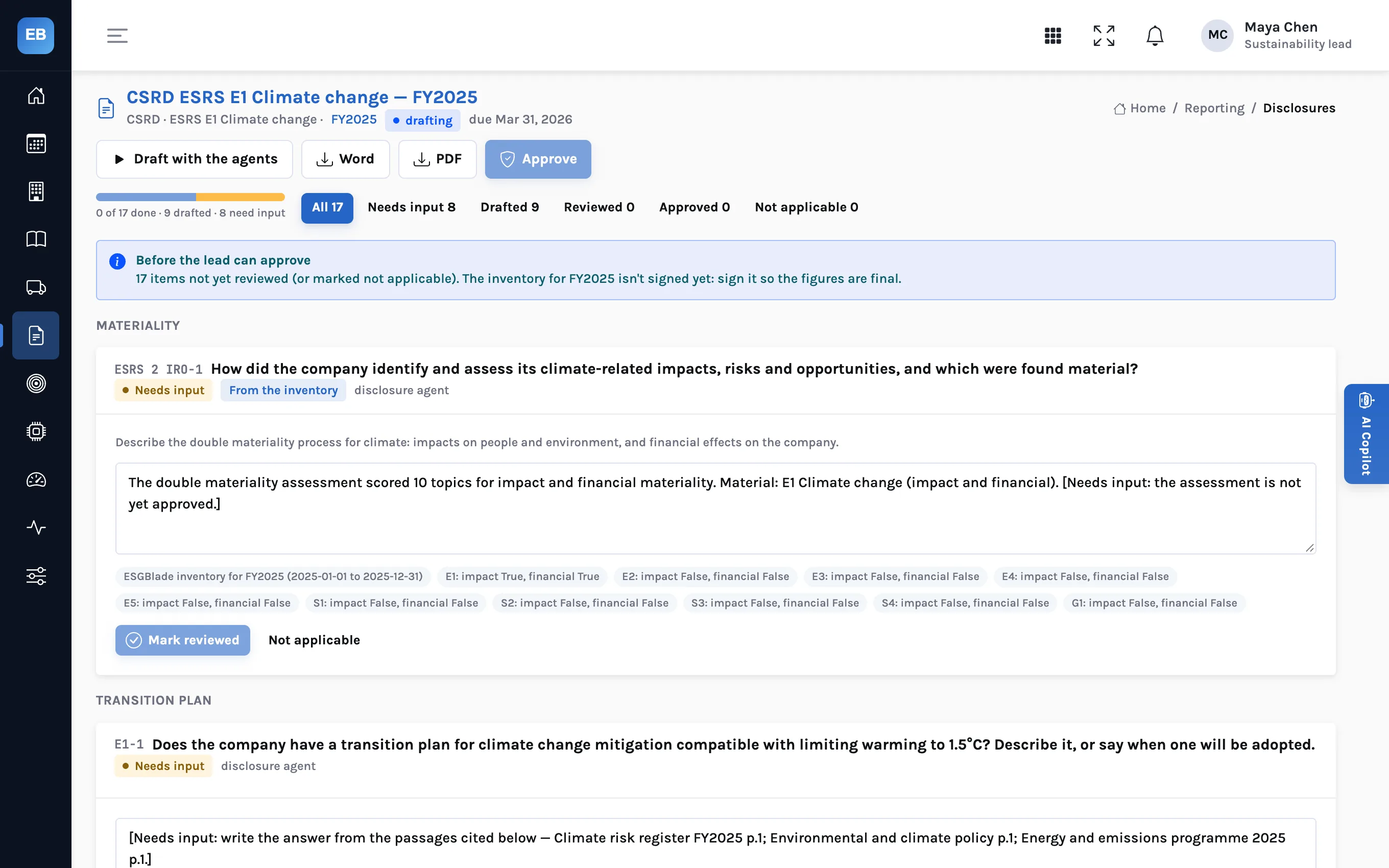
Figures come from the inventory and are checked against it; narrative answers cite your evidence; anything nobody has told ESGBlade is marked Needs input. Export to Word and PDF.
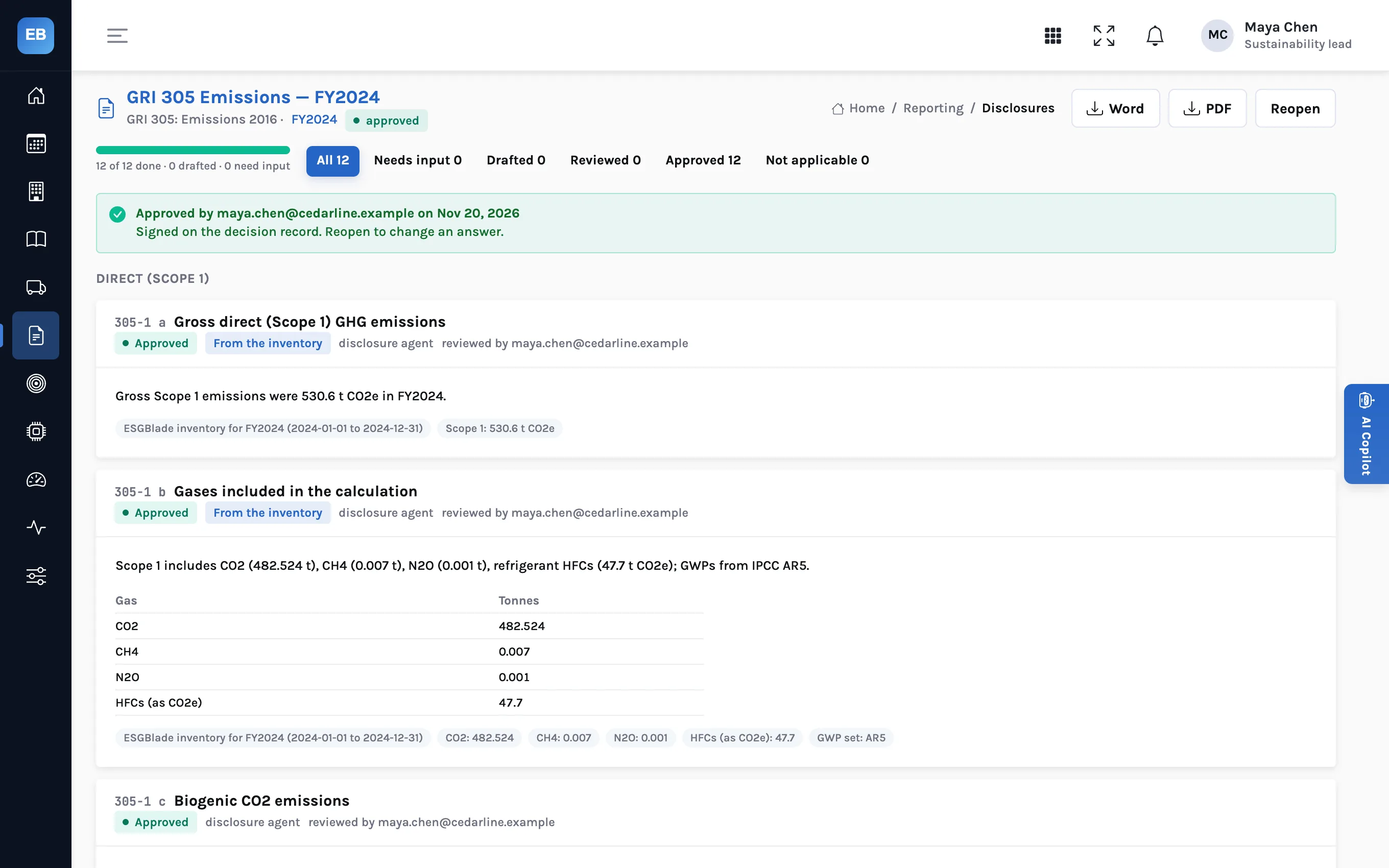
The inventory controls from Rules Studio run before sign-off. Signing locks the period; approving locks a disclosure with every answer as it stood, until someone reopens it.
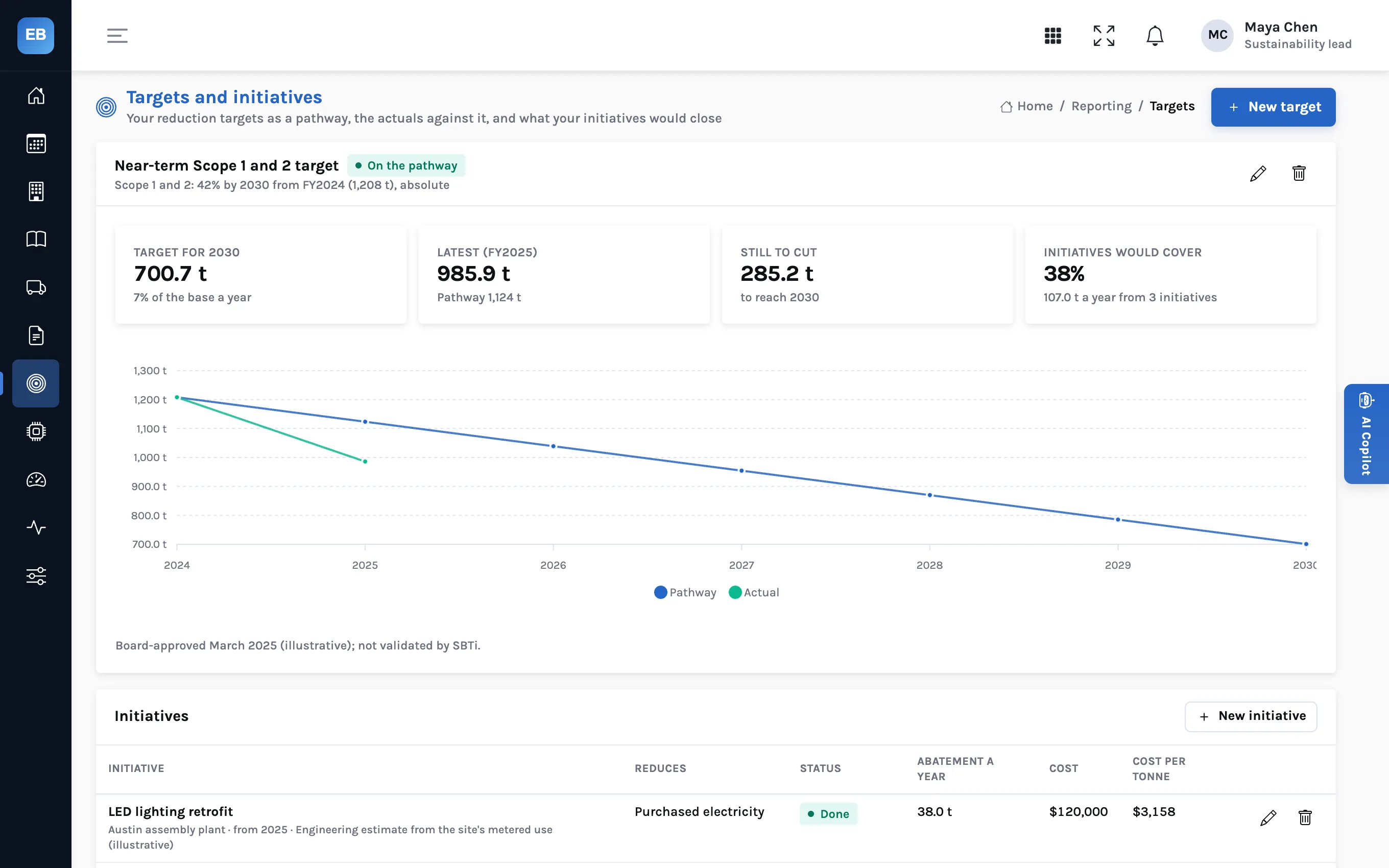
Suppliers answer through a link with no login; their figure replaces a spend estimate when you choose. Targets are drawn against a calculated base year, with the gap your initiatives would close.
A customer sends a sustainability questionnaire. A lender asks for Scope 1 and 2. A parent company needs ESRS figures. Most mid-sized companies have no carbon team; they have a facilities lead, a finance analyst and a folder of utility bills.
Bills, fuel statements, the purchase ledger and the travel report, read into activity lines cited to their page.
Ten agents find the missing bill, the bill entered twice, the suppliers that matter, and draft every datapoint they can.
ESRS E1, ISSB S2, SB 253, GRI 305 and customers' questionnaires, exported to Word and PDF.
Ask suppliers through a link with no login, and replace a spend estimate with their figure when you decide to.
Each activity line keeps its source: the bill page and the words on it, the spreadsheet row, or the person who entered it. Each result keeps the factor, the library edition and every step of the arithmetic, so a reviewer, an auditor or a customer can follow it.
For a manufacturer like the demo company, most emissions sit in what it buys, and most of that starts as a spend-based estimate. That's why ESGBlade puts the supplier work and the purchase ledger next to the bills, not after them.
Plants, refrigerants and a long supplier list, with customers sending questionnaires.
Fleets, freight in ton-miles and warehouses across regions.
Small Scope 1, Scope 3 in cloud, services and travel.
Answering health systems' supplier questionnaires with figures that hold up.
Dozens of sites, dozens of bills, refrigerant in the cold chain.
Food, construction, packaging, automotive parts and portfolio companies.
ESGBlade is free to use: the inventory, the agents, the disclosures, suppliers and targets. Tell us about your company and we'll set up a workspace.
ESGBlade prepares; your people decide. The lead signs the period and approves each disclosure, and your company files it. Your assurance provider gives assurance over the figures, with the full trail in front of them. Your team sets the reduction target; ESGBlade draws the pathway and the gap your initiatives would close.
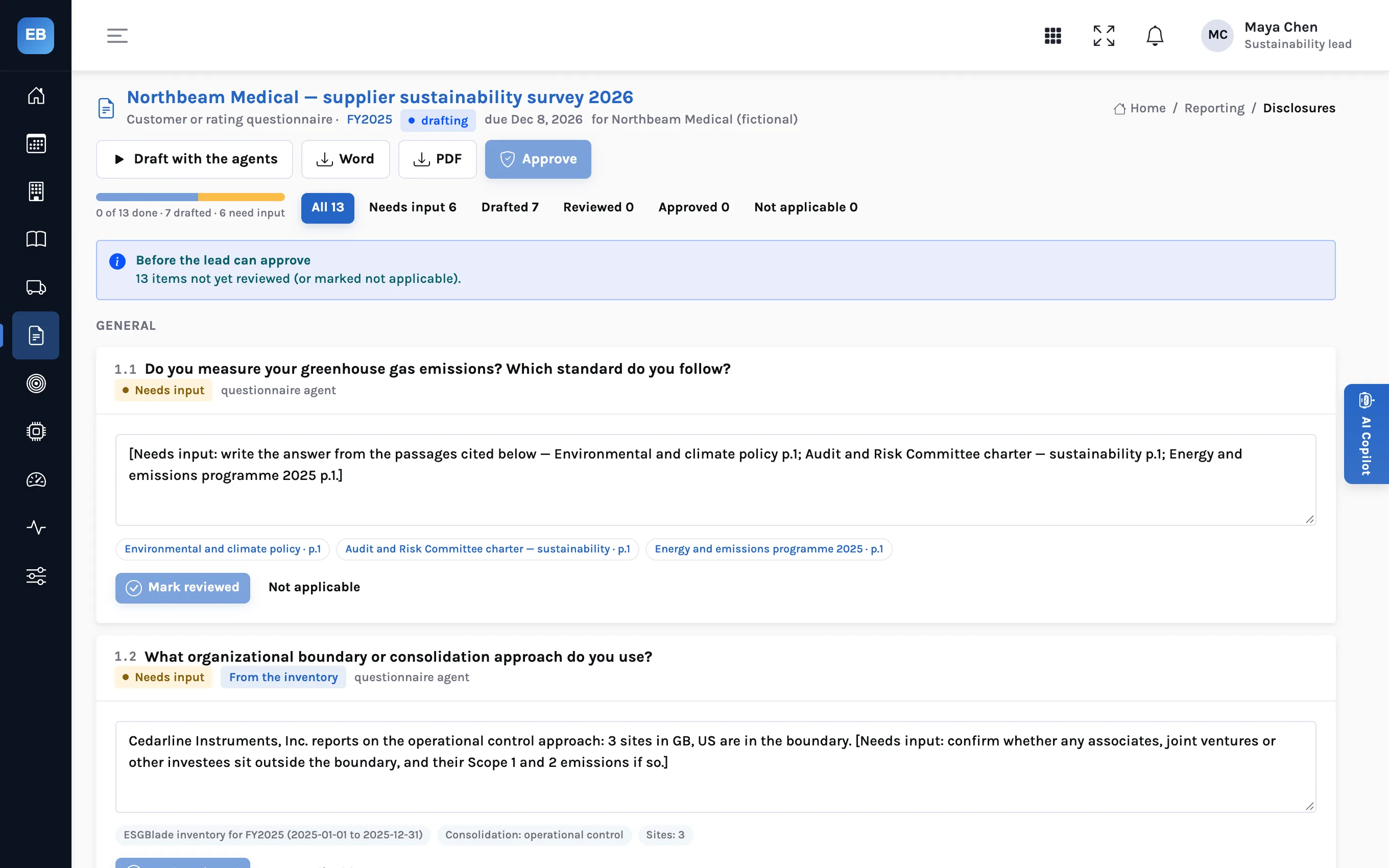
Import the customer's spreadsheet, let the questionnaire responder draft from your inventory and evidence with citations, fill what it marks Needs input, then export to Word or PDF. Step by step, with a 13-question example.
A first greenhouse gas inventory built from utility bills, fuel statements and the purchase ledger: boundary and sites, three ways in, the factor library, the three scopes and sign-off, shown on a demo company in ESGBlade.
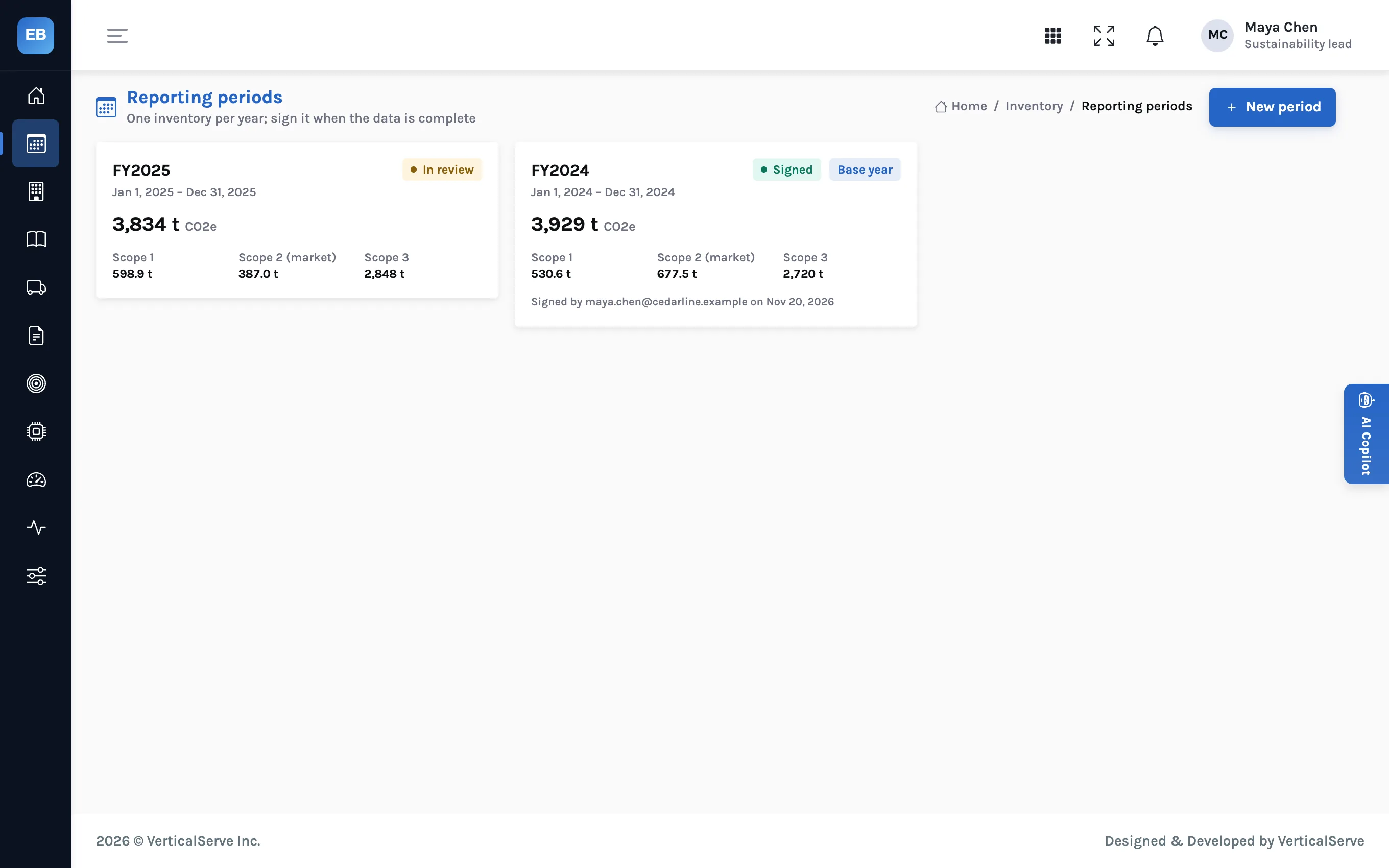
How the fictional demo company Cedarline Instruments built its first GHG inventory: the boundary, the base year, what drove each scope, and the customer requests that started it.
ESGBlade is free: no paid plan and no card. Tell us about your company and we'll set up your workspace.